Urban Matter
Location: Chania, Greece
Status: Planning Application
Year: 2026
Area: 950 sqm
Client: Supreme Home Constructions
Urban Matter is a residential development in Chania, Greece, conceived as a contemporary reinterpretation of the Greek polykatoikia—not as a nostalgic reference, but as a system-based architectural framework capable of responding to present-day urban, social, and environmental conditions.
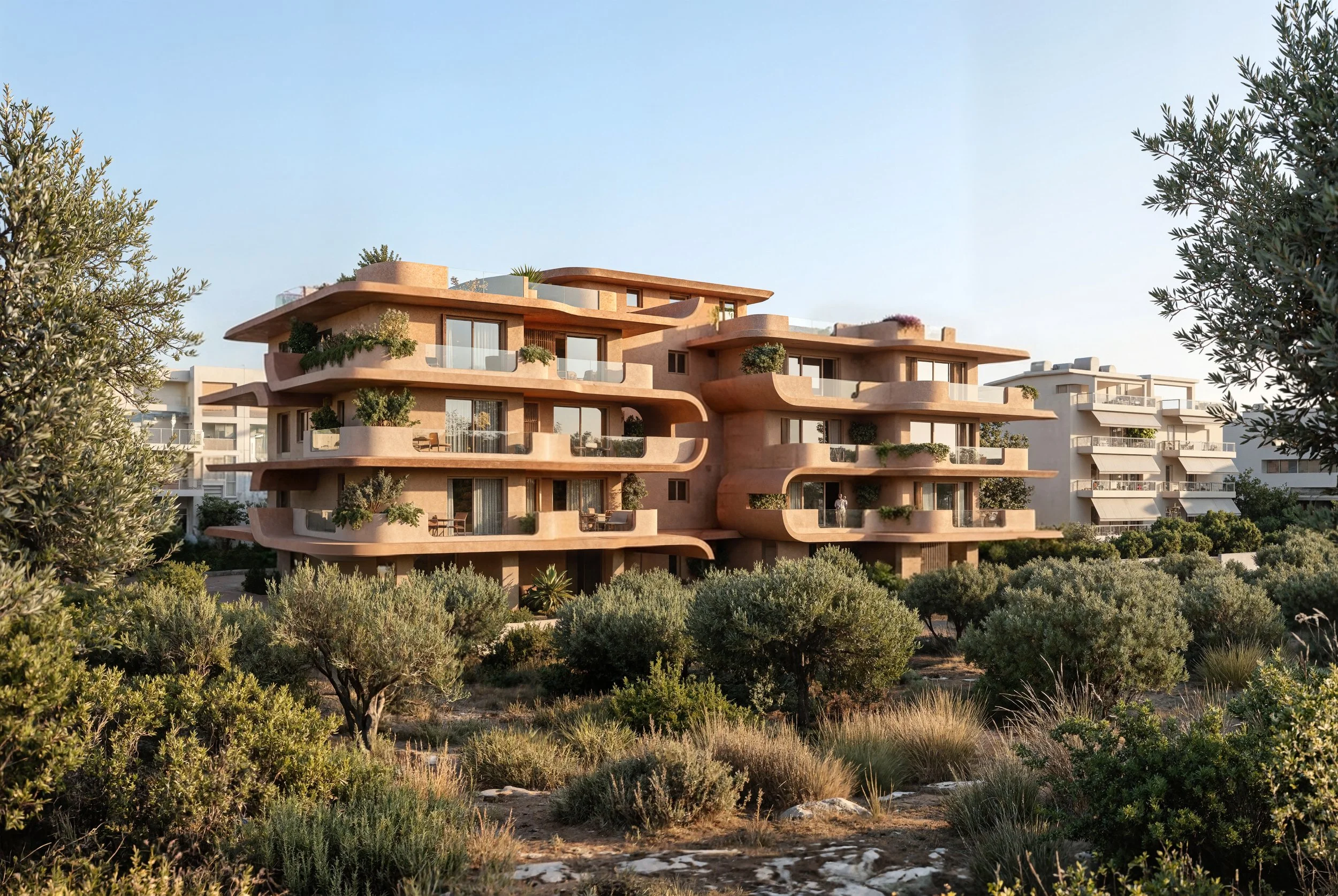
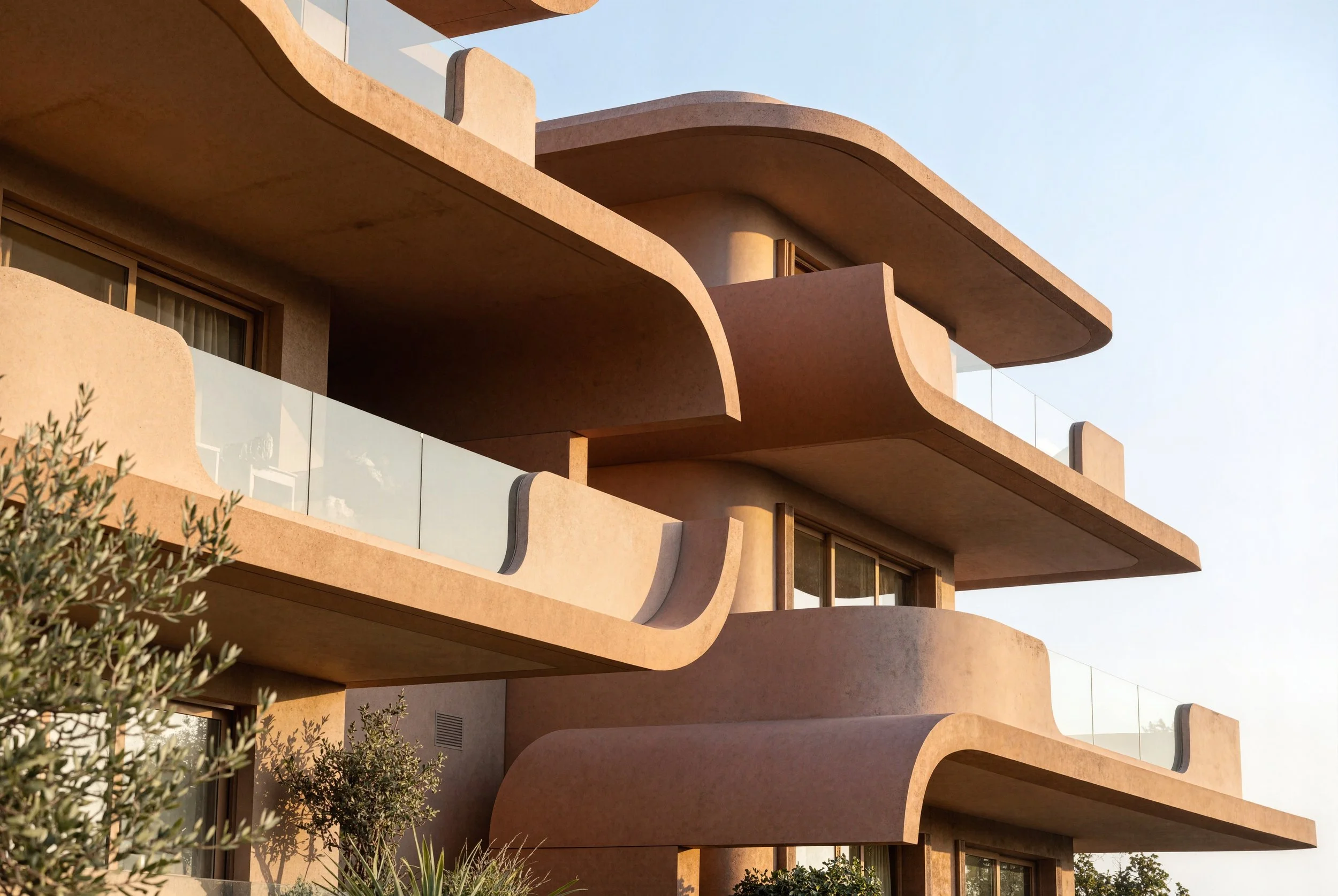
Urban Matter re-engages this legacy through a clear modular logic, spatial depth, and a calibrated relationship between dwelling and urban context
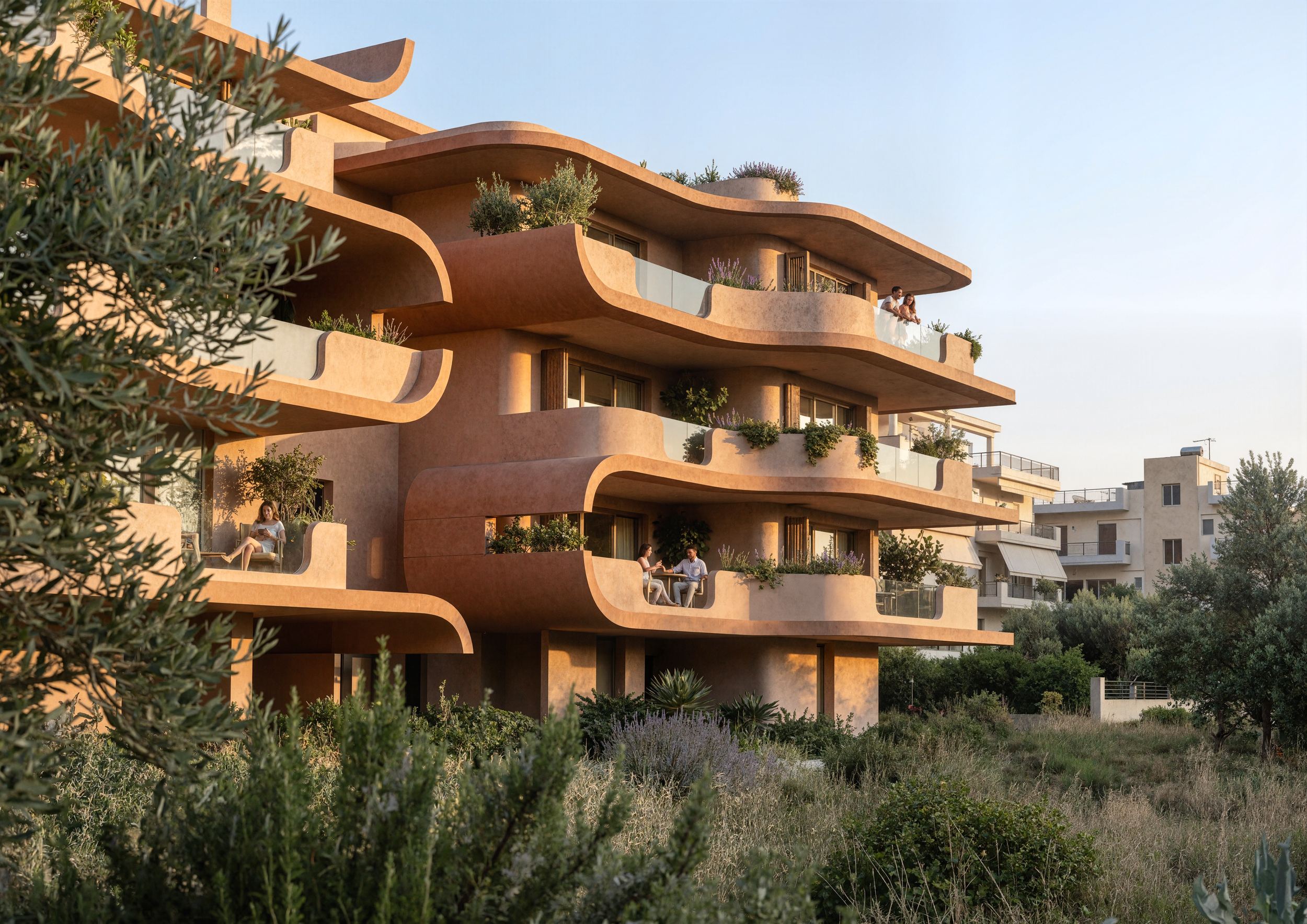
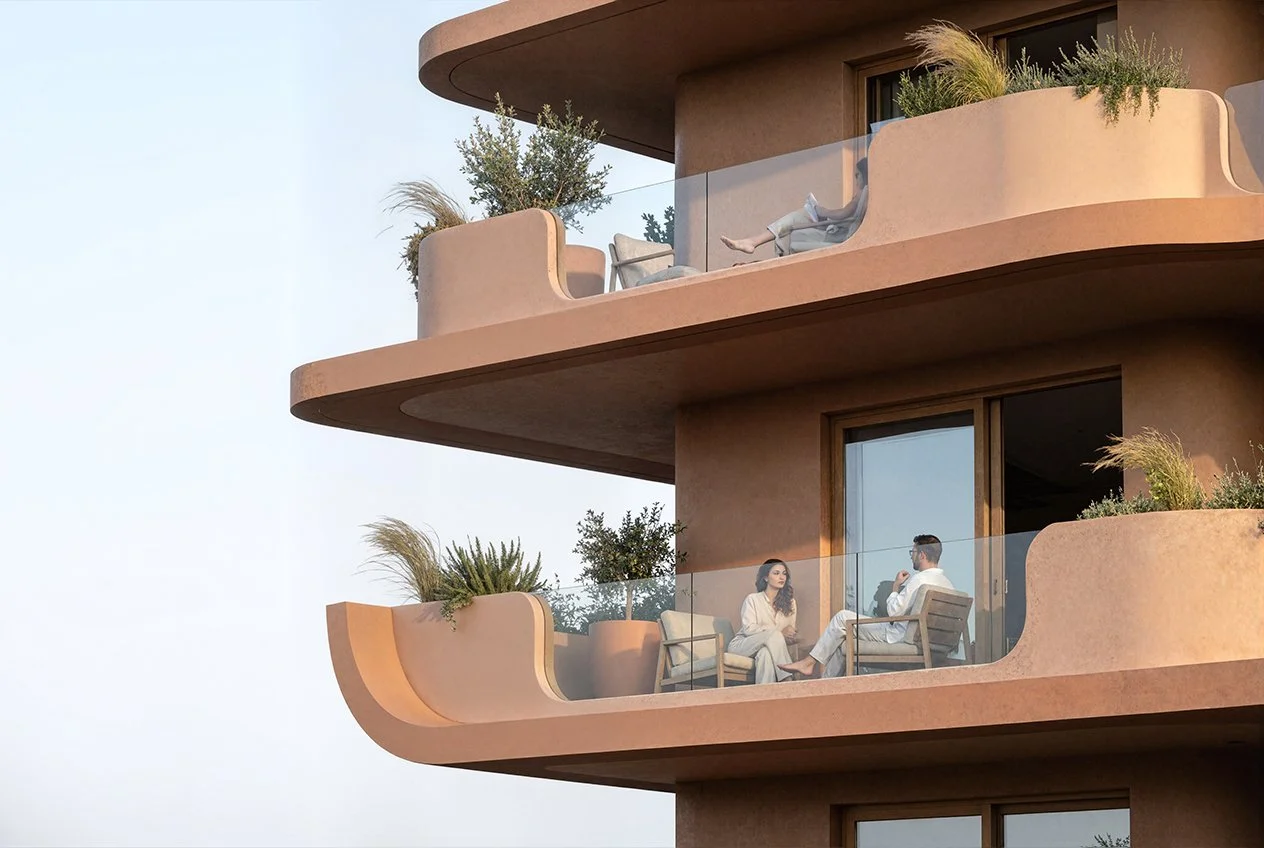
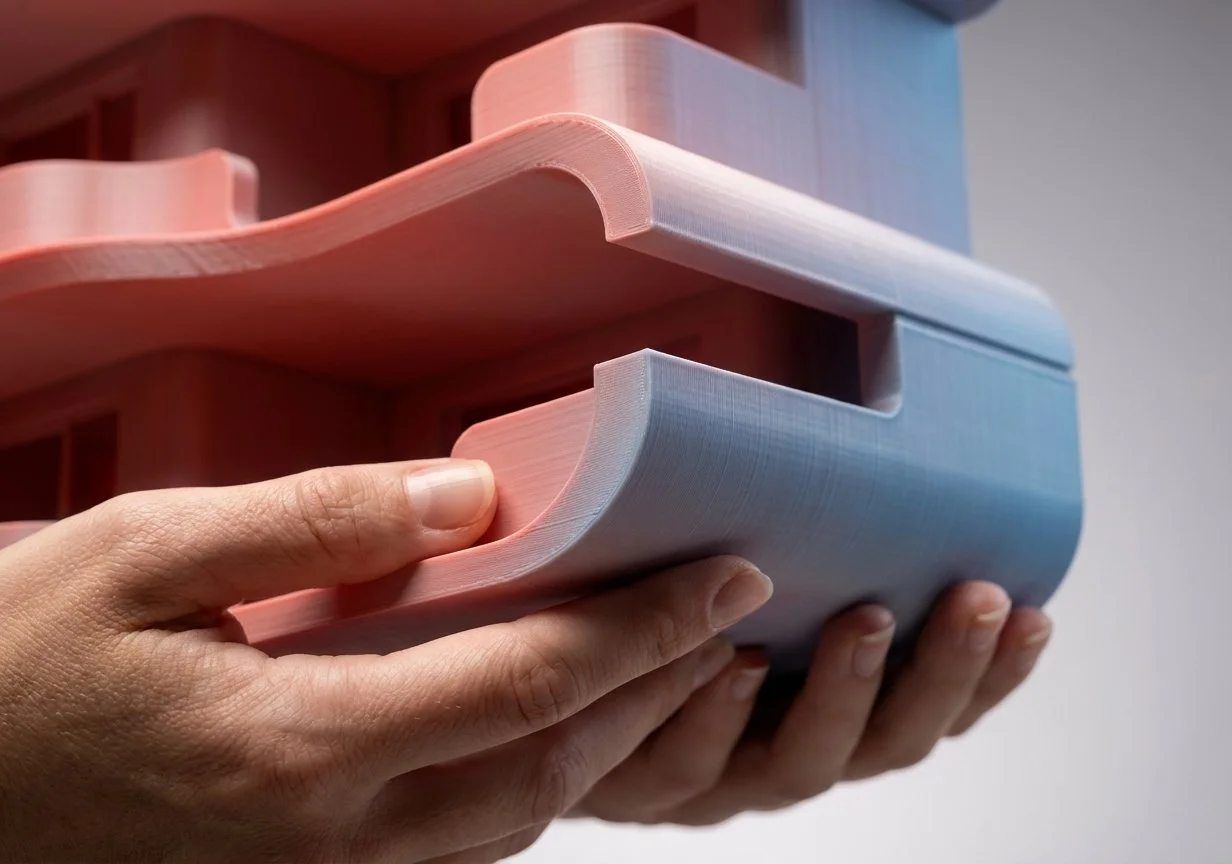
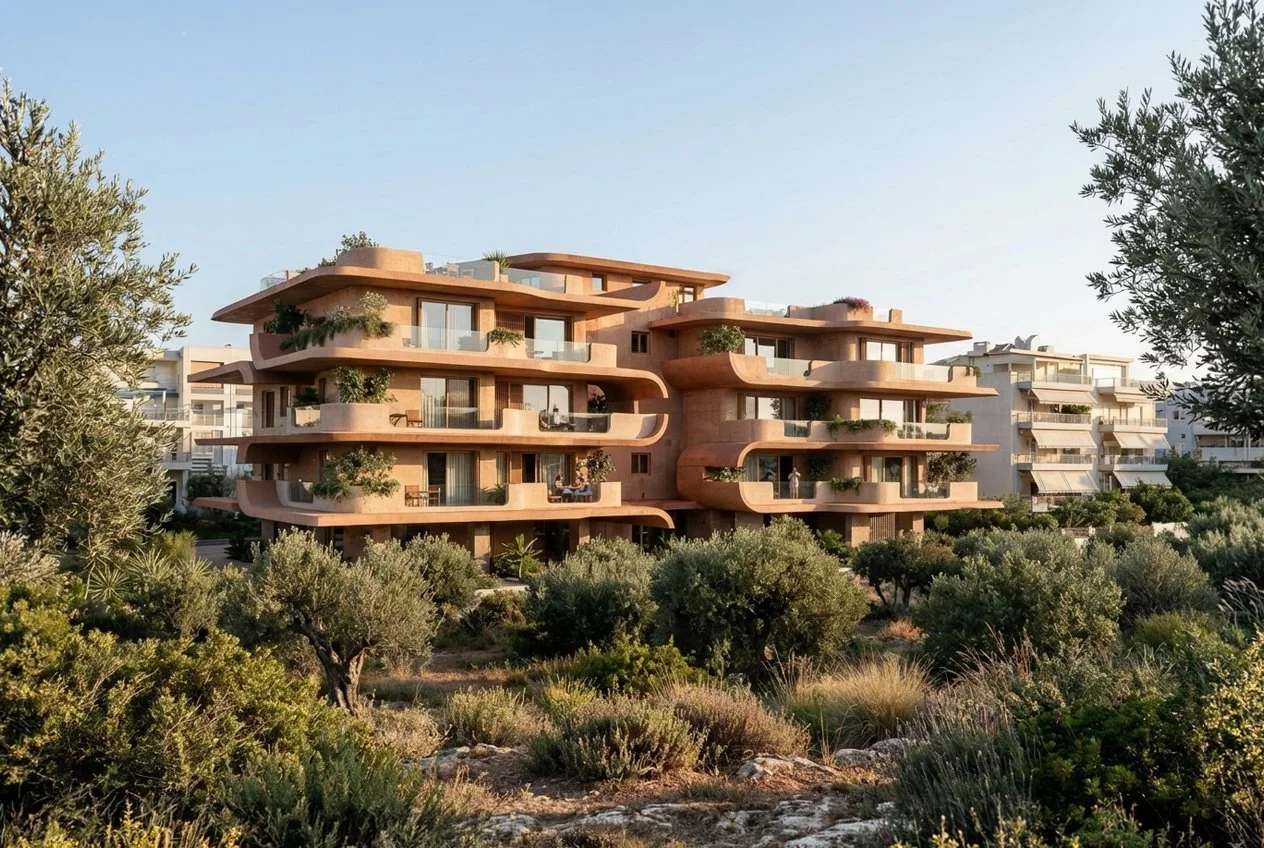
At its core, the project is structured by a rational modular framework that governs both plan and elevation. This framework establishes a clear order for load-bearing structure, circulation, and habitation, allowing repetition without monotony and variation without arbitrariness.
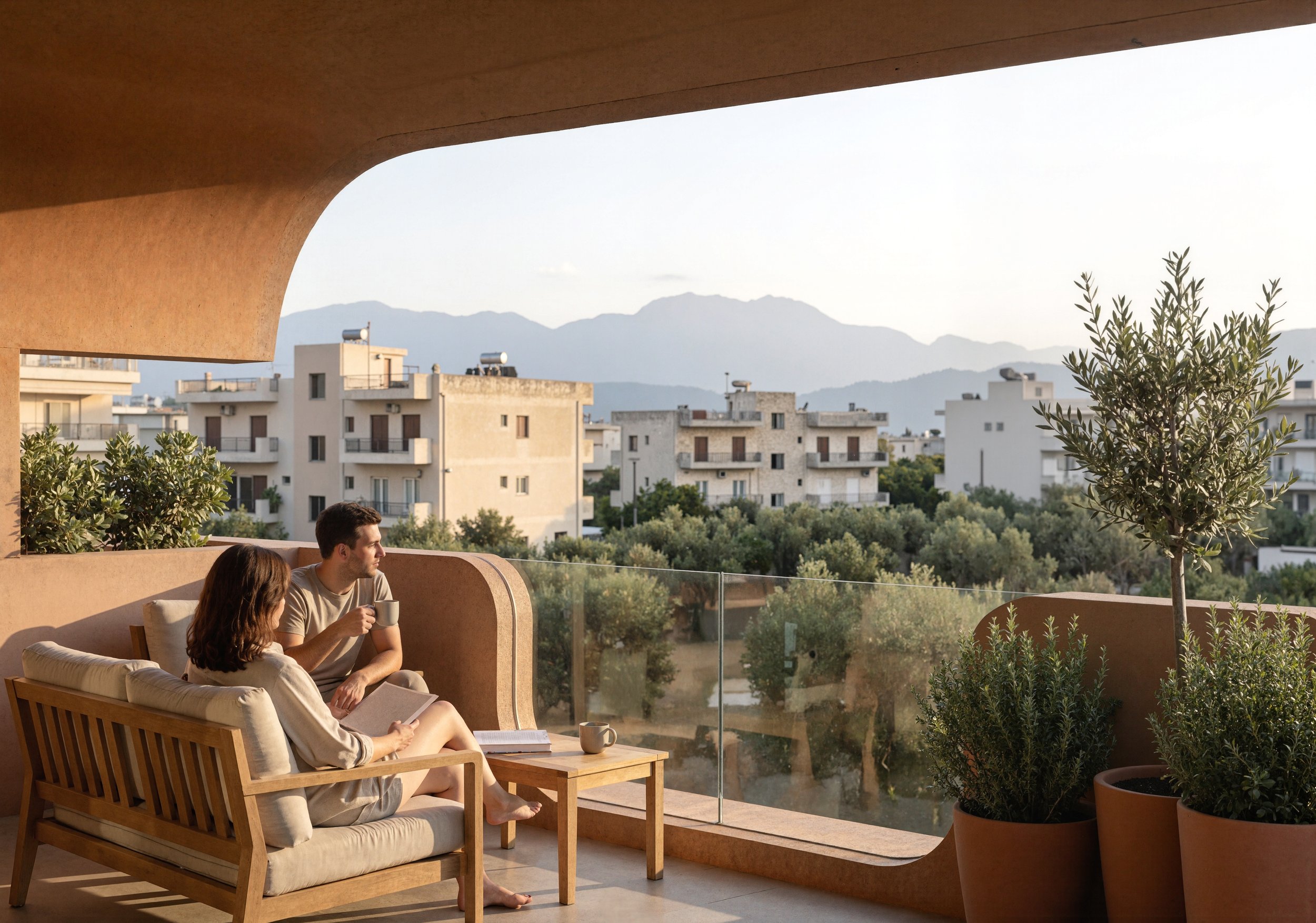
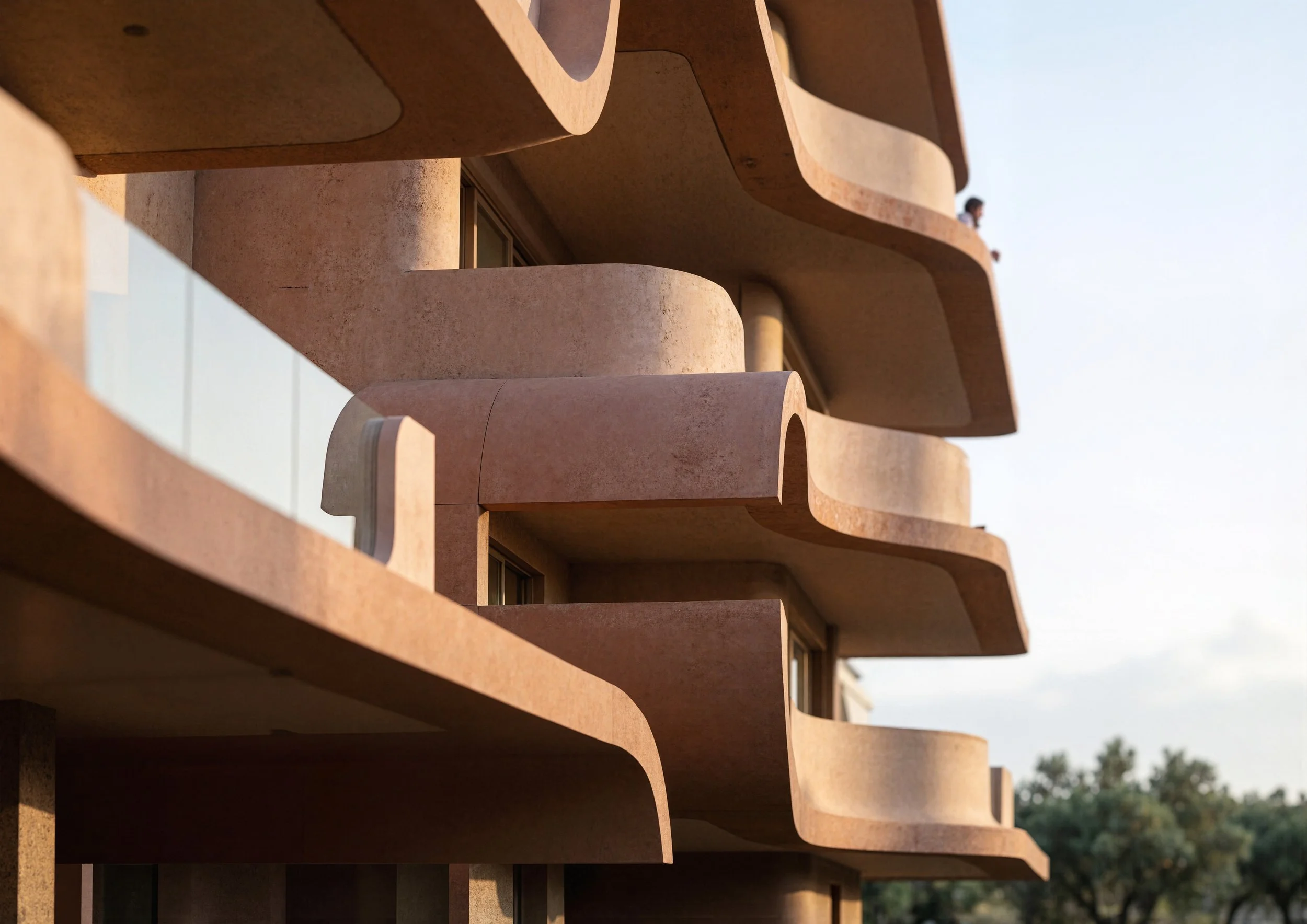
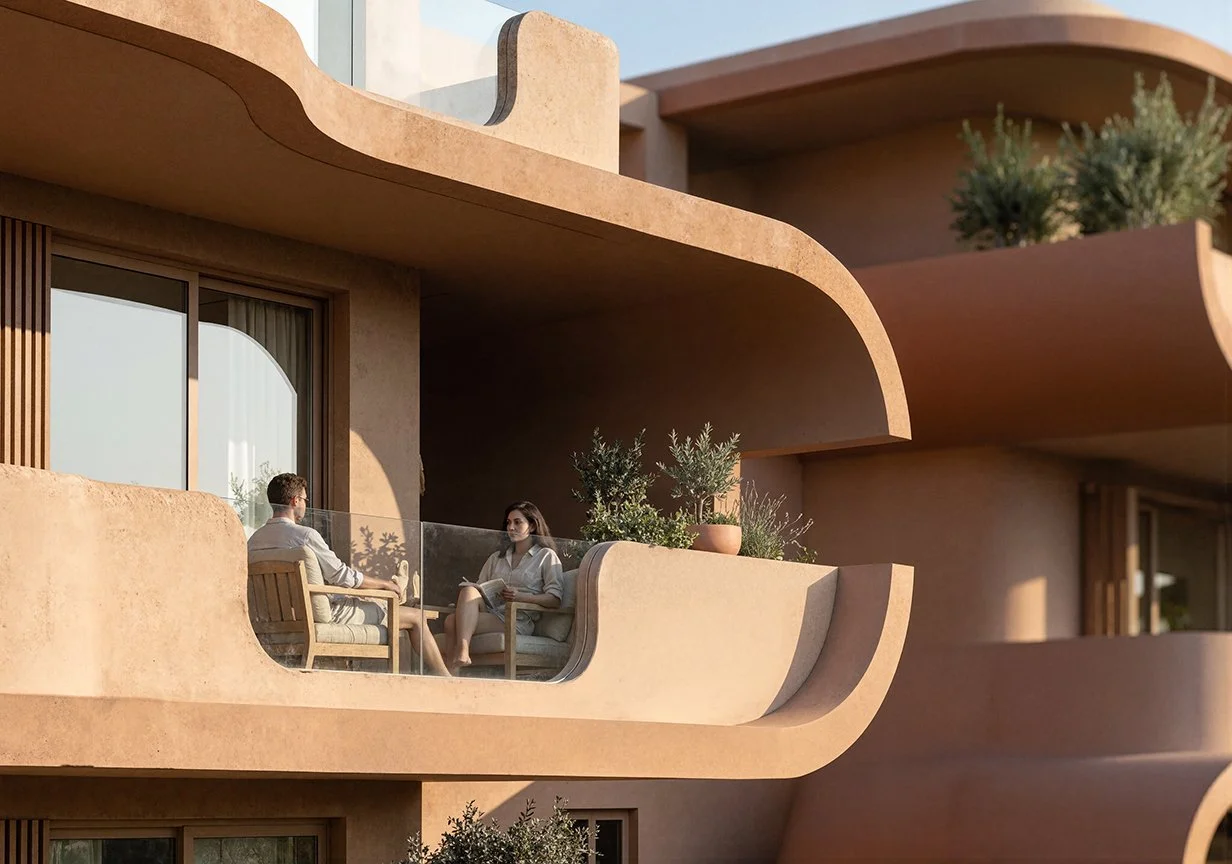
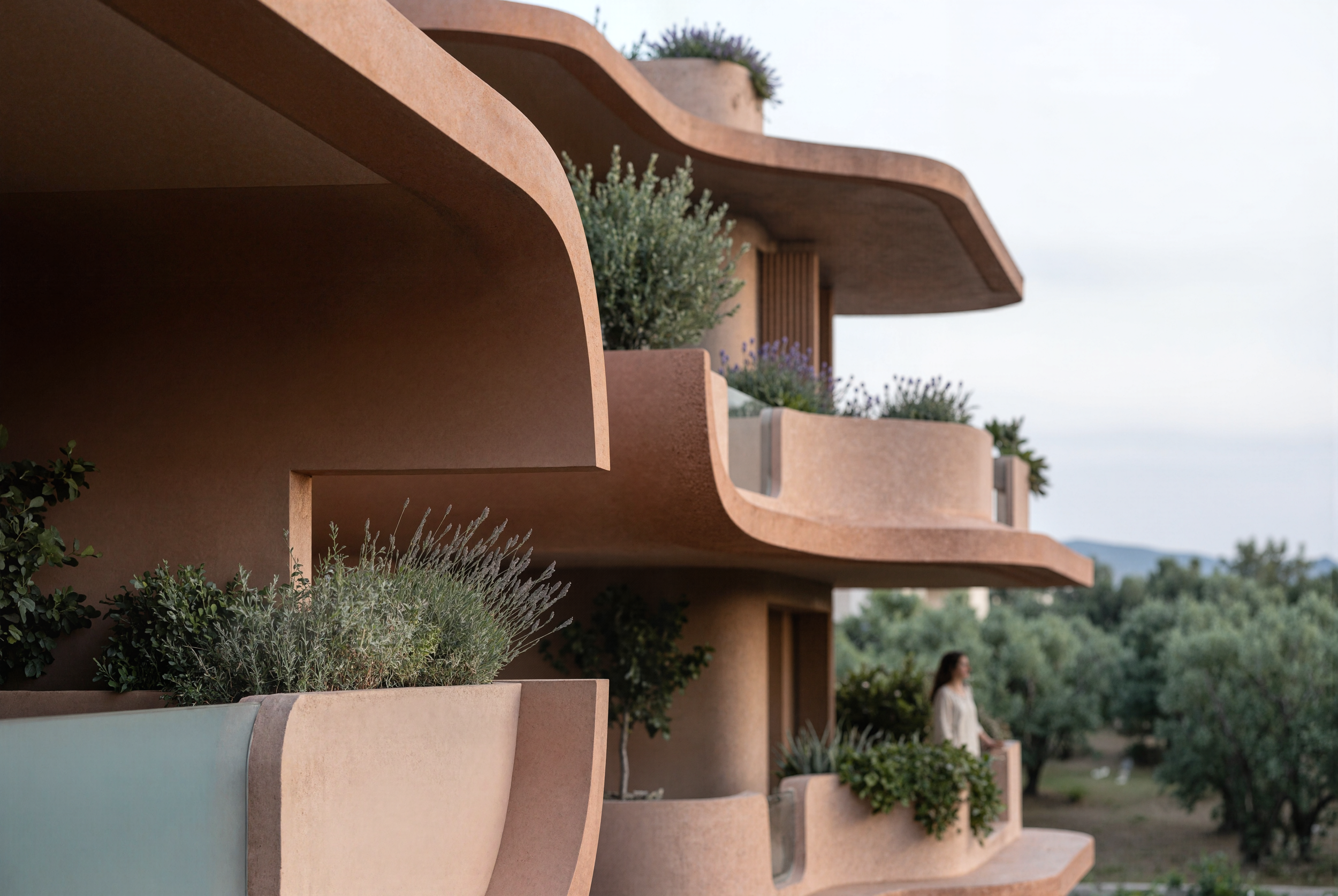
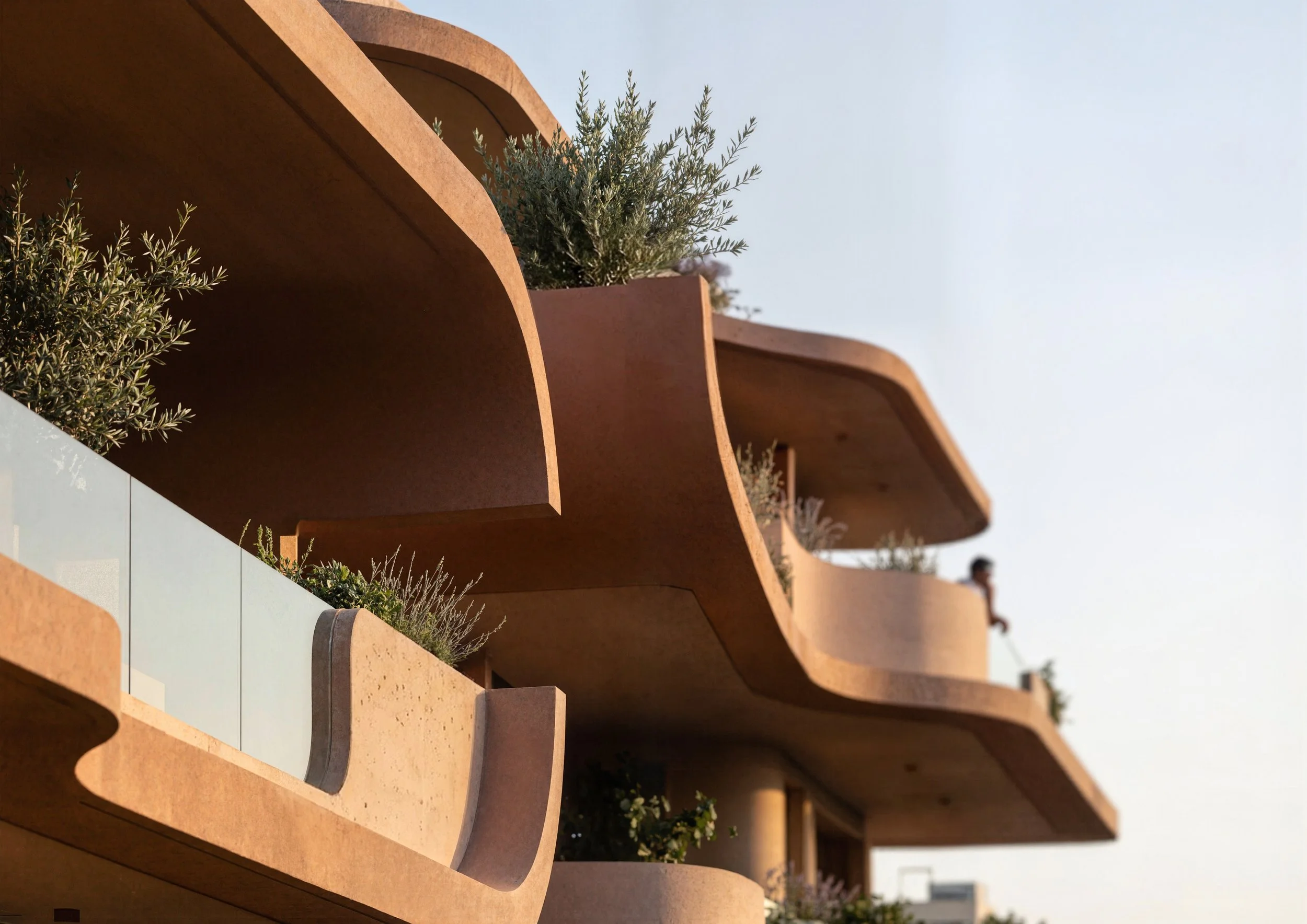
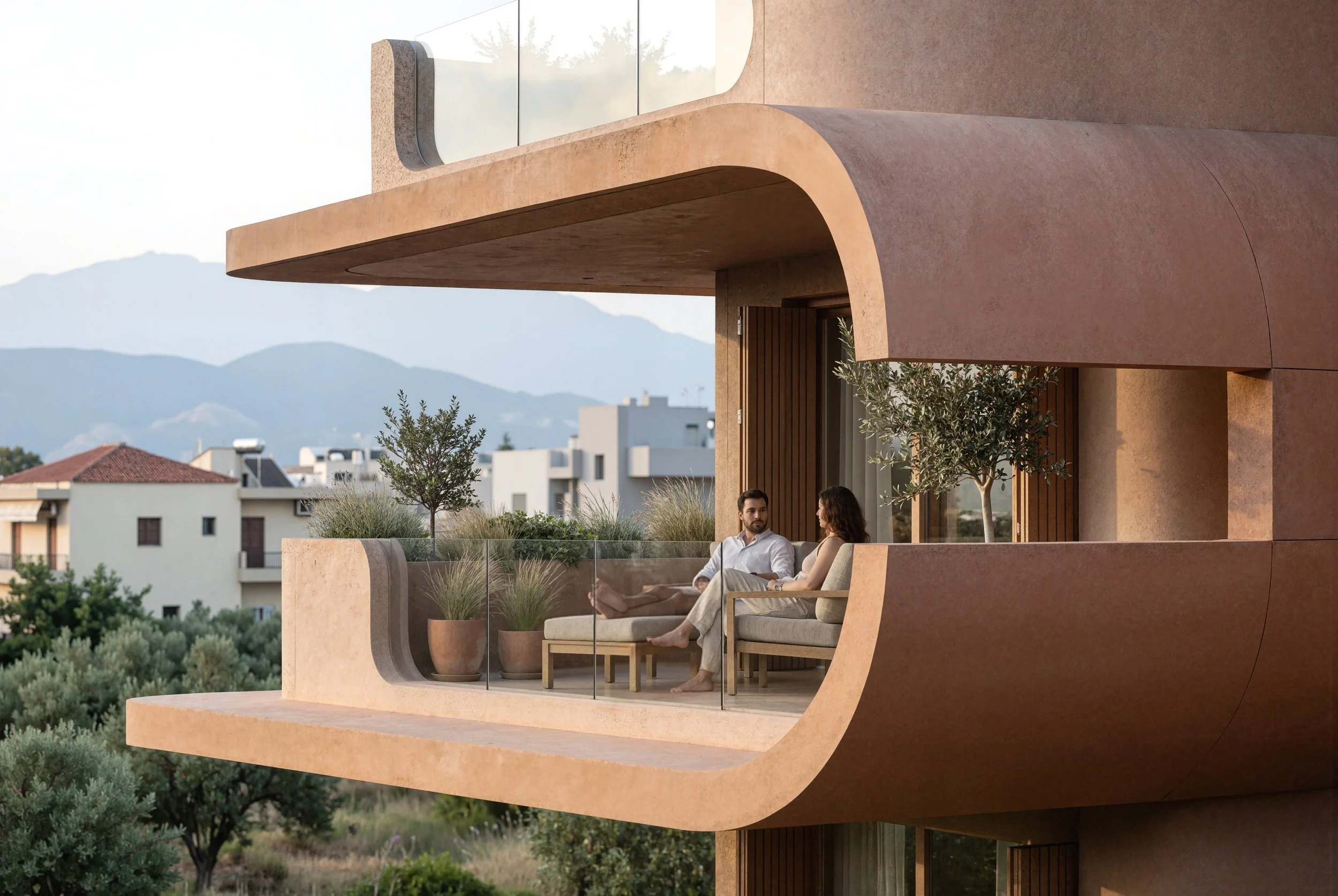
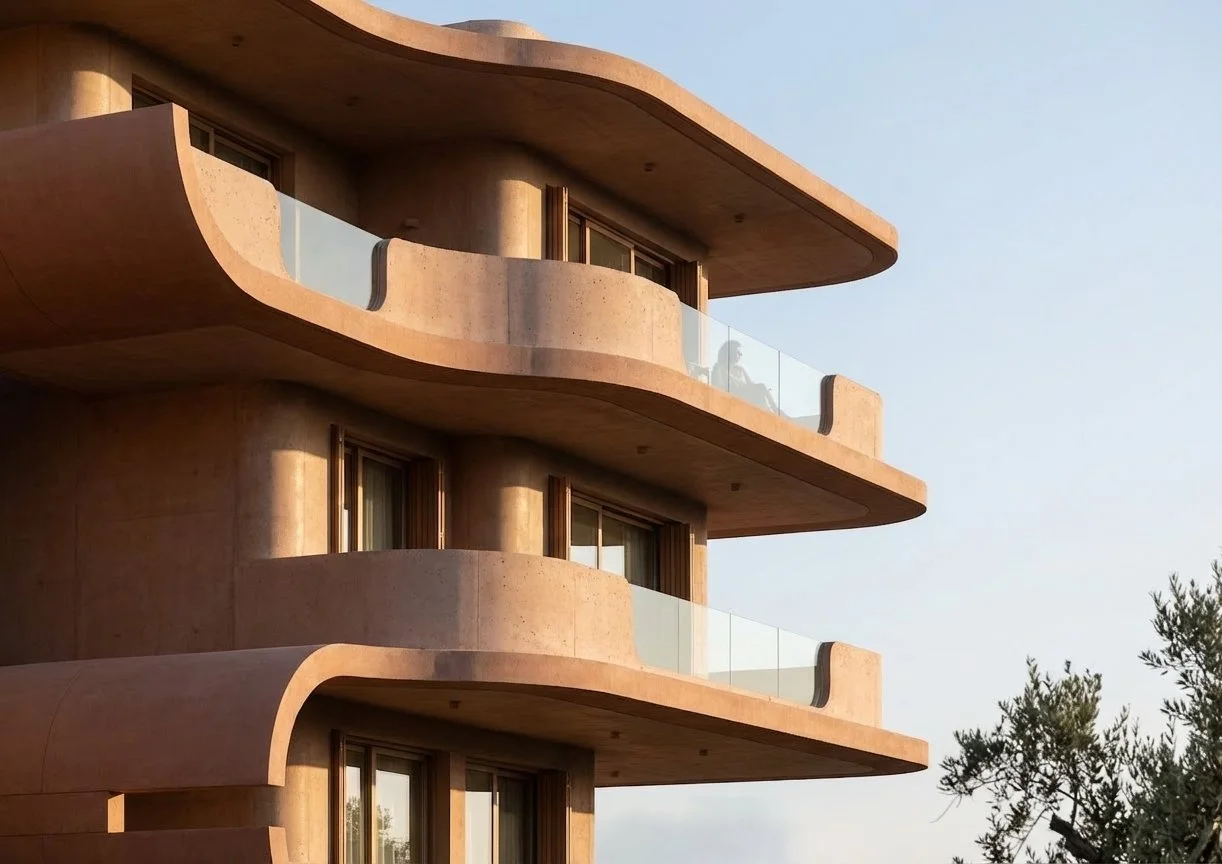
One of the defining architectural features of Urban Matter is the continuous ring of semi-enclosed balconies that wraps around the building. This inhabitable perimeter creates a deep façade, thickened through use rather than ornament.
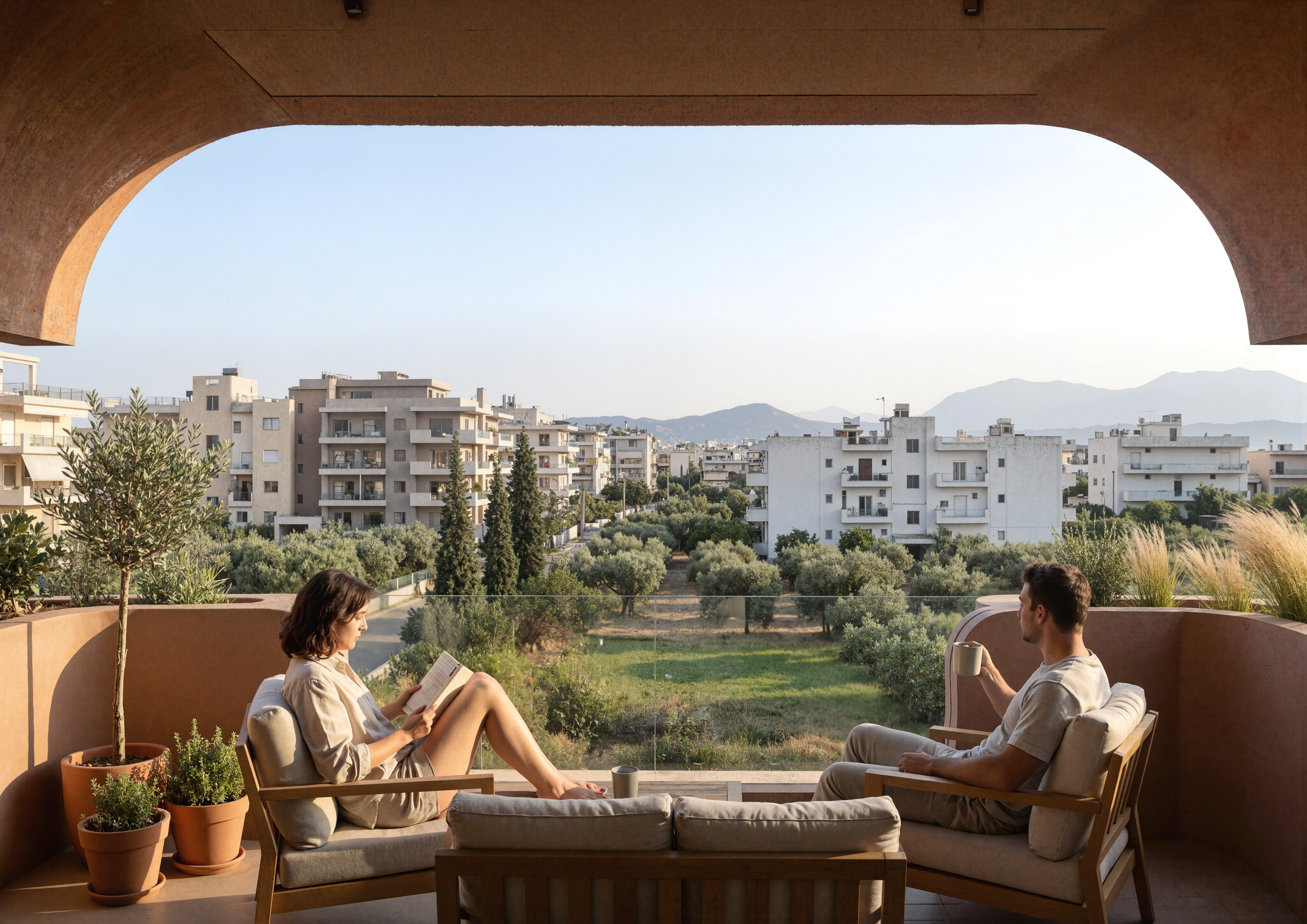
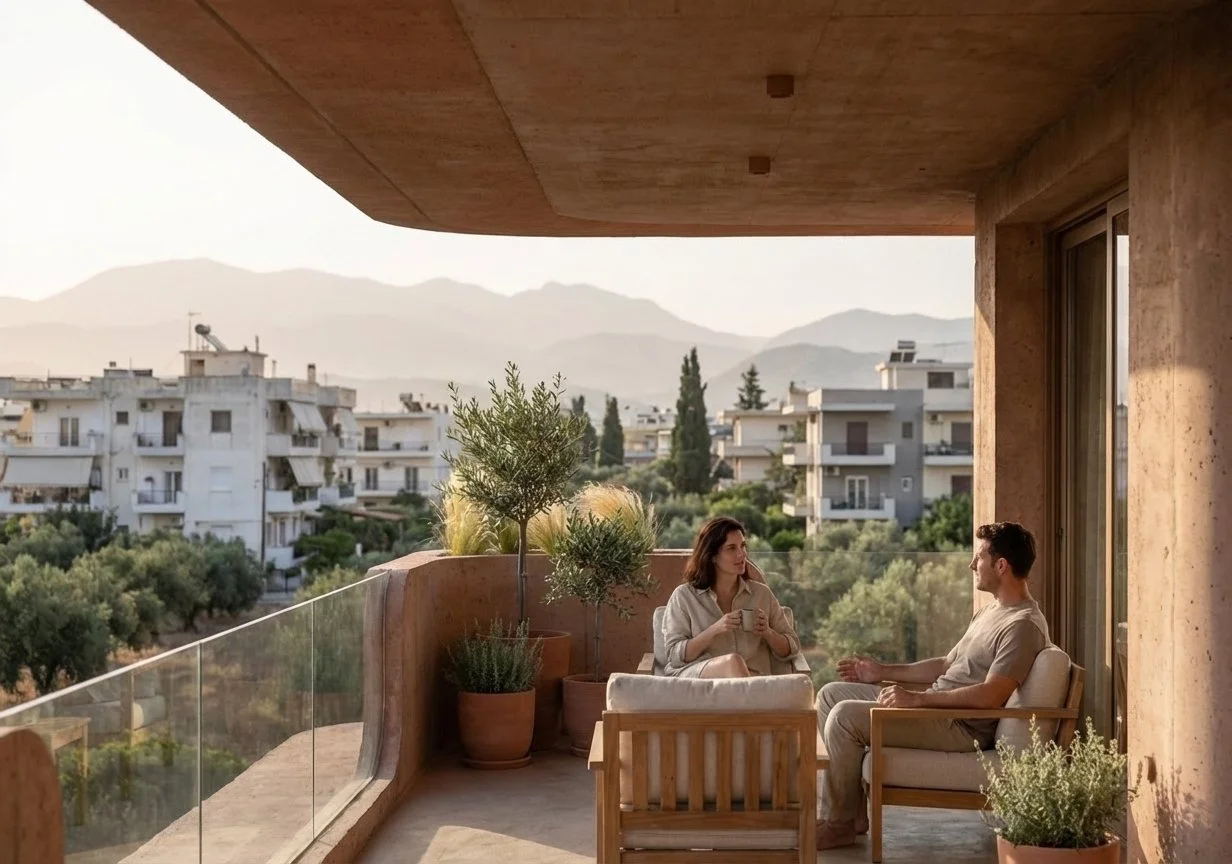
The balcony ring functions as a spatial buffer between interior domestic spaces and the public realm, offering shade, privacy, and opportunities for outdoor living while maintaining visual and environmental connection to the city. In this sense, the façade is not a surface but a zone—a lived threshold where private and collective conditions overlap.
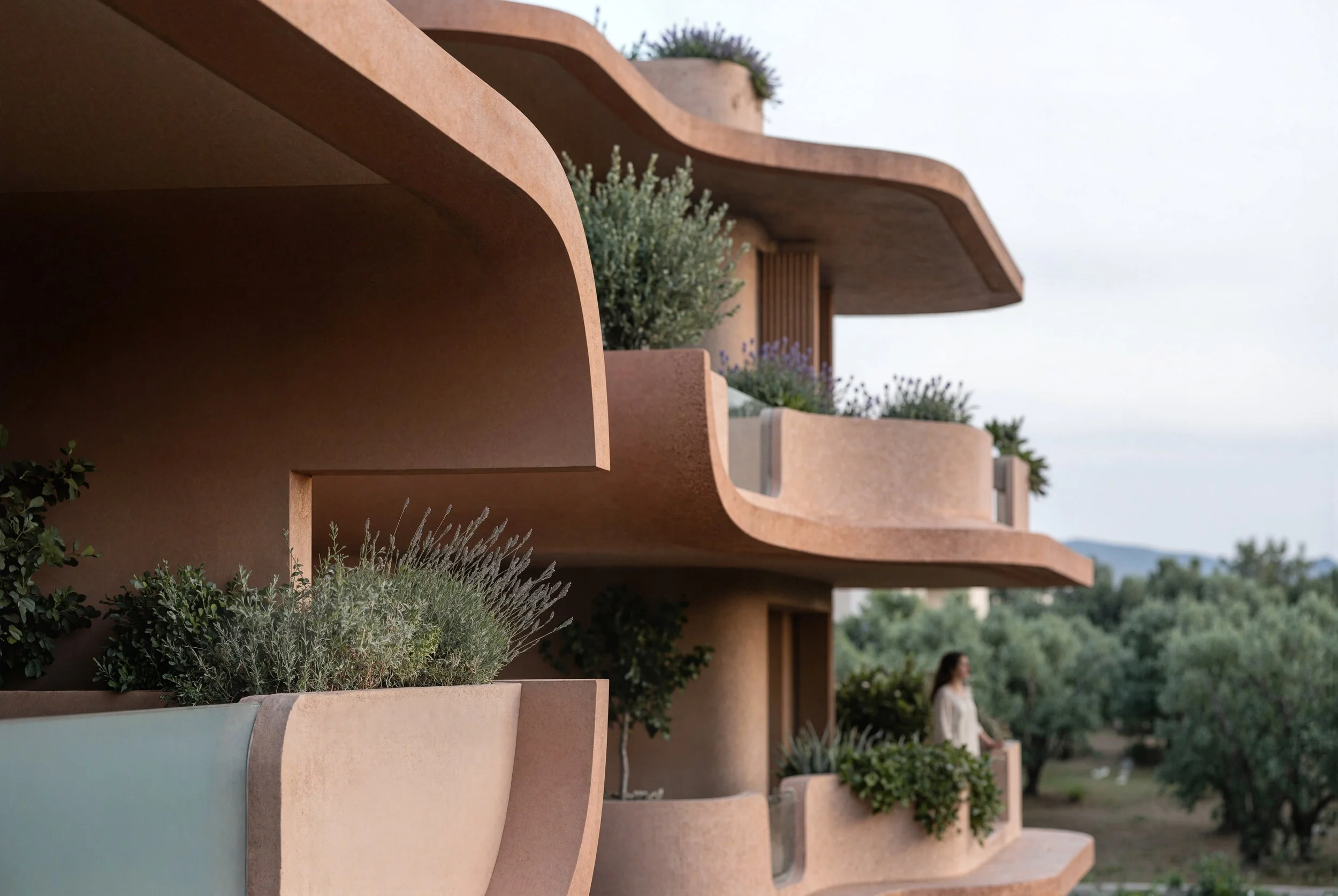
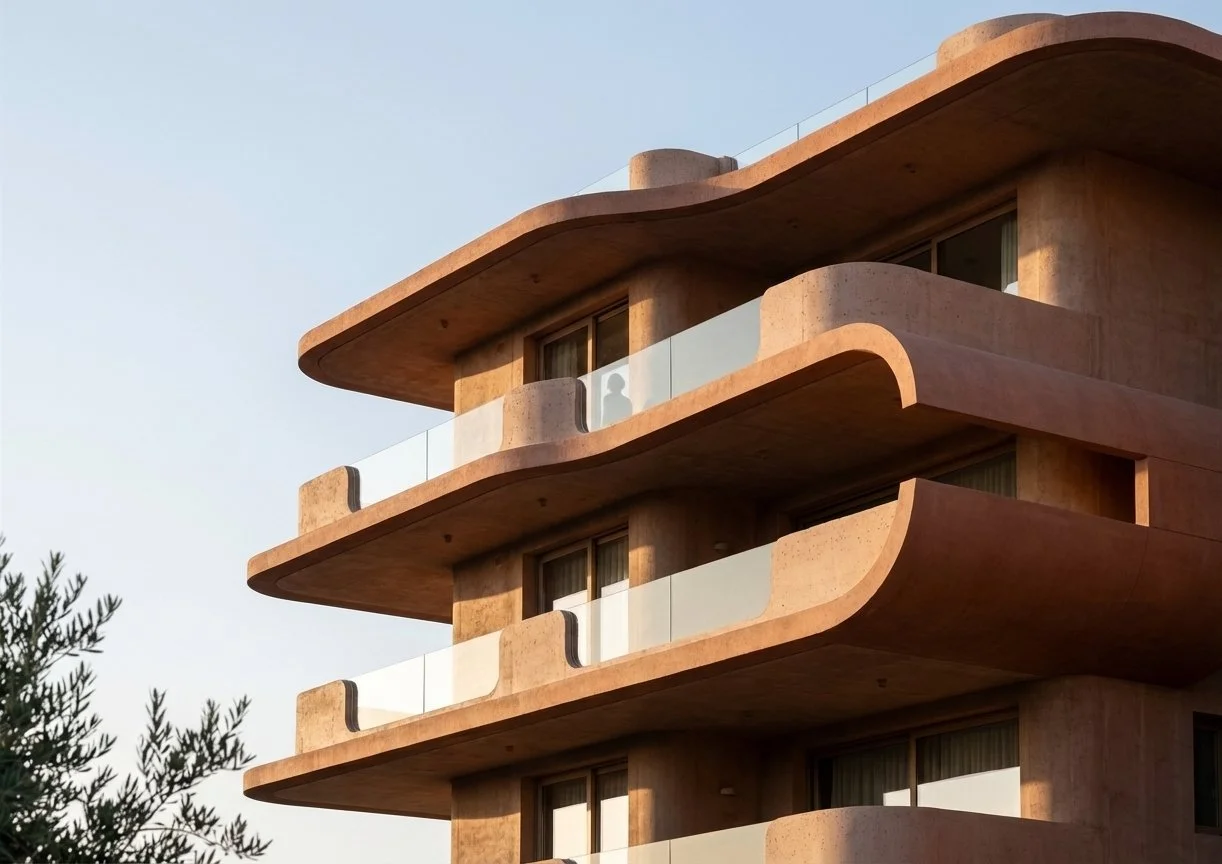
The semi-enclosed nature of the balconies is carefully calibrated. Screens, parapets, and structural elements modulate exposure, allowing residents to control degrees of openness according to climate, orientation, and personal preference. This layered façade responds to the Mediterranean context of Chania, addressing issues of solar protection, natural ventilation, and seasonal use.
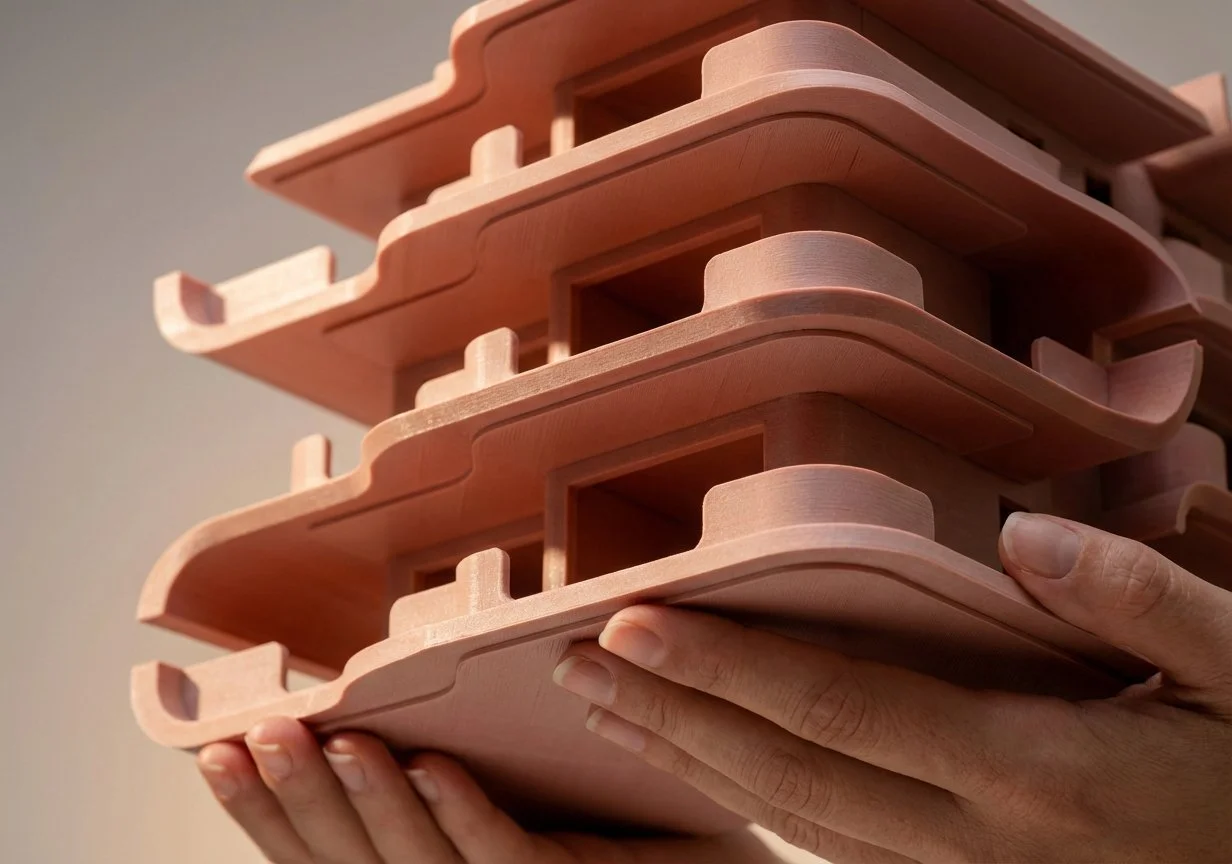
A key ambition of the project is to connect each apartment to the city across multiple scales. At the most immediate level, residents engage with the street through visual and acoustic proximity, maintaining awareness of urban life below. At a broader scale, the building’s orientation and balcony depth frame views toward the surrounding city fabric and the distant landscape, allowing residents to perceive their position within a wider urban and geographic context.
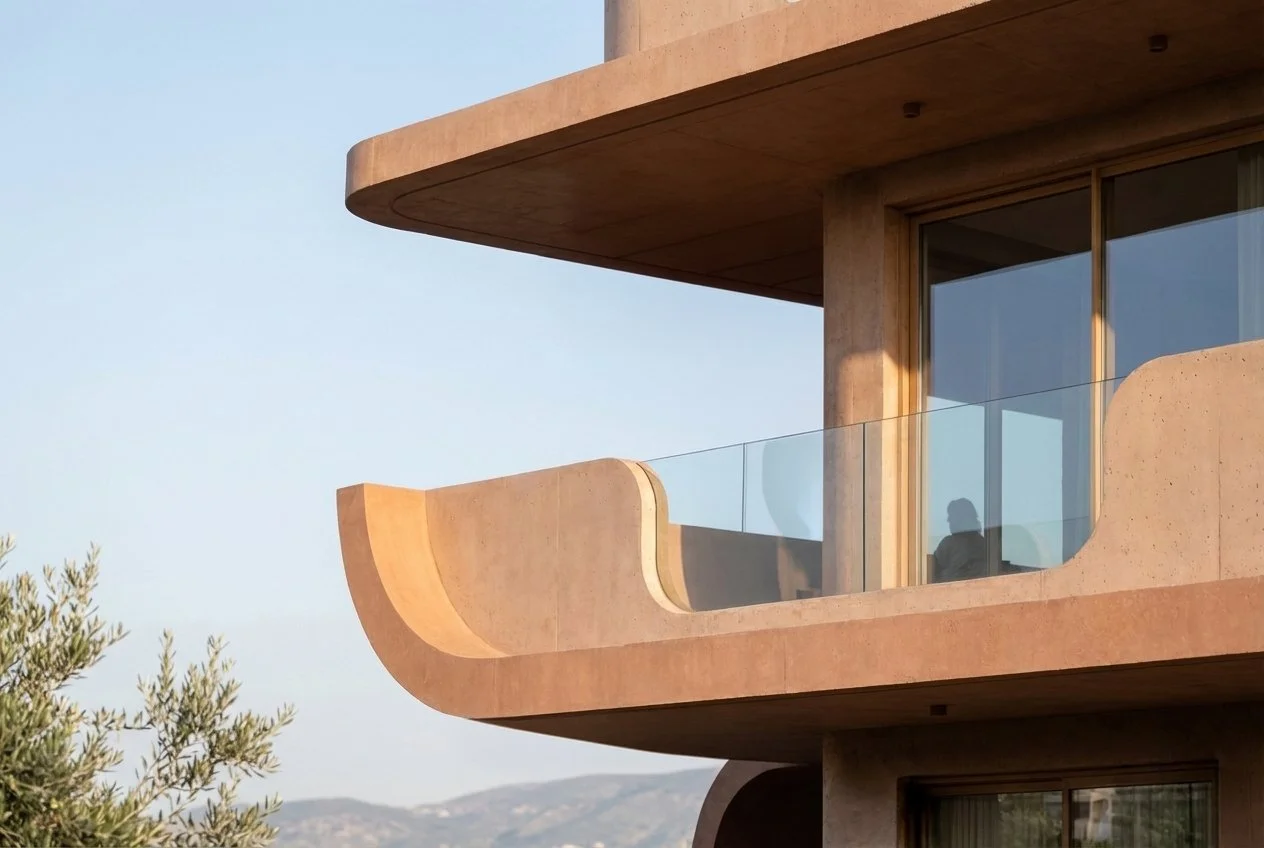
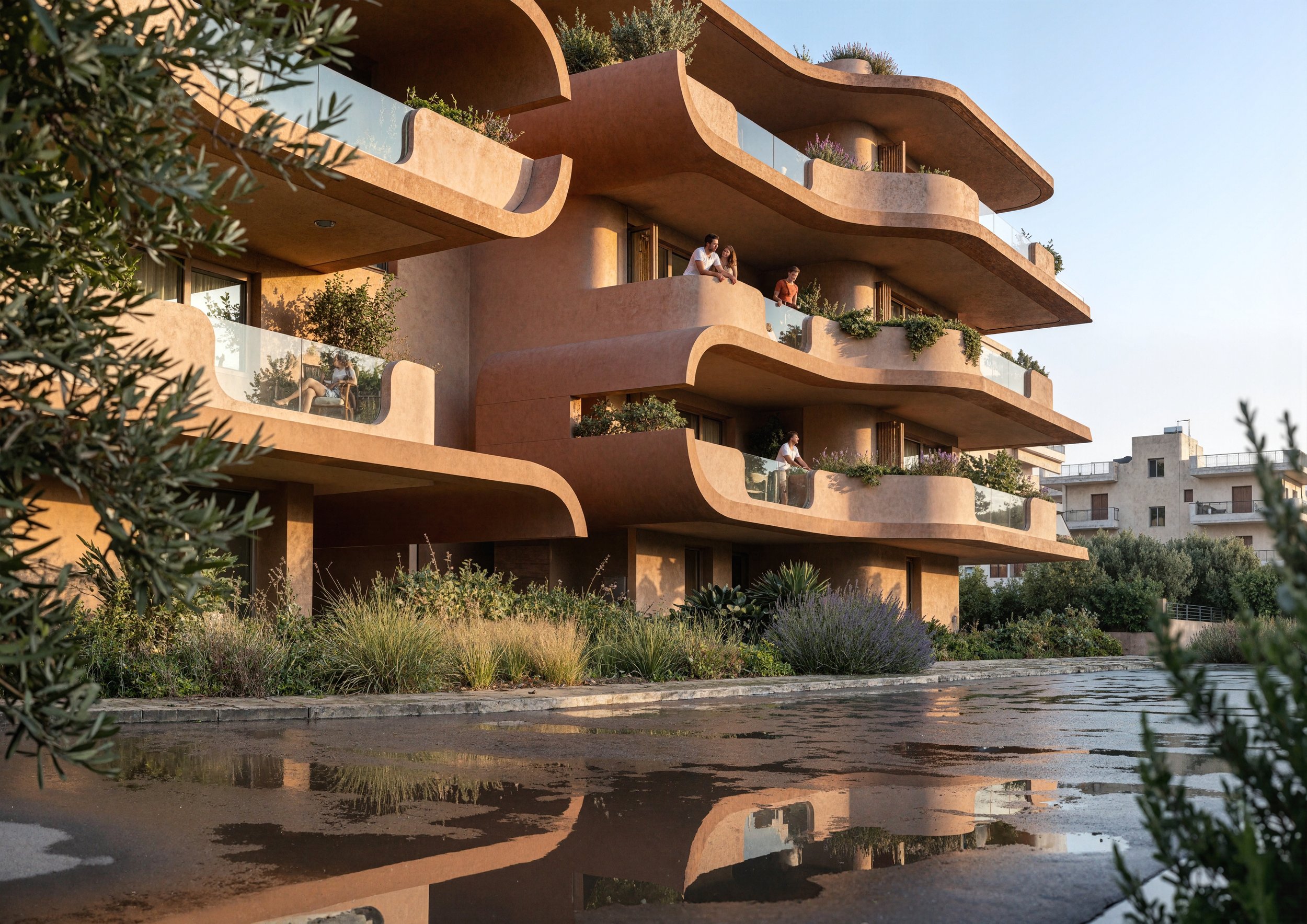
Material choices throughout the project are deliberately restrained, emphasizing durability, tactility, and coherence with the structural logic. The expression of concrete, plaster, and metal elements aligns with the modular framework, reinforcing the reading of the building as a system rather than a composition of independent gestures. This material discipline supports longevity and adaptability, allowing the building to age gracefully within its urban context.
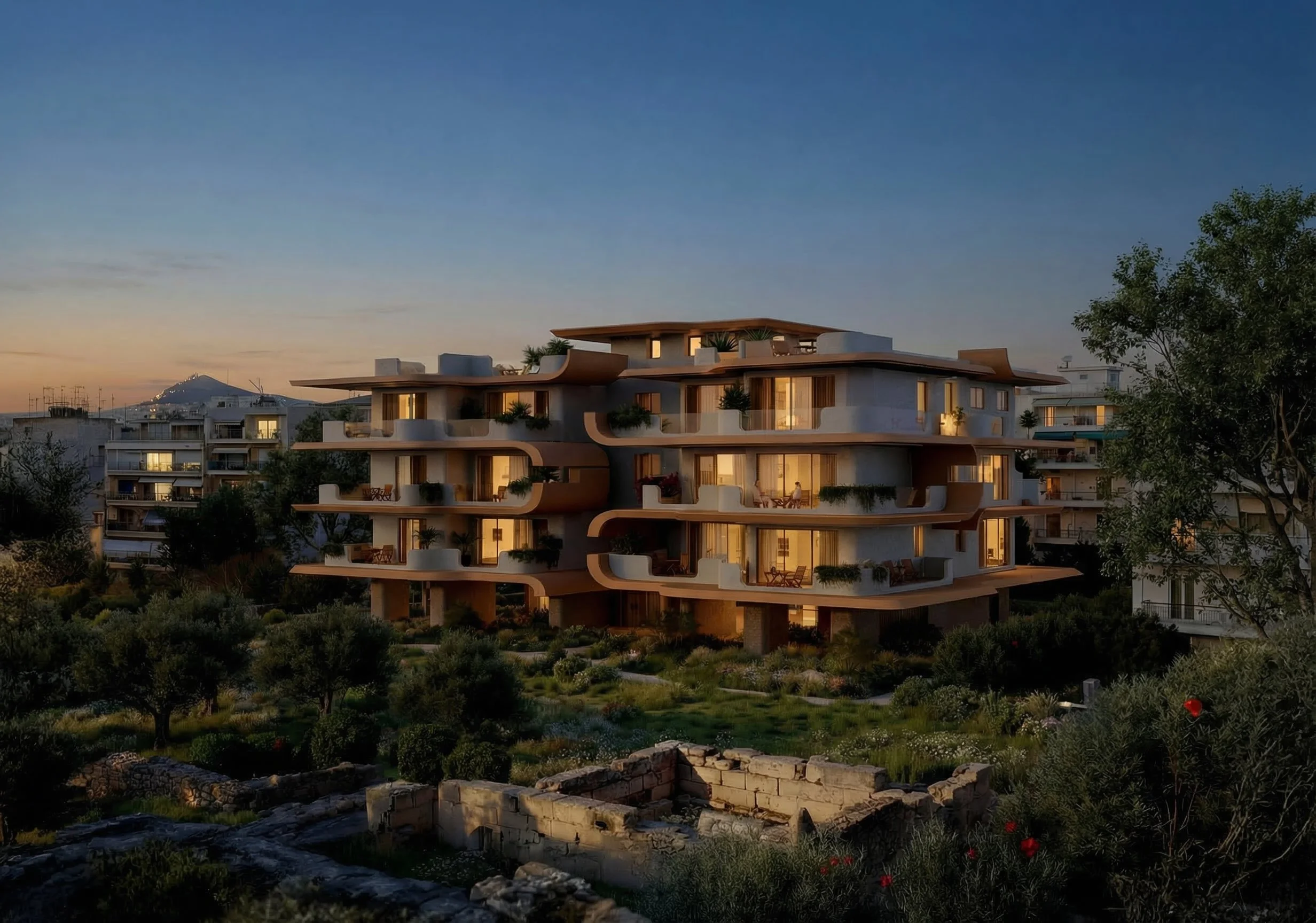
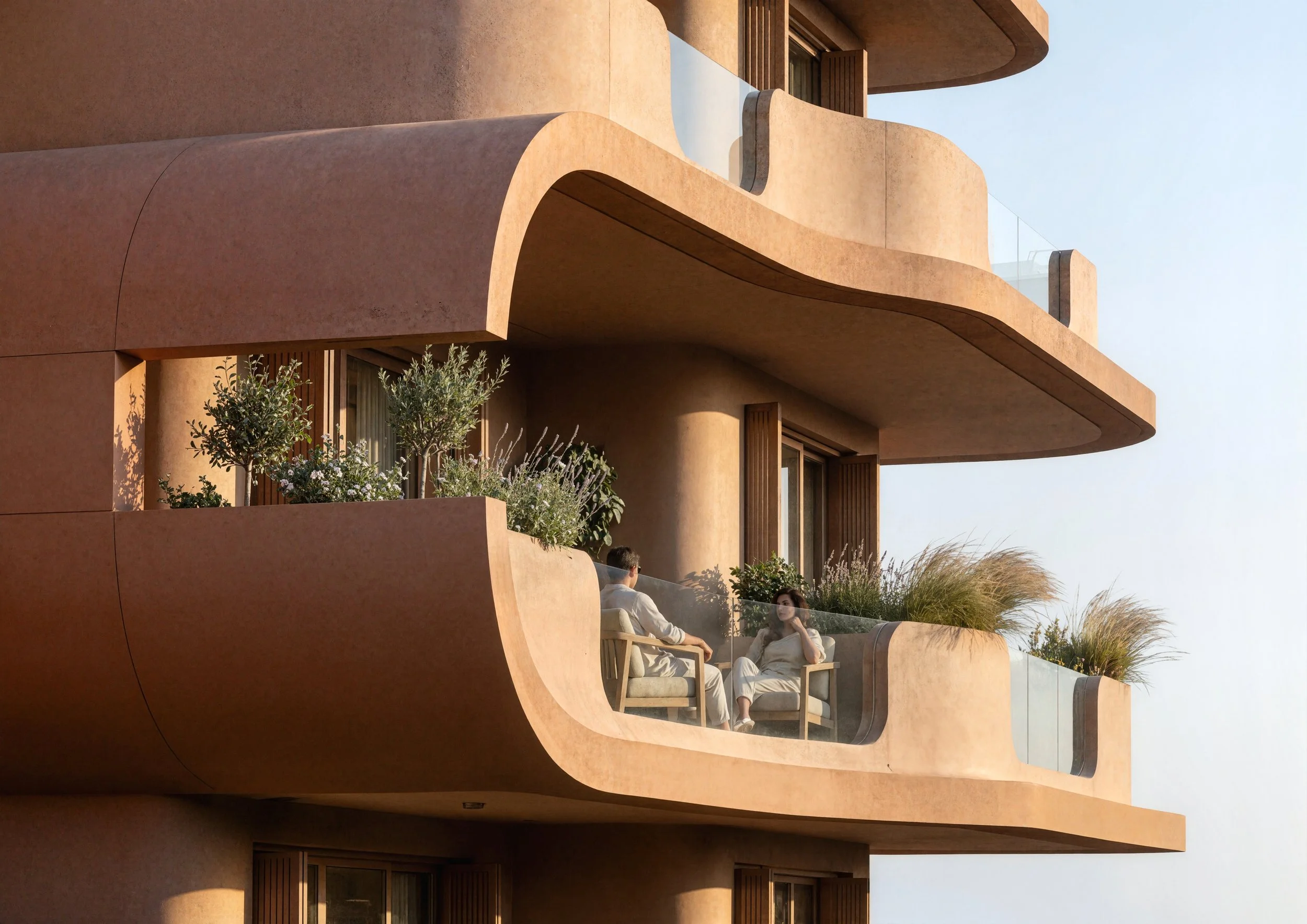
The repetition inherent in the modular system is not treated as a limitation but as a source of architectural strength. Subtle variations in balcony use, shading devices, and interior arrangements introduce diversity within the overarching order. Over time, the building is expected to accumulate traces of habitation—plants, furniture, and personal modifications—further enriching its façade and reinforcing its role as a living urban structure.
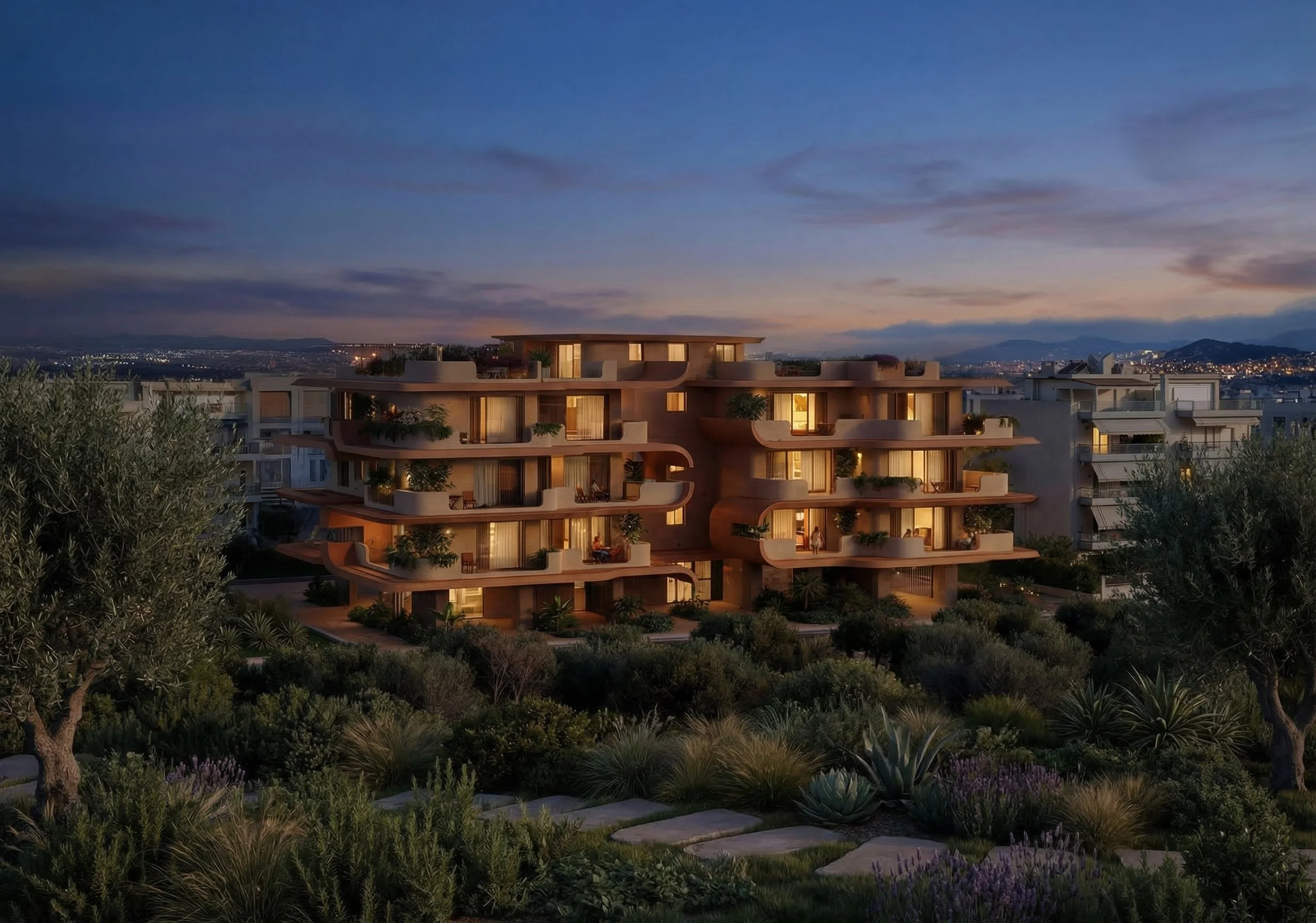
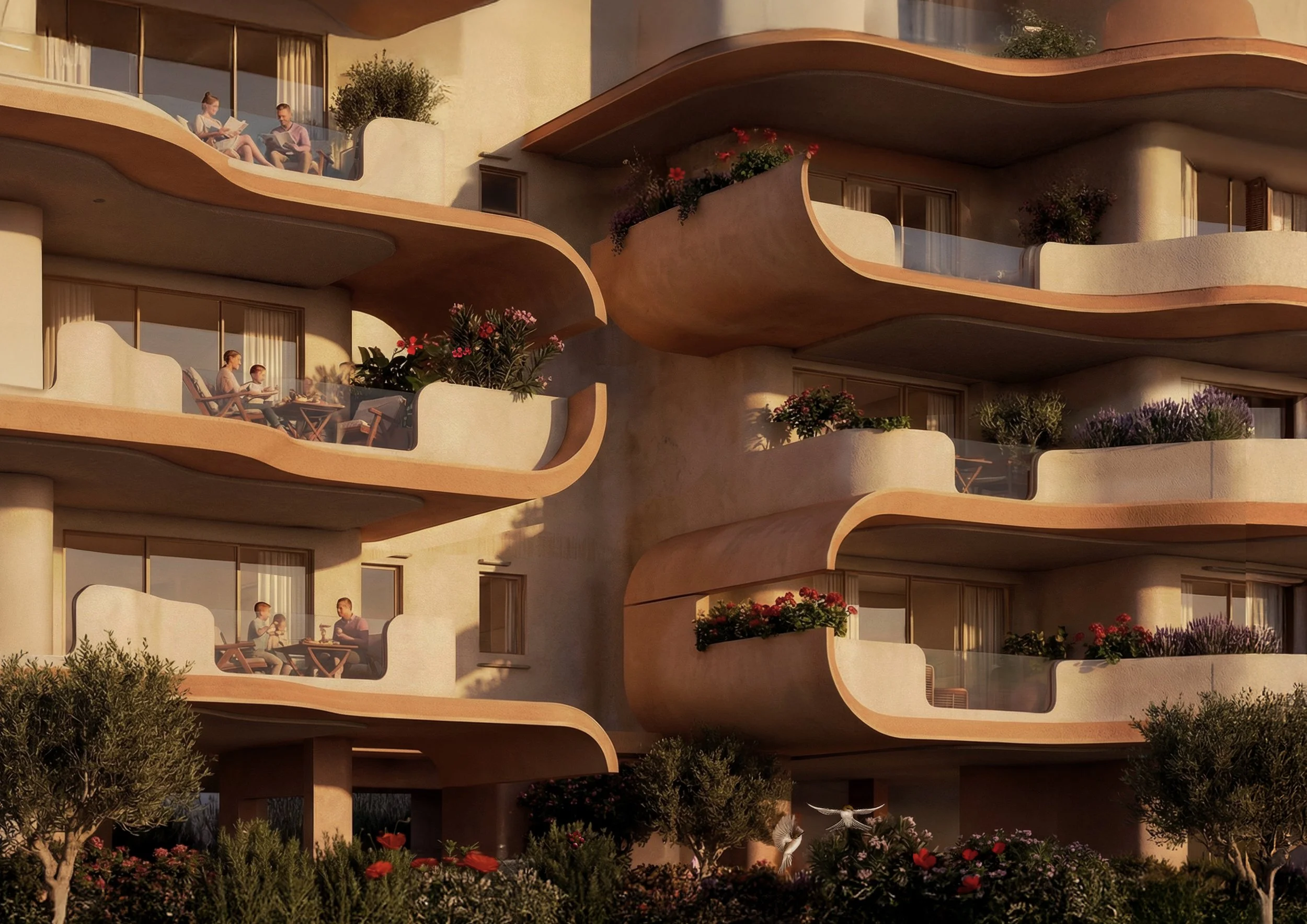
Ultimately, Urban Matter proposes housing as an active participant in the life of the city. Through its modular framework, deep inhabitable façade, and multi-scalar urban connections, the project redefines the relationship between dwelling and urbanity. It suggests that contemporary residential architecture can be both systematic and humane, collective and individual, precise and open-ended. In doing so, Urban Matter contributes to an ongoing conversation about how we live together in the city, not as isolated units, but as part of a shared urban fabric.
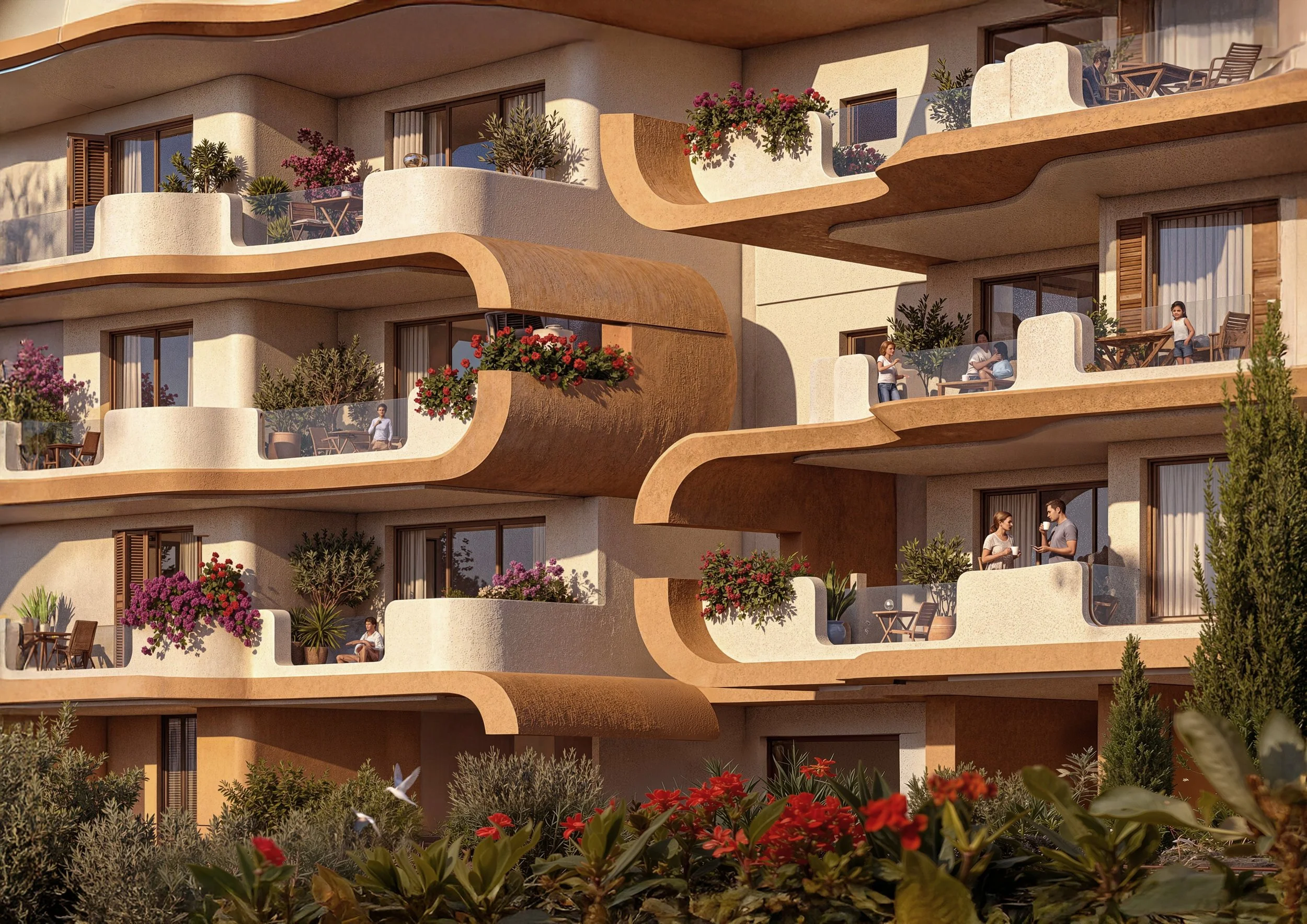
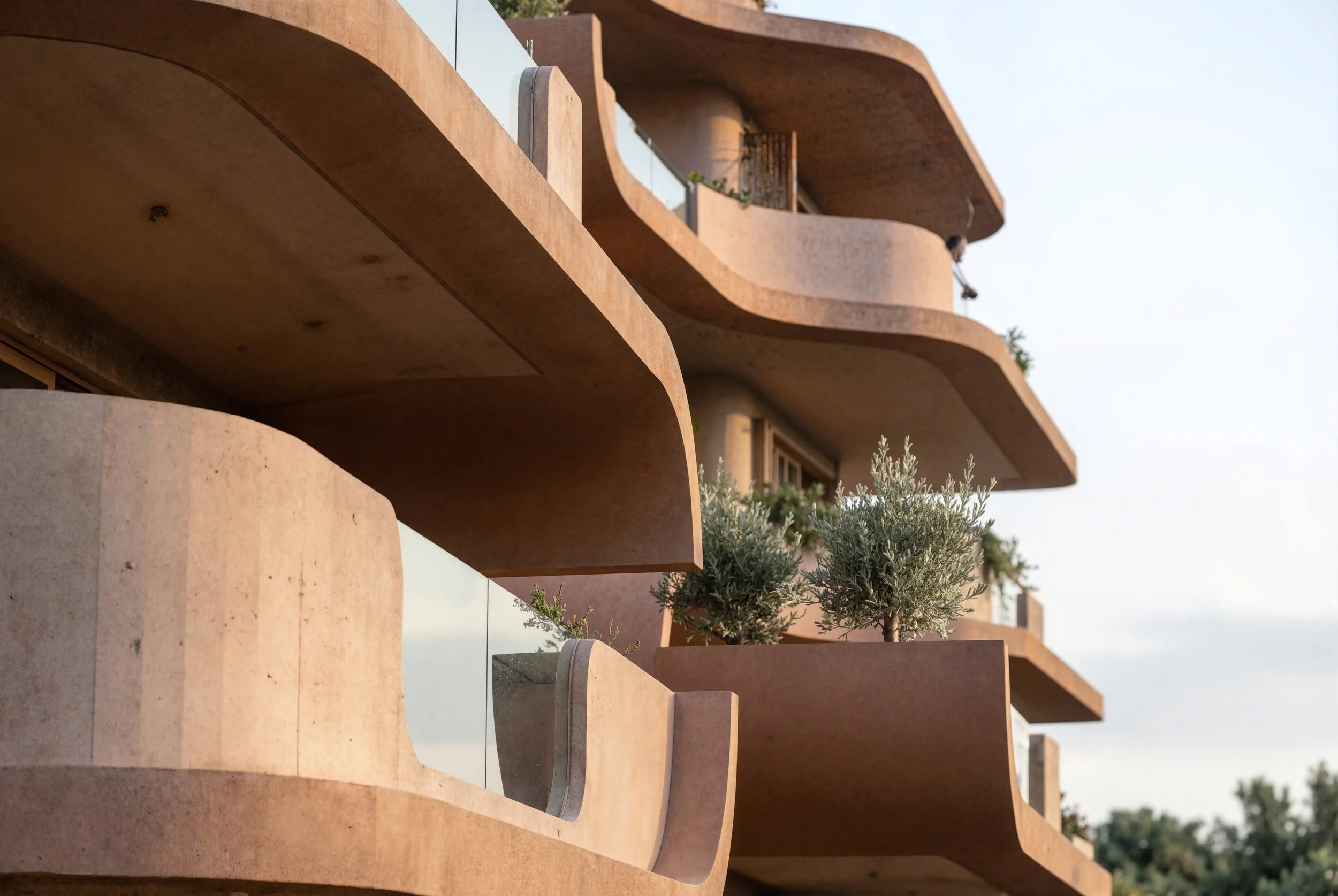
At a broader scale, the depth of the façade frames views toward the surrounding city fabric, while upper levels establish visual connections to the wider urban horizon and landscape. These layered relationships reinforce a sense of belonging, situating domestic life within a larger collective and geographic context.
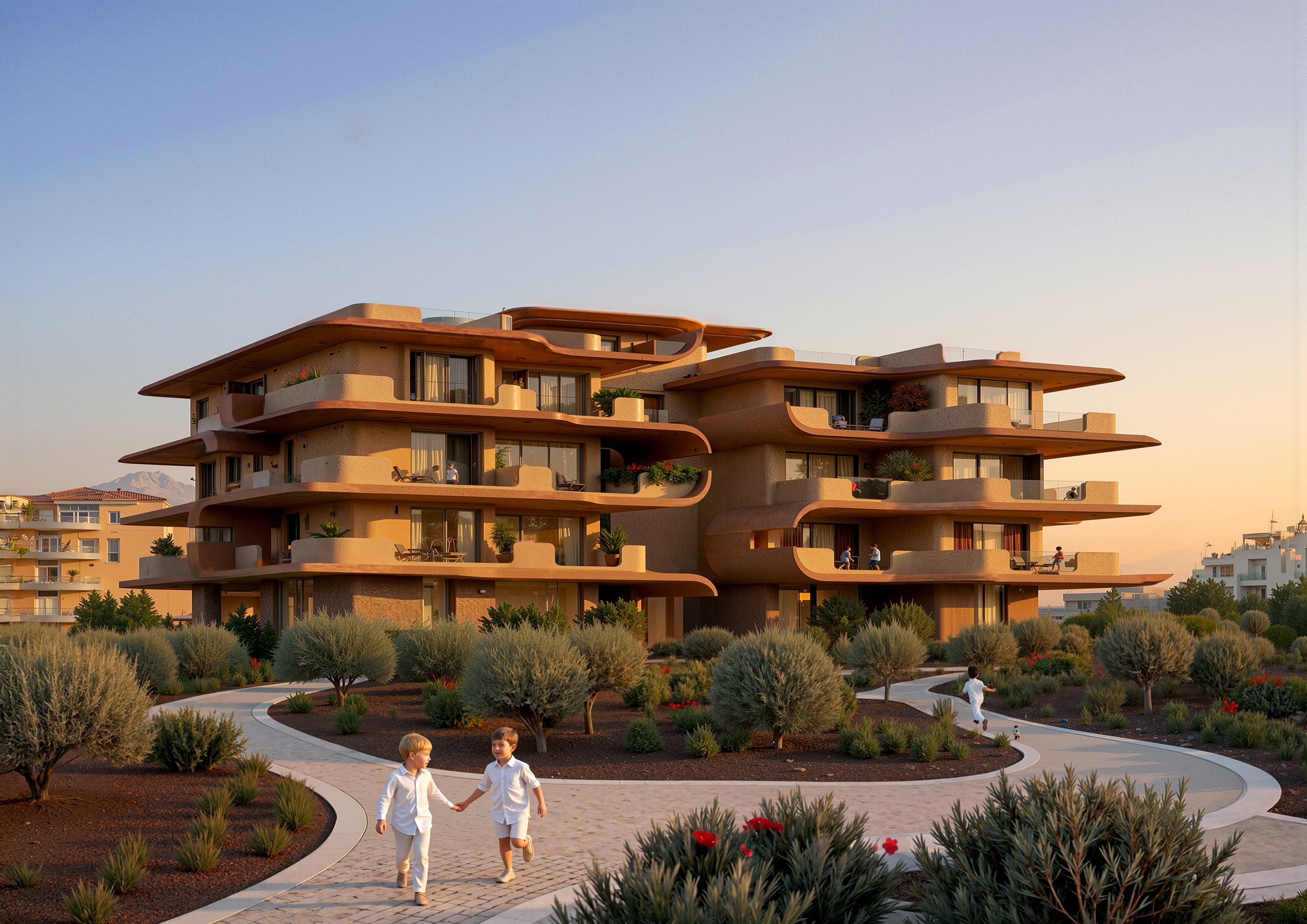
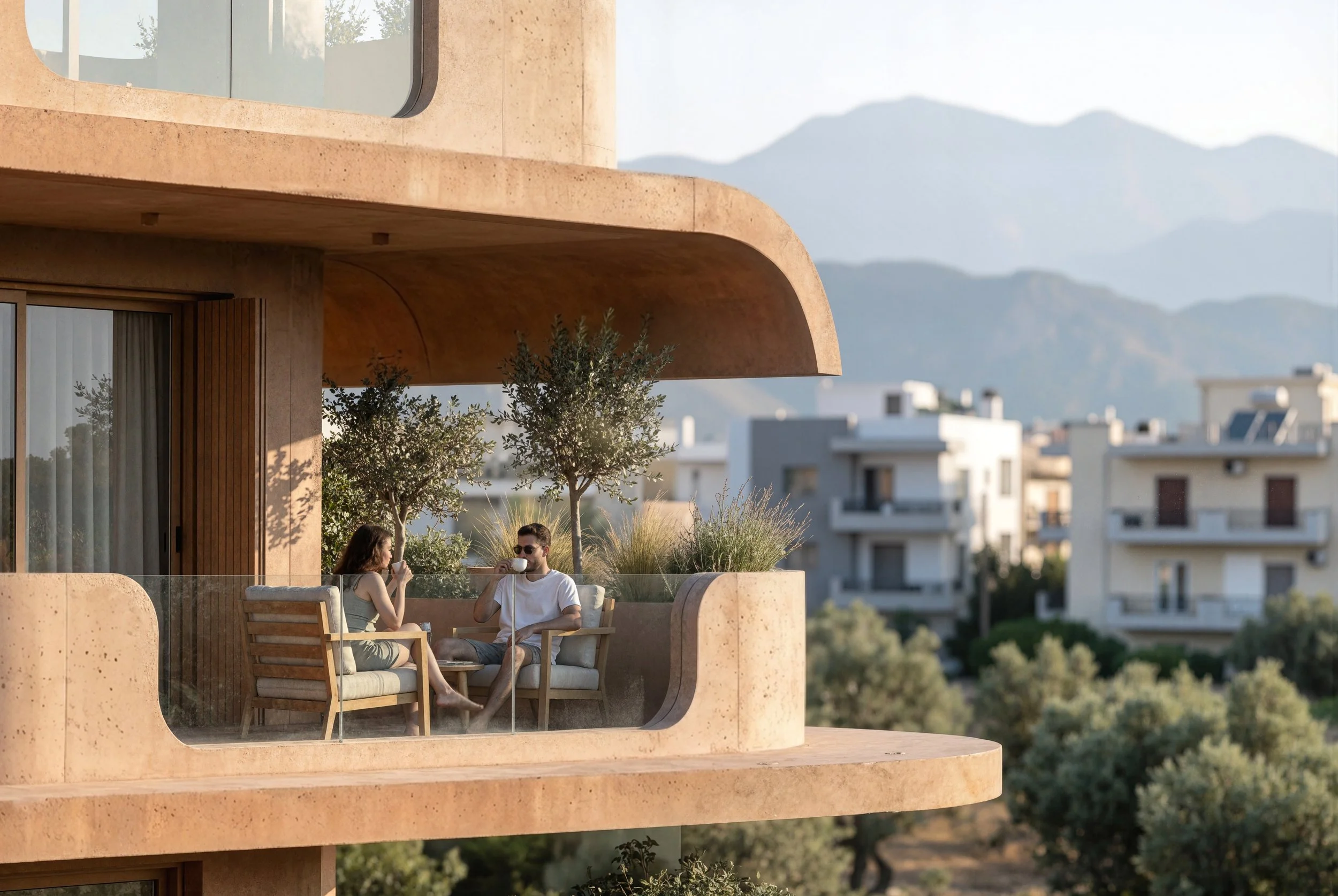
The building acknowledges its responsibility to the public realm, reinforcing the idea that residential architecture is inseparable from the life of the street.
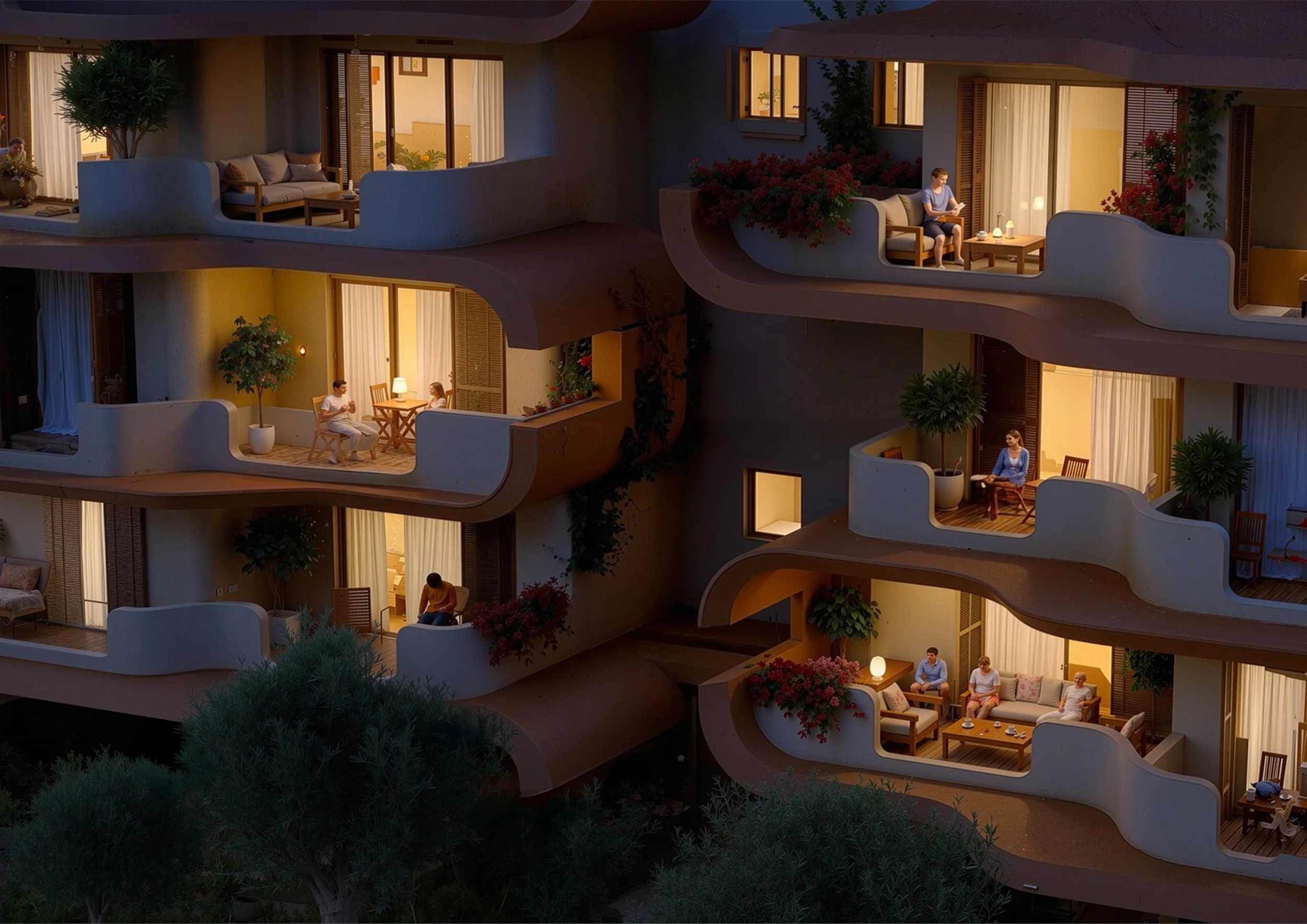
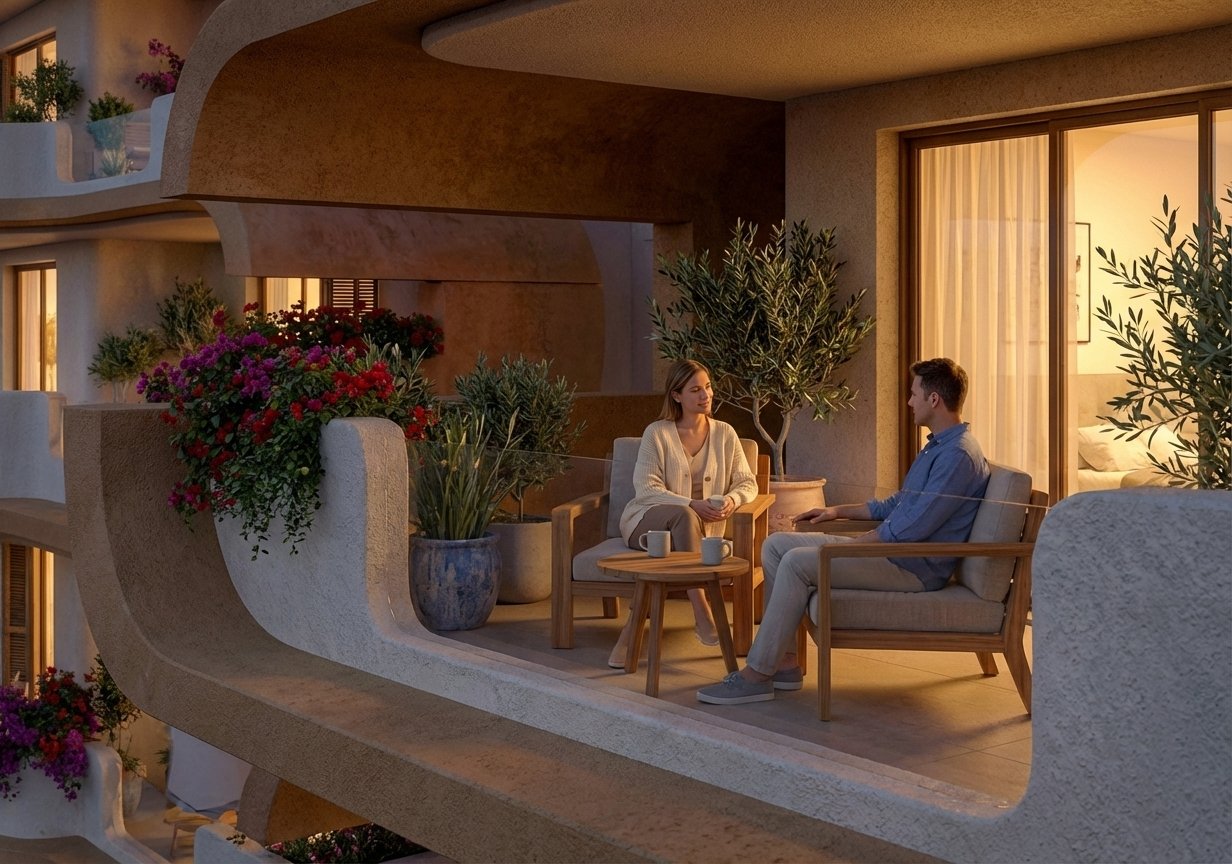
This material discipline supports longevity and adaptability, enabling the building to age gracefully and accommodate change without losing its architectural clarity.
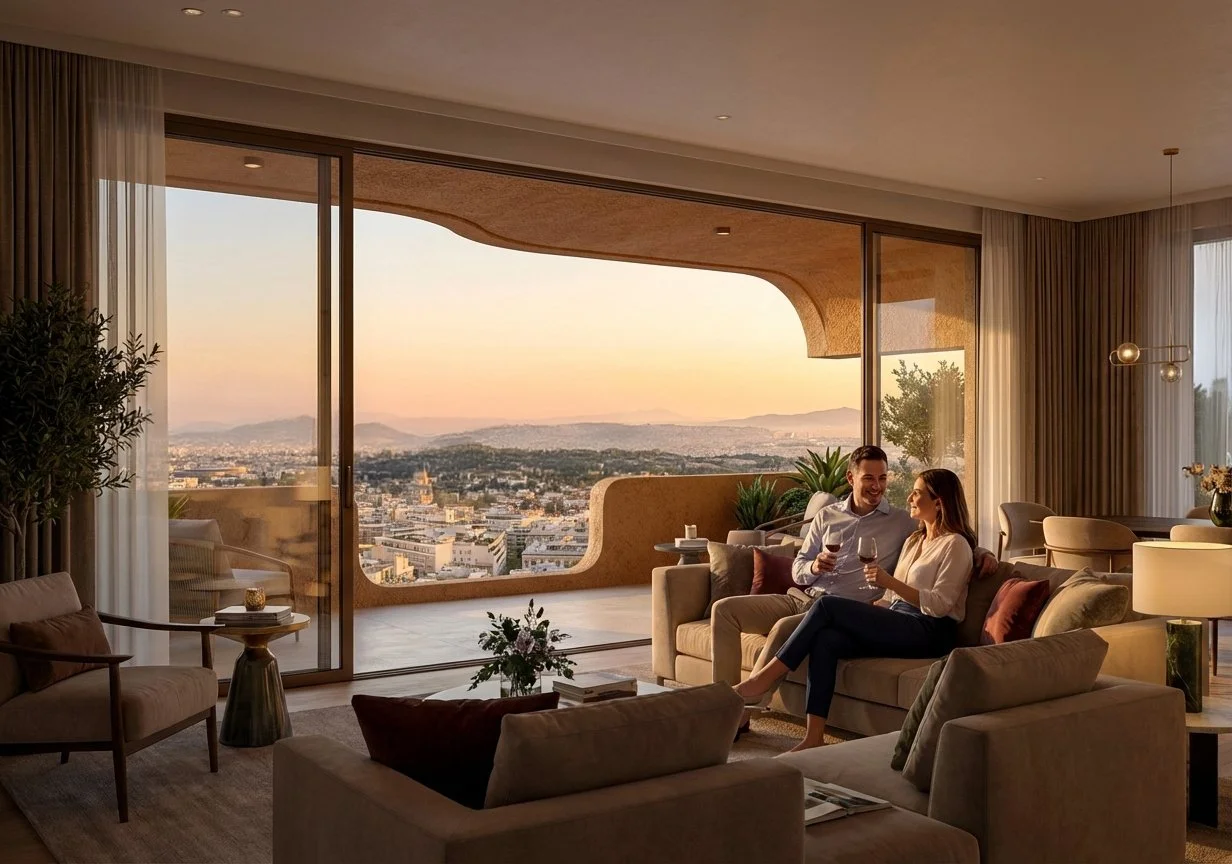
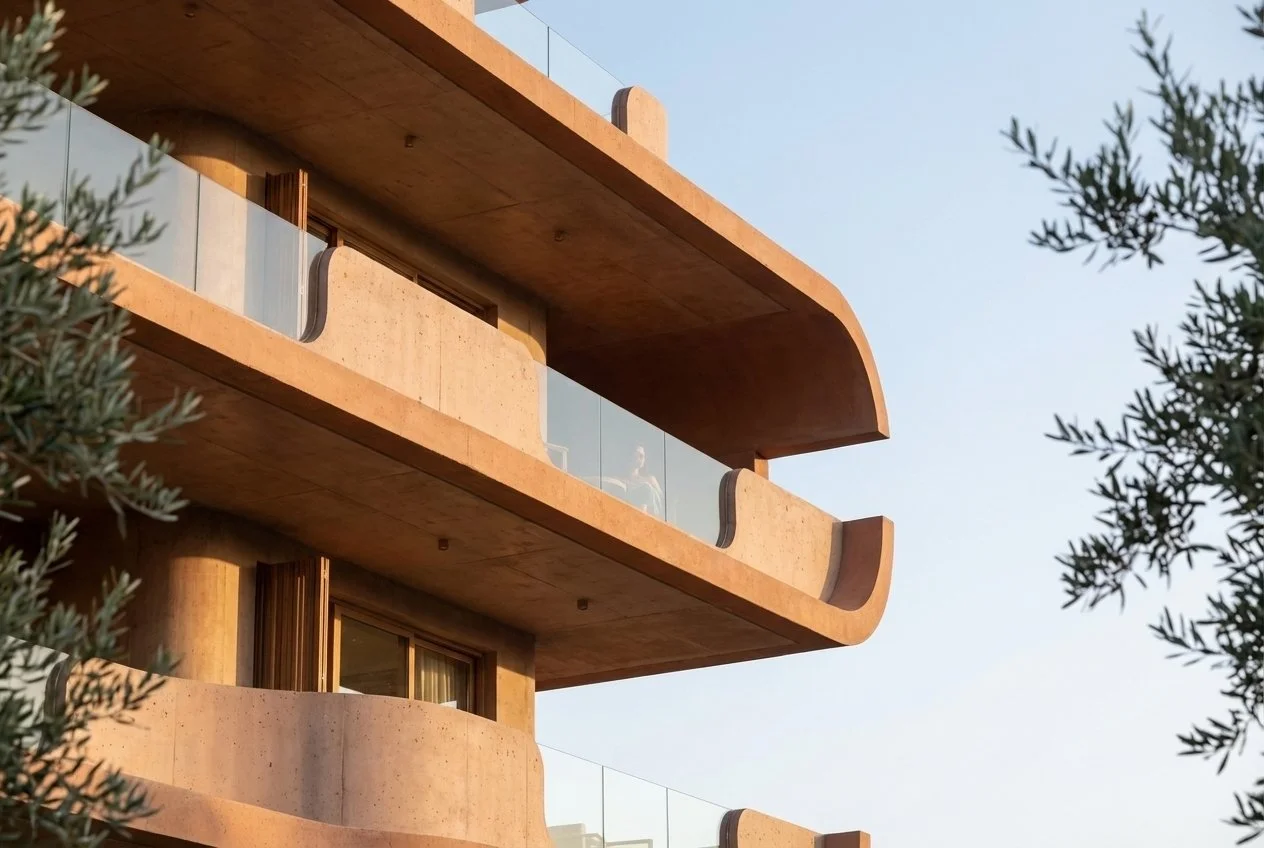

Urban Matter also addresses contemporary questions of density and sustainability. By consolidating multiple dwellings within a compact footprint, the project supports efficient land use while maintaining high standards of spatial quality. Shared infrastructure, passive environmental strategies, and reduced reliance on artificial systems contribute to a more sustainable mode of urban living. Density is treated not as a constraint, but as an opportunity to foster proximity, interaction, and collective awareness.
In reinterpreting the polykatoikia, Urban Matter positions itself within a lineage of Greek urban housing while critically responding to its limitations. The project retains the typology’s adaptability and social openness while refining its environmental performance, spatial clarity, and urban engagement. The result is a building that feels both familiar and forward-looking—rooted in local architectural culture yet responsive to contemporary conditions.
As a contemporary residential project, Urban Matter suggests that the future of urban housing lies not in formal novelty, but in the careful re-articulation of systems that have historically shaped collective life. Its restrained materiality, clear structural logic, and adaptability over time position the building as an open framework rather than a fixed architectural statement.