

The project investigates active wood bending through robotic fabrication. The process is divided into three stages: steaming the timber, bending it using a robotic arm, and securing it in position until the material cools and regains its rigidity. The research began with an analogue approach and gradually evolved into a fully robotic fabrication process.
By applying controlled robotic force while respecting the inherent properties of the material, the research achieved significant improvements in precision, repeatability, and fabrication quality. Progressing from simple two-dimensional curves to more complex three-dimensional geometries, the study developed a catalogue of design possibilities that was subsequently applied to the challenge of redesigning the façade of the Plug-In Building by People's Architecture Office.
The study explores how robotic wood bending can generate new architectural possibilities by establishing a closer relationship between material behaviour, computation, and fabrication. In doing so, it reconsiders the architect's role and tools while proposing new ways in which robotics and traditional materials can coexist within the construction processes of the twenty-first century.
Robotic wood bending -

-
design strategy
wood & robotic parts preparation

-
robotic process
wood bending

-
sensing
feedback on wood behaviour

Robotic Frabrication
3-Dimensional Bends
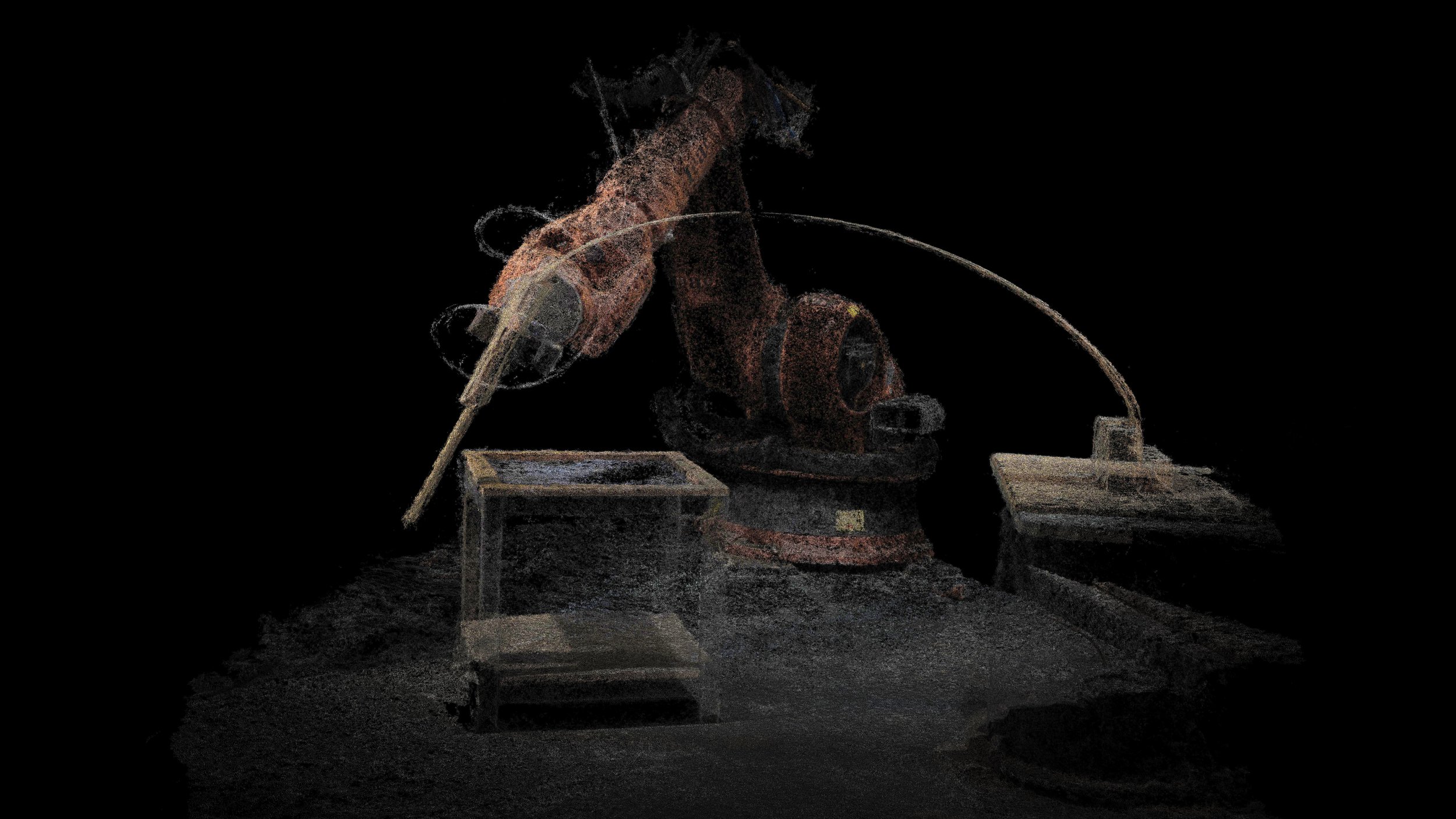
live feedback
-
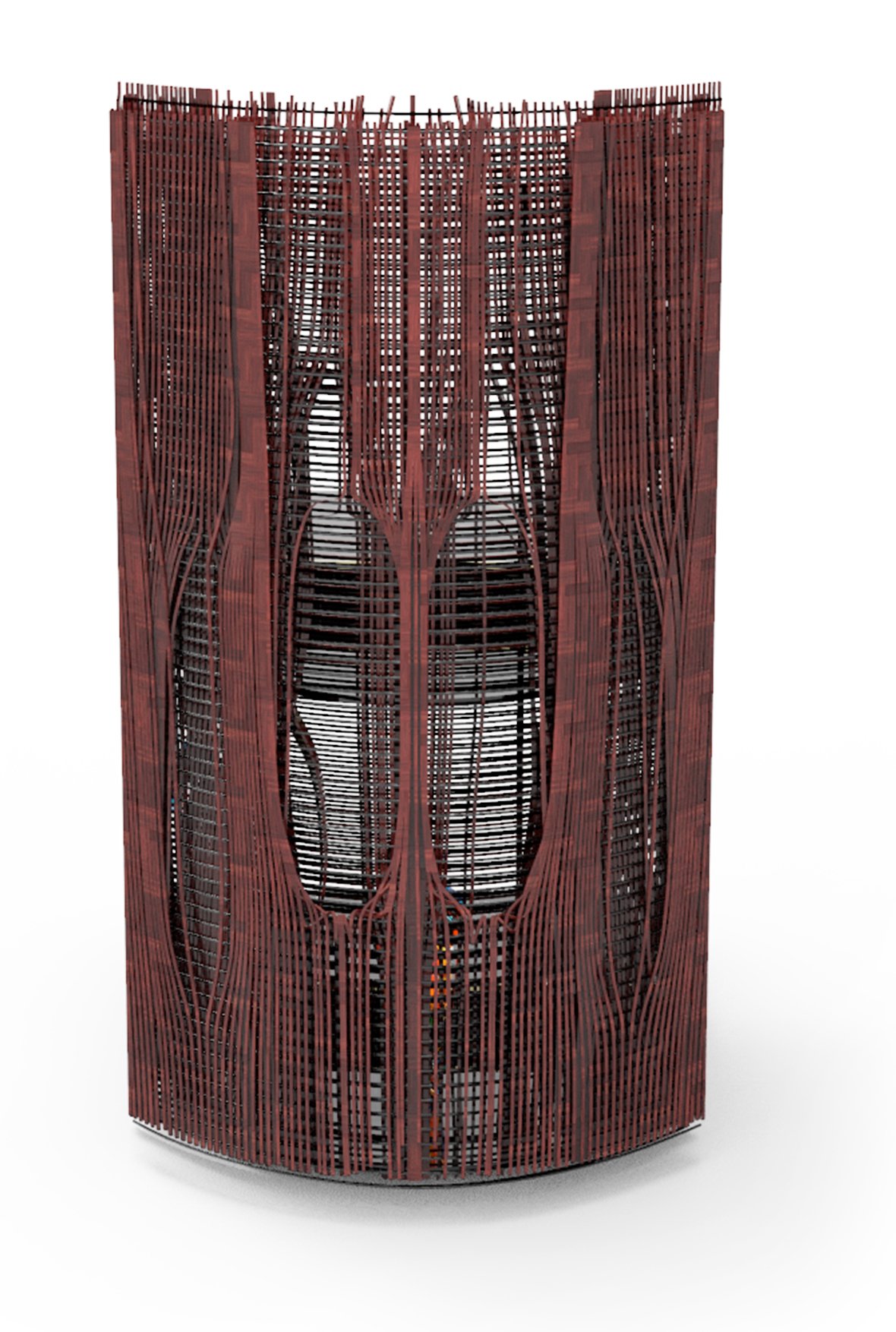
lower level
x amount of wood sheet pieces & metal connection rods
-

middle level
x/2 ““
-

upper level
x/4 ““

Robotic Active Wood Bending is a project of IaaC, Institute for Advanced Architecture of Cataloniadeveloped at Master in Robotics and Advanced Construction in 2019 by:Students: Alexandros Varvantakis, Cedric Droogmans and Roberto VargasFaculty: Alexandre Dubor, Raimund Krenmueller