Urban Matter

Total Area : 950sqm

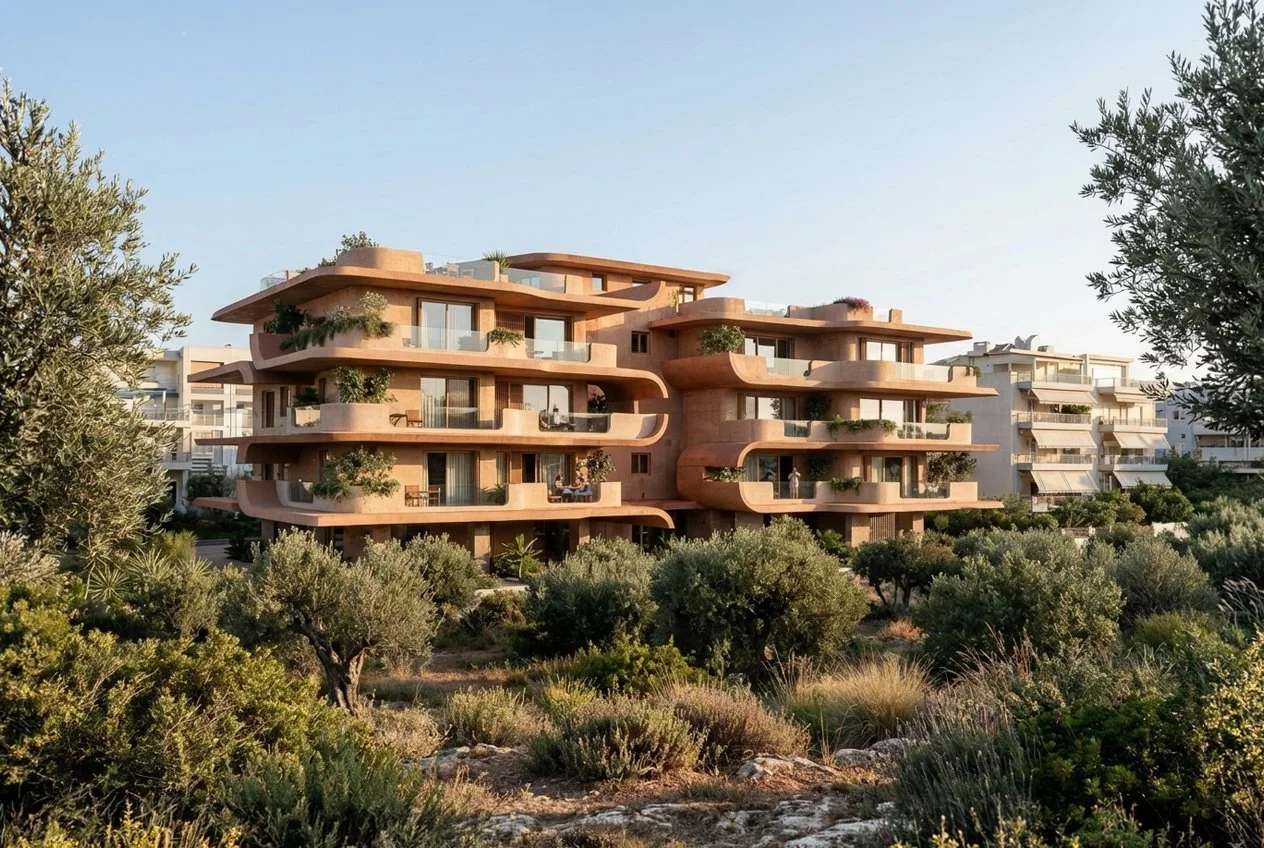
Urban Matter is a residential development in Chania, Greece, conceived as a contemporary reinterpretation of the Greek polykatoikia—not as a nostalgic reference, but as a system-based architectural framework capable of responding to present-day urban, social, and environmental conditions. Rather than reproducing the familiar typology through stylistic gestures, the project examines the polykatoikia as an organizational device: a repeatable structure that historically mediated between private life and the collective city.
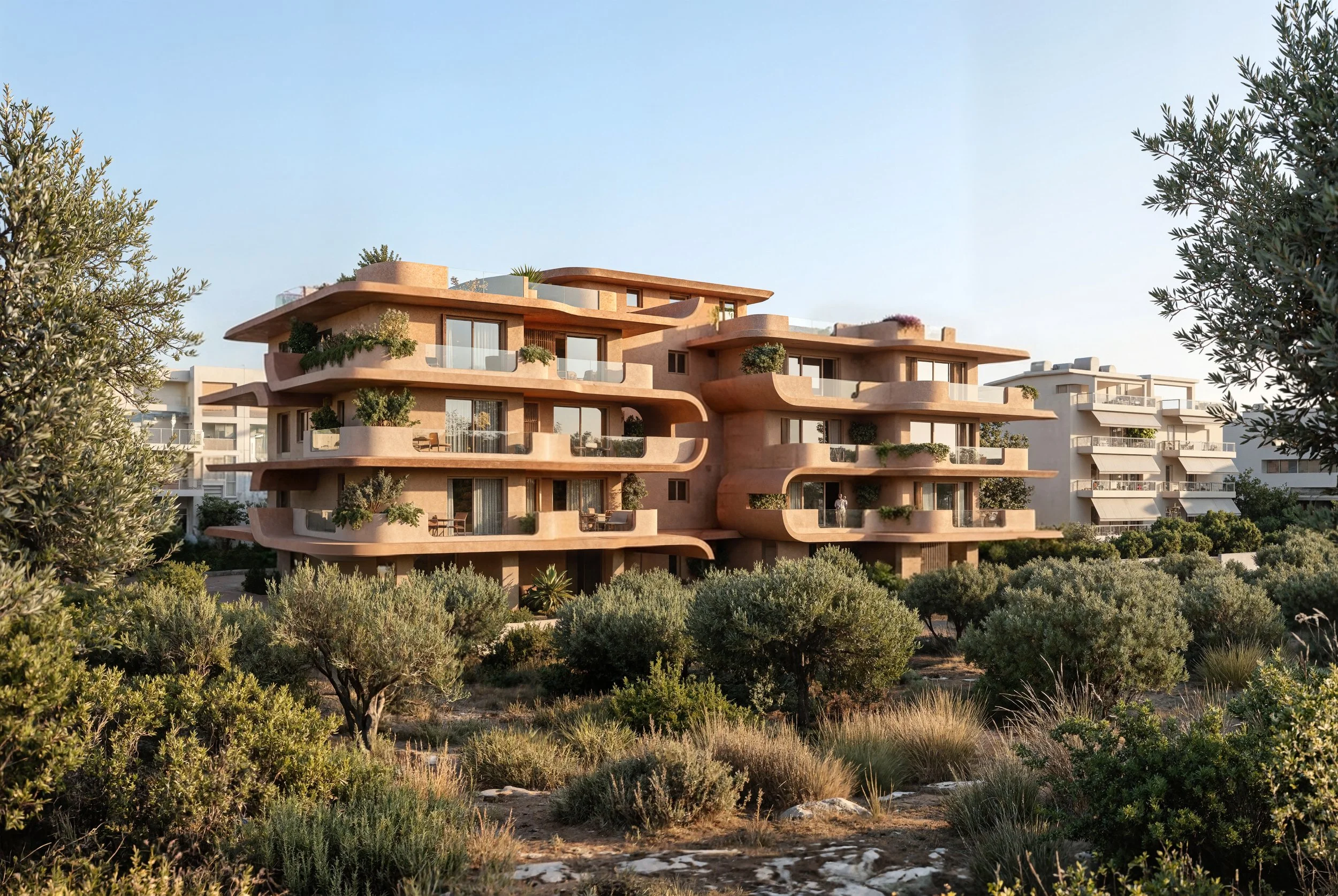
Urban Matter re-engages this legacy through a clear modular logic, spatial depth, and a calibrated relationship between dwelling and urban context.

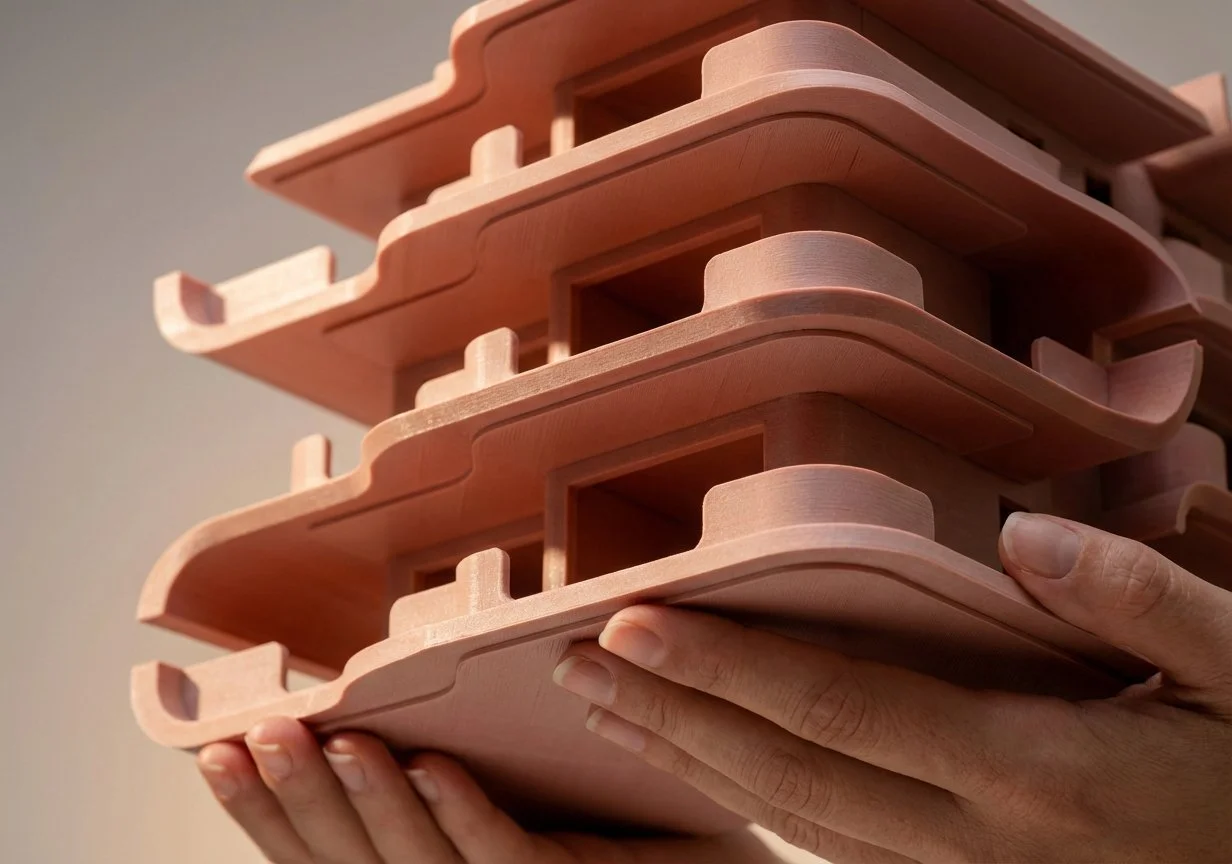
At its core, the project is structured by a rational modular framework that governs both plan and elevation. This framework establishes a clear order for load-bearing structure, circulation, and habitation, allowing repetition without monotony and variation without arbitrariness. The module operates as an architectural unit that accommodates domestic programs while remaining flexible enough to adapt across different apartment types. By doing so, the building avoids the fragmentation often found in contemporary residential developments, instead presenting a legible and coherent urban presence.
The structural grid is not treated as a neutral background but as an active generator of space. Columns, slabs, and partitions align to produce clarity in both construction and use, reinforcing a sense of continuity between individual dwellings and the collective whole. This approach reflects a broader ambition of the project: to treat housing not as a collection of isolated units, but as a shared urban artifact. The building becomes a piece of city-making rather than a standalone object.

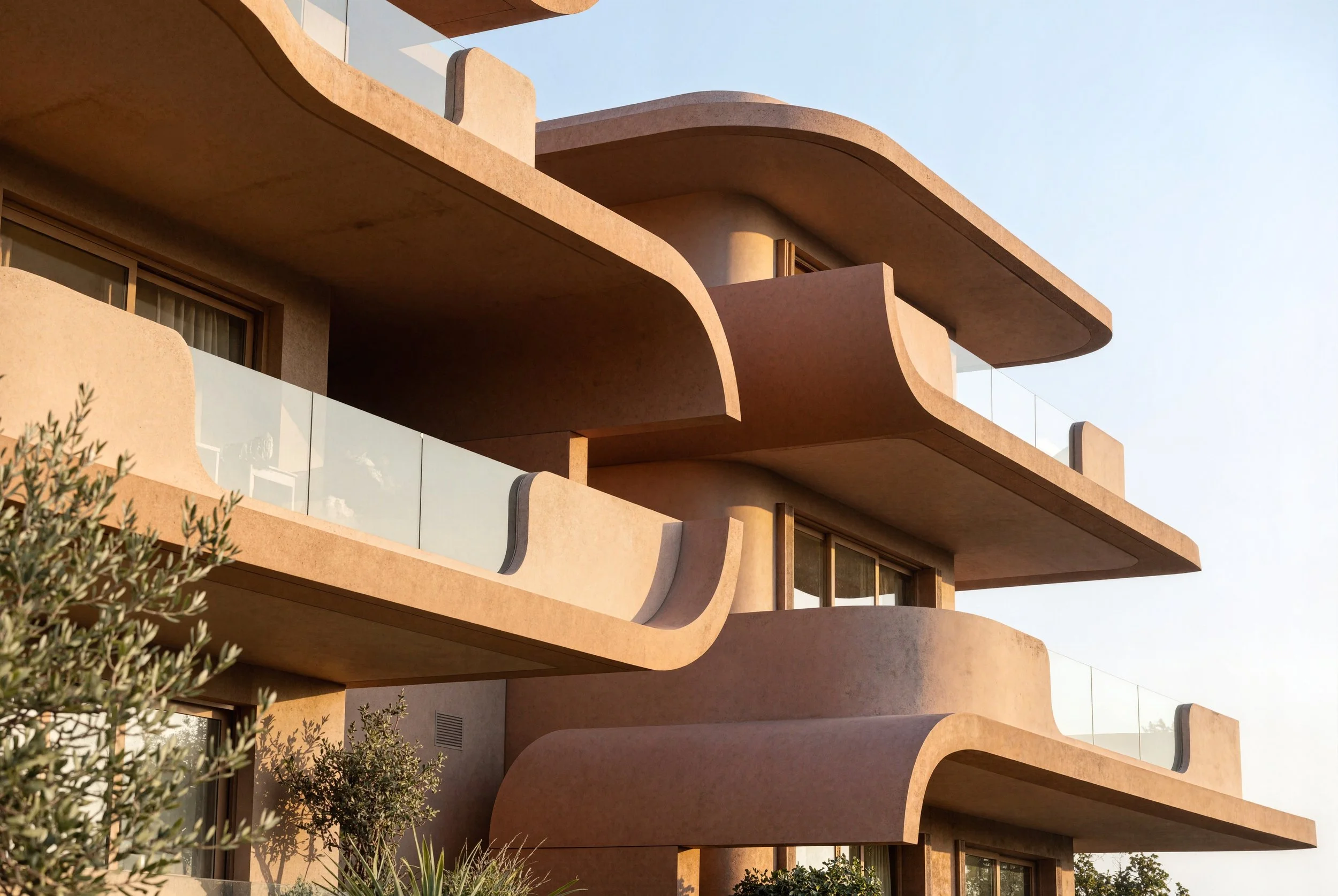
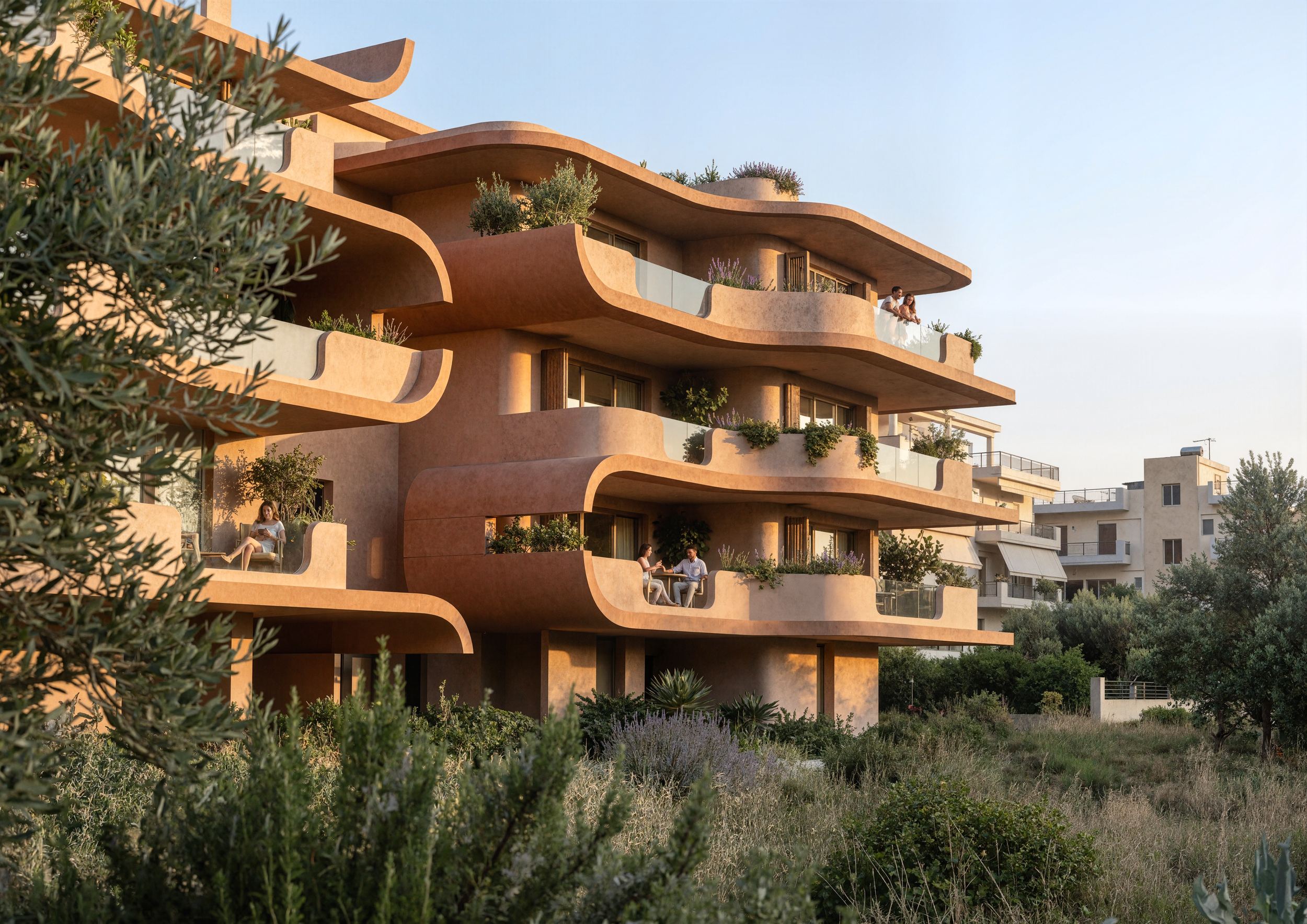
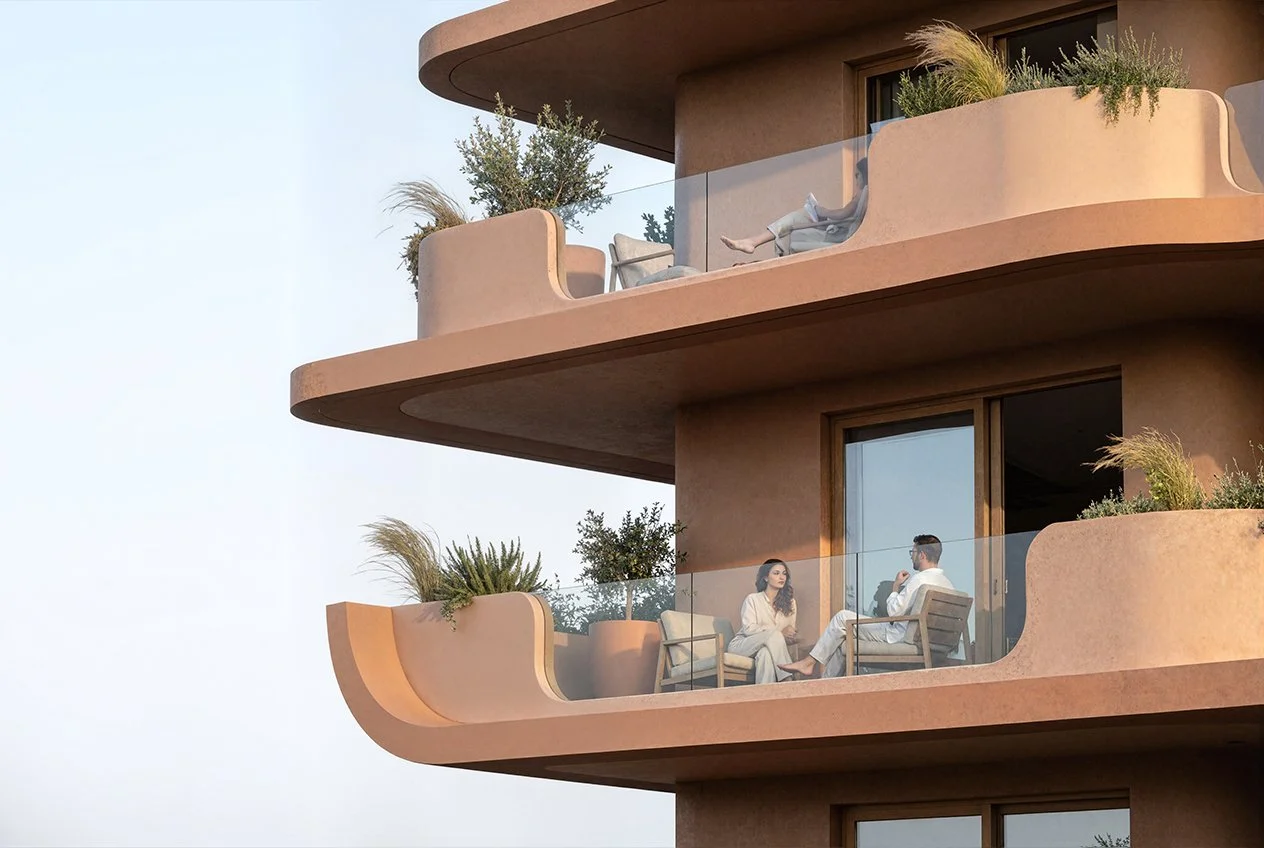
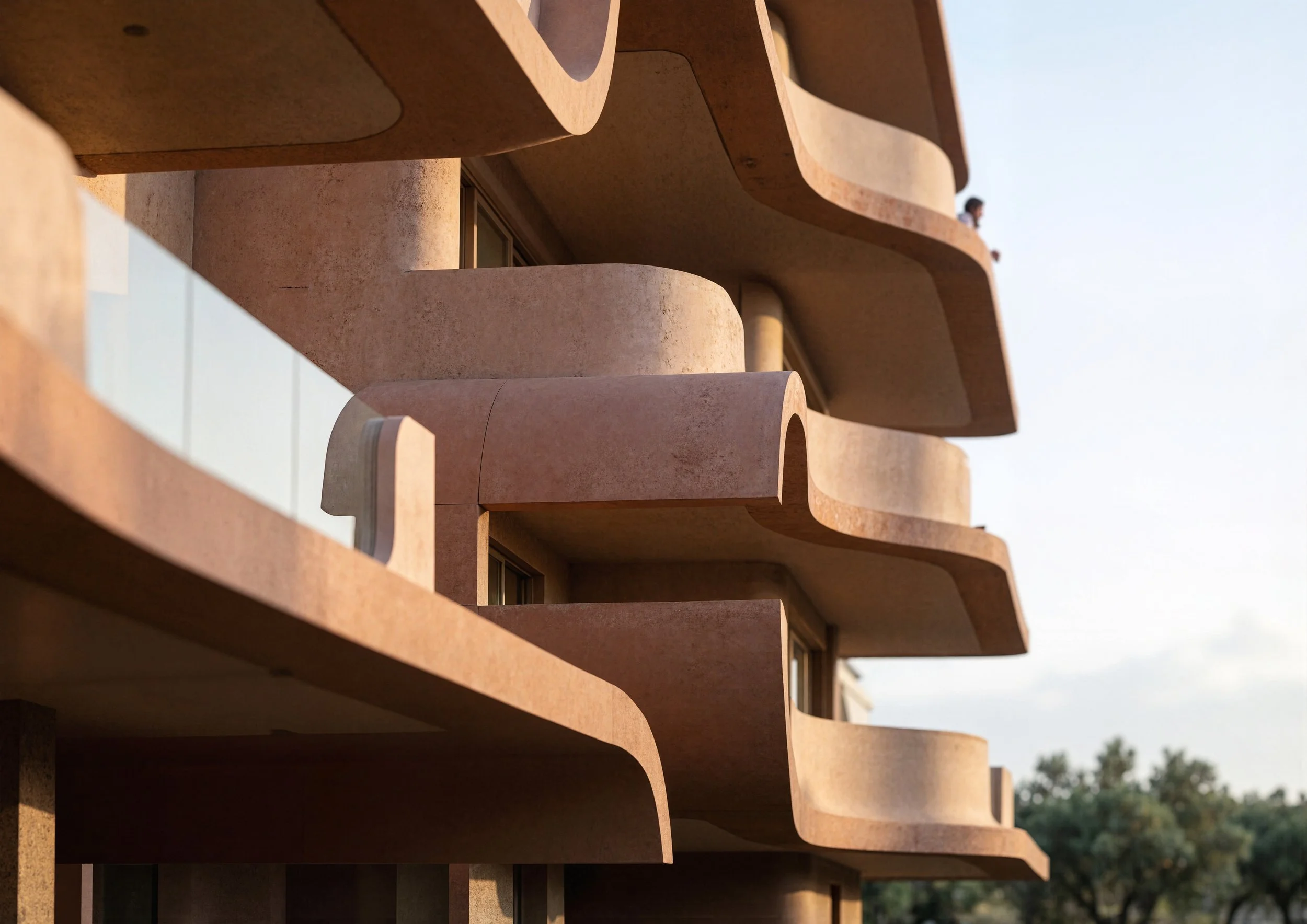
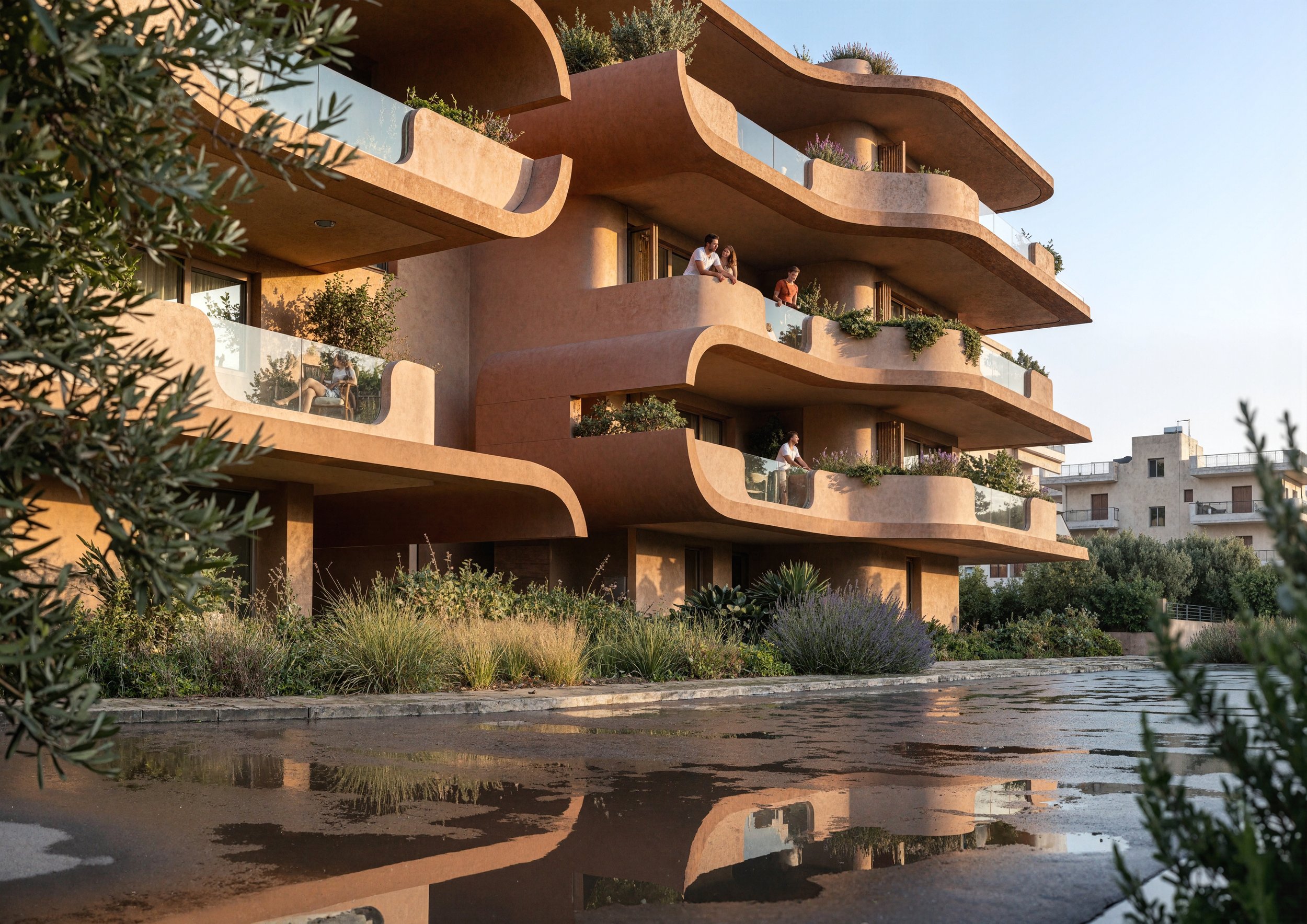
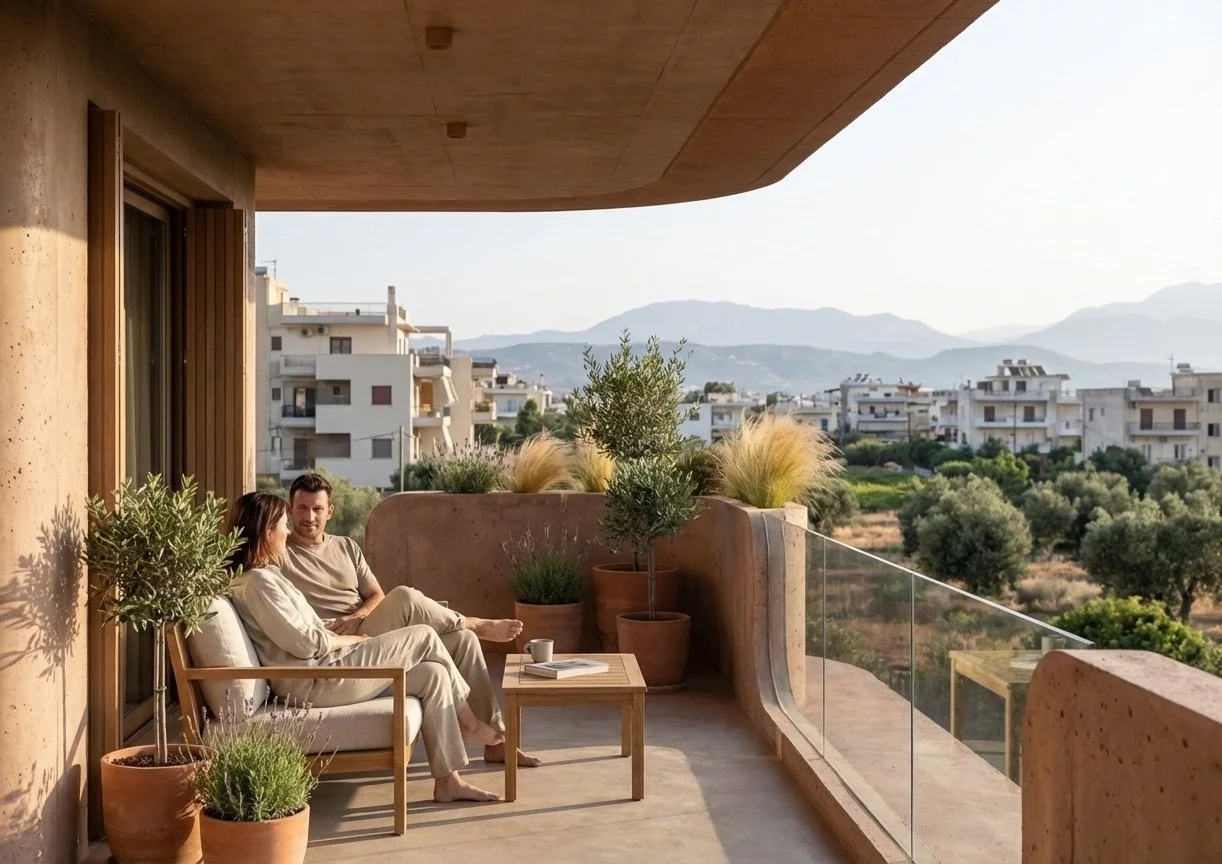
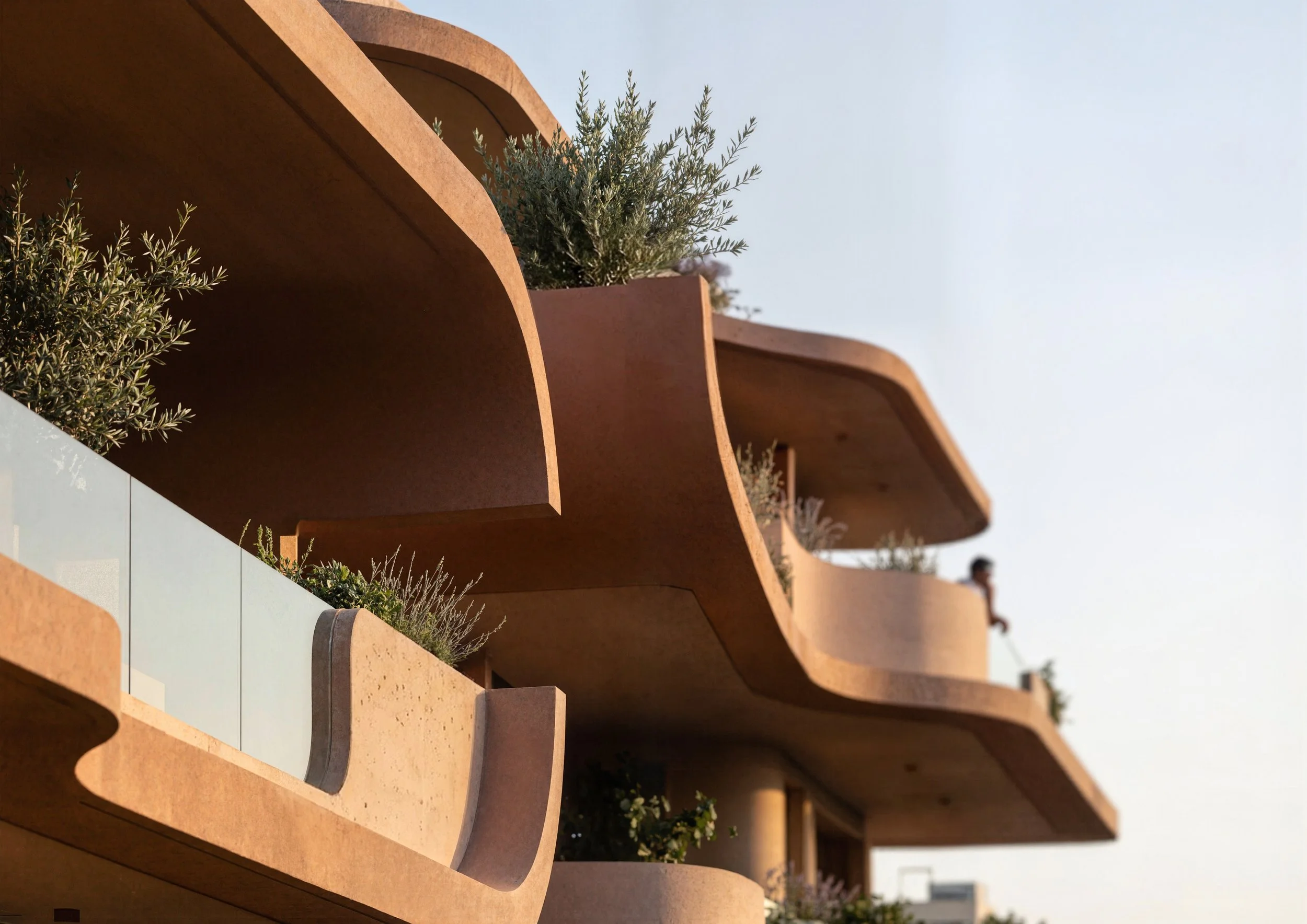
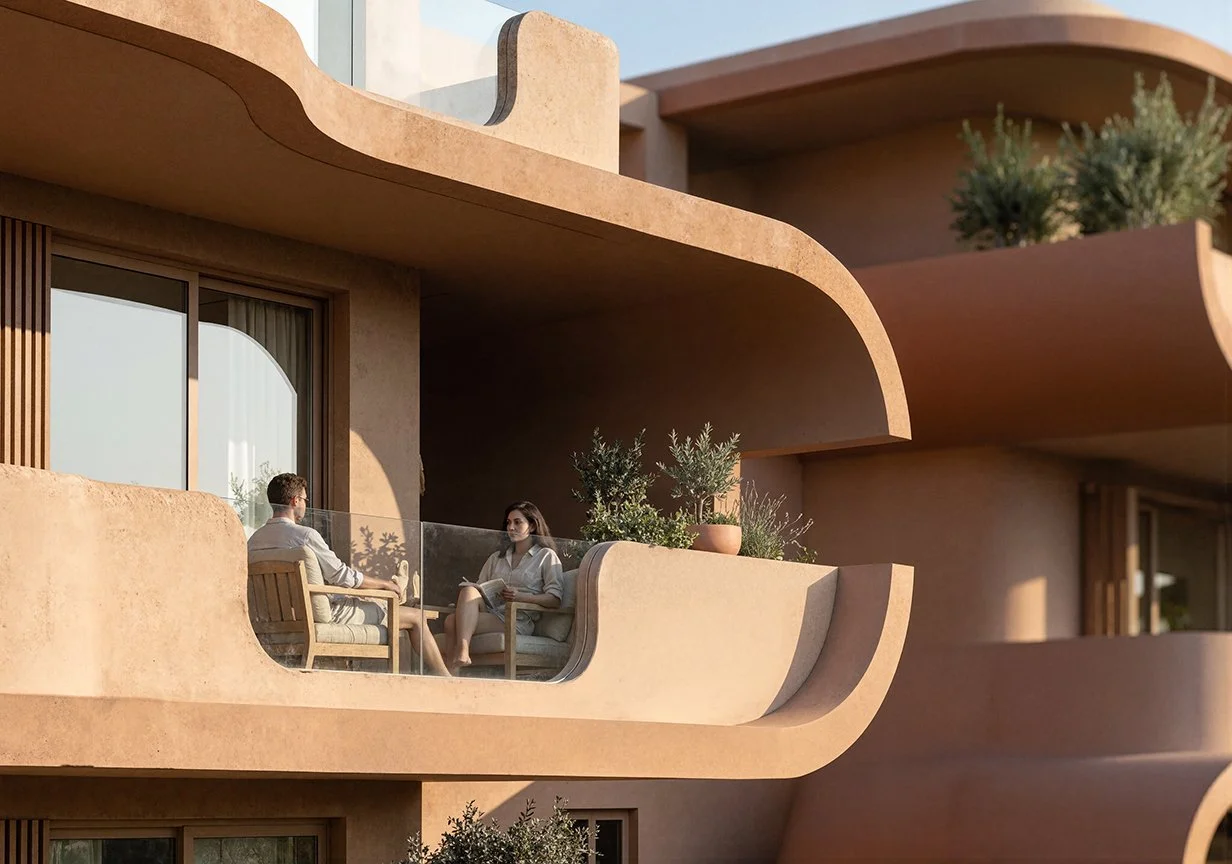
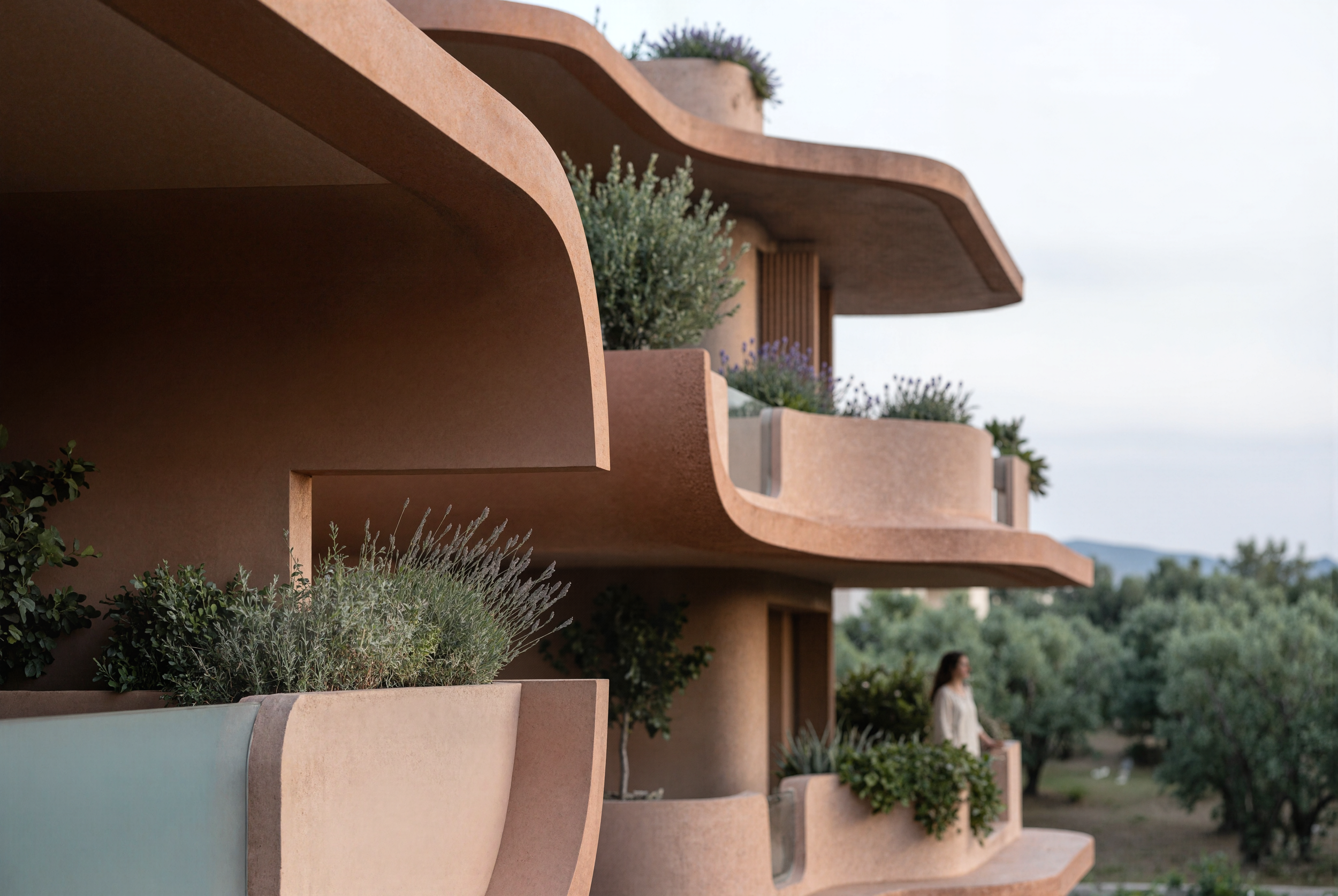
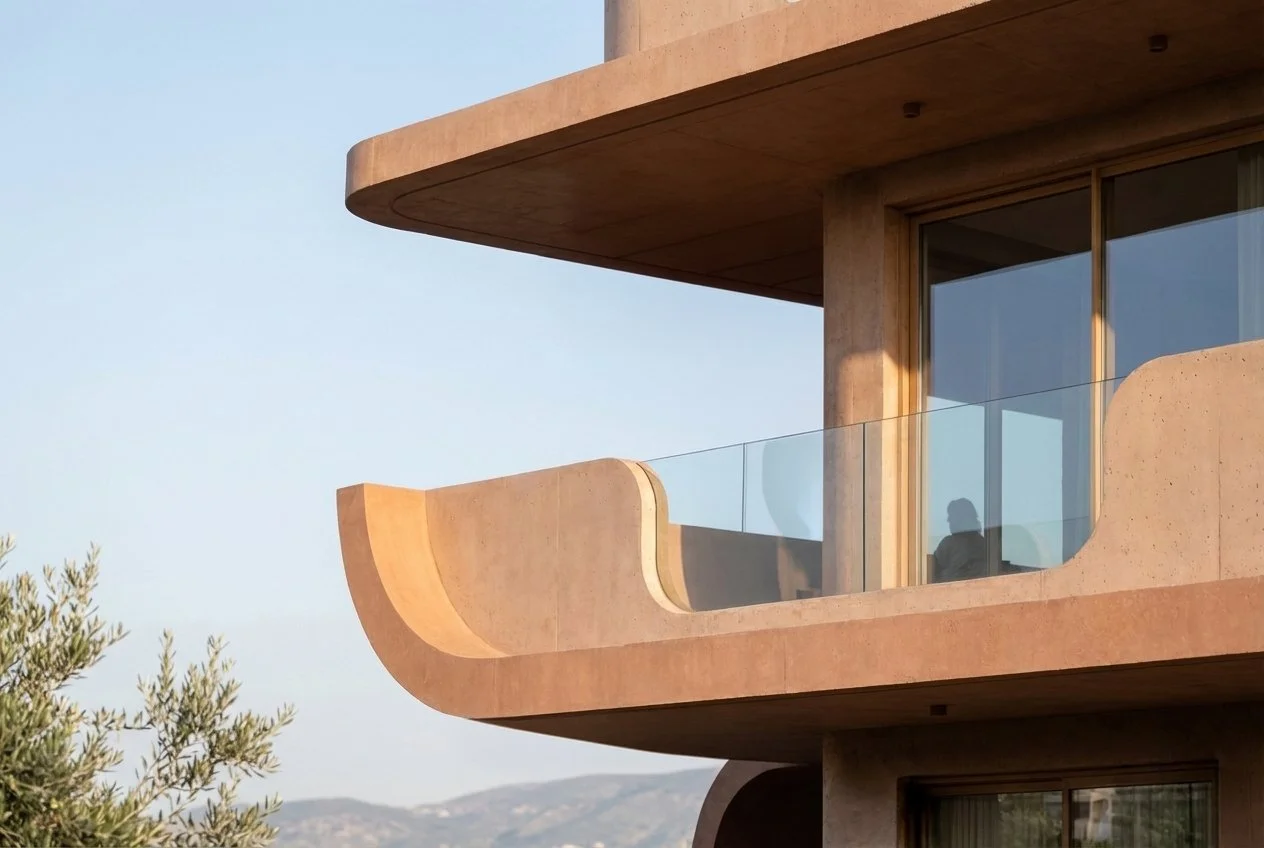
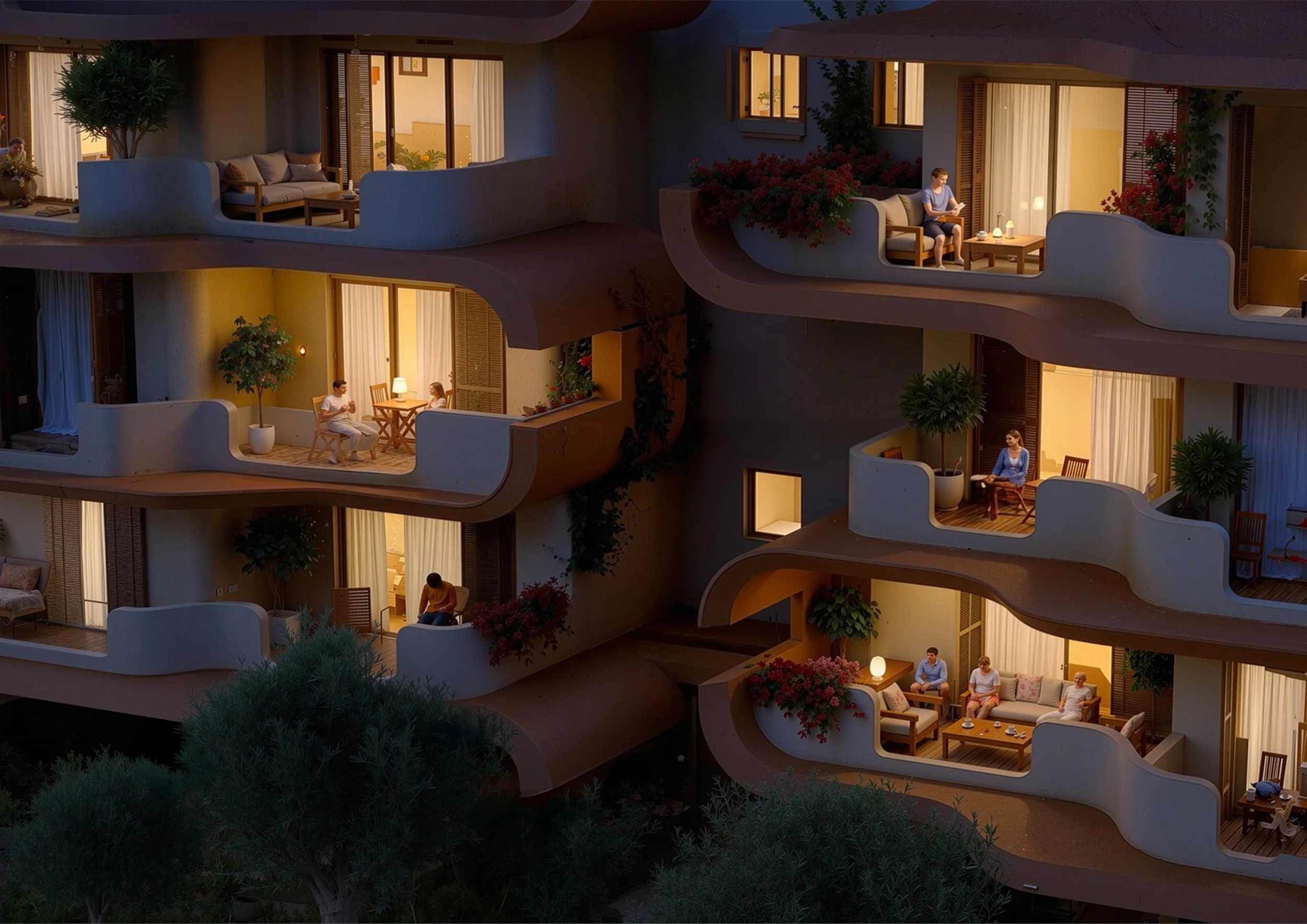
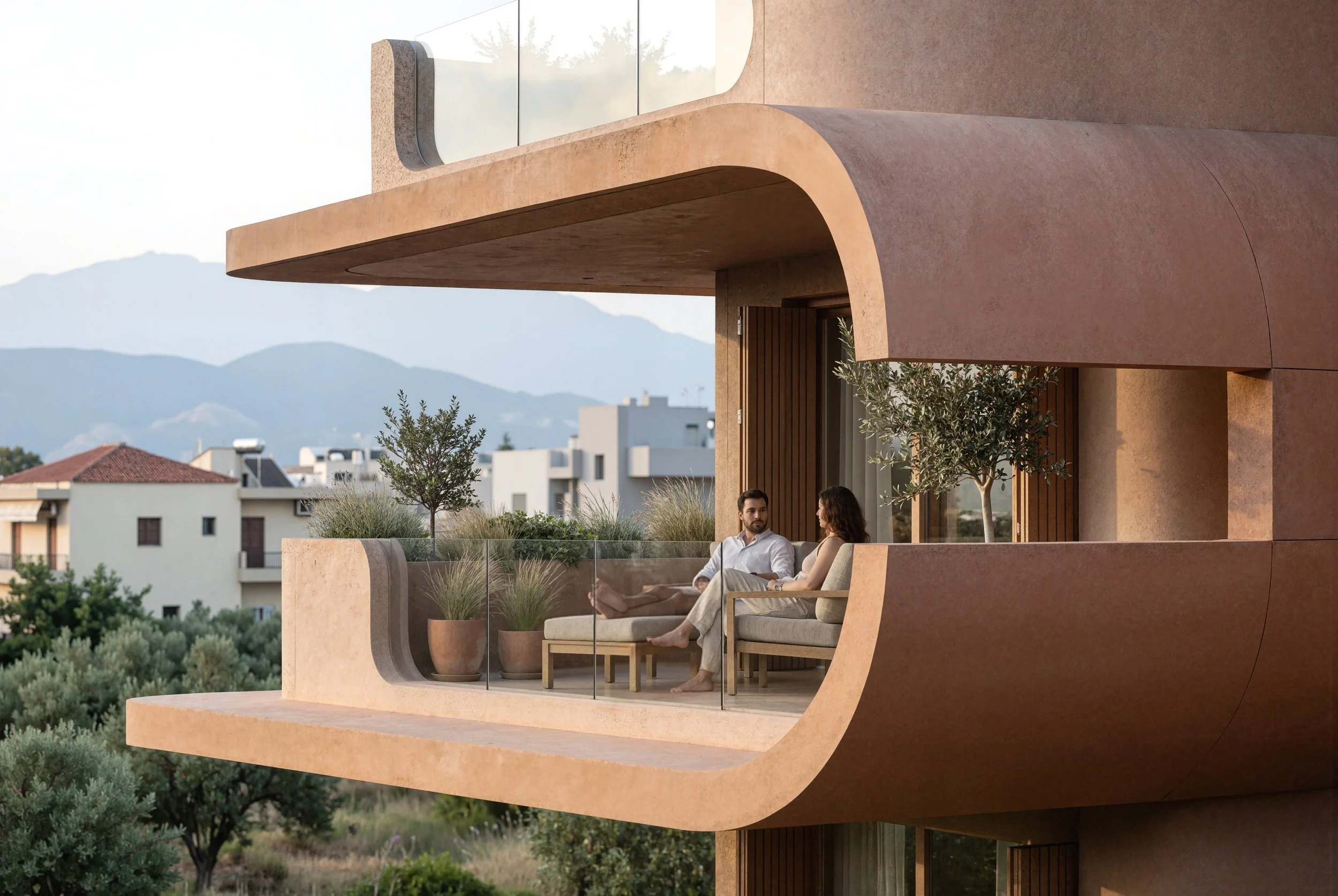
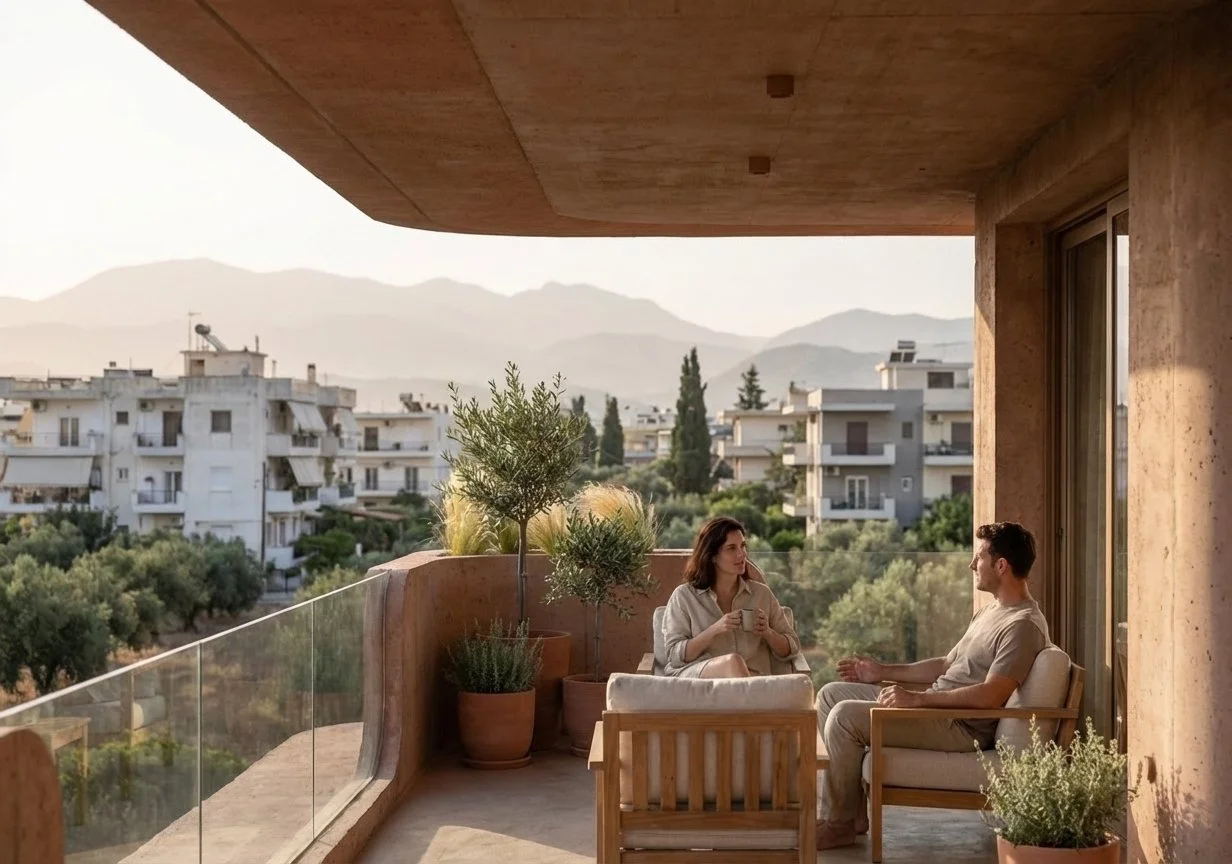
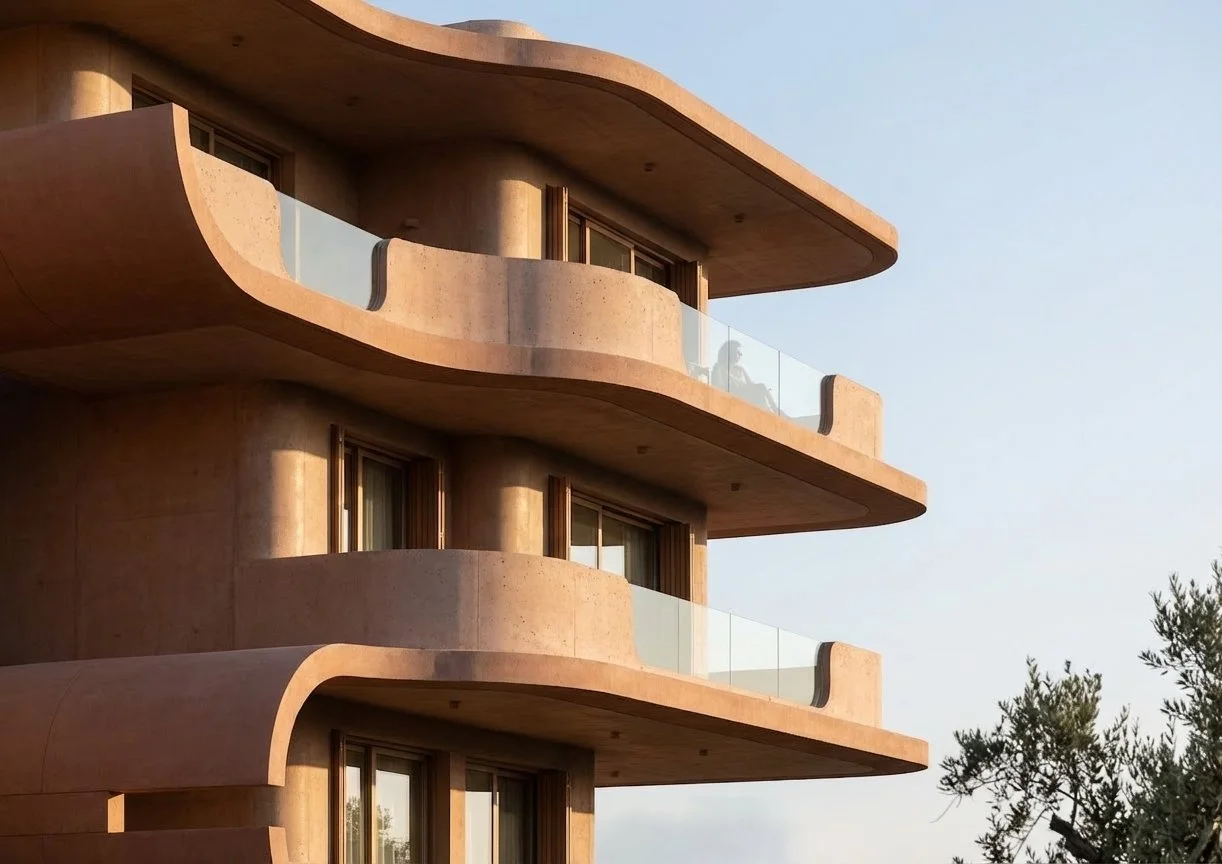
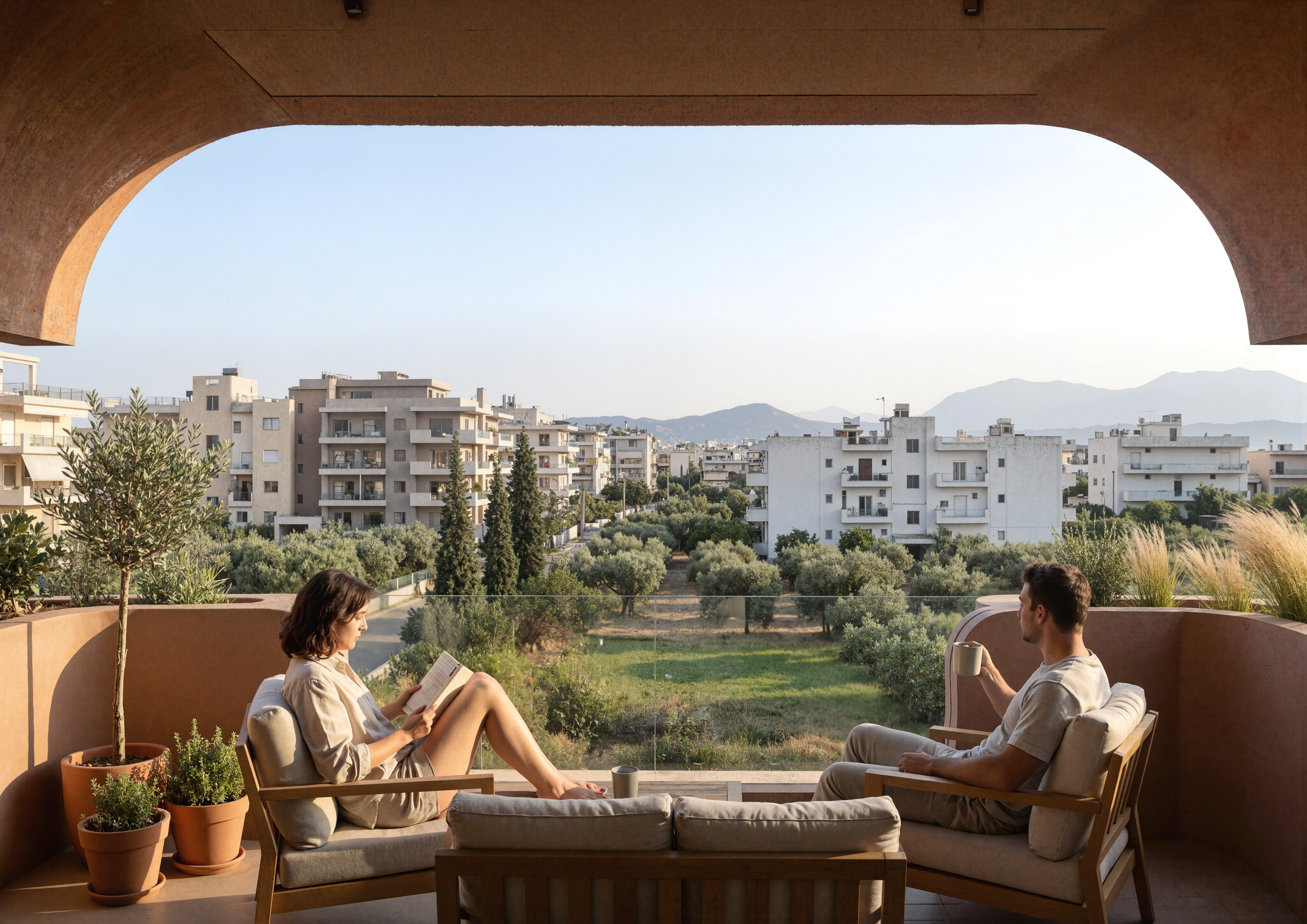
One of the defining architectural features of Urban Matter is the continuous ring of semi-enclosed balconies that wraps around the building. This inhabitable perimeter creates a deep façade, thickened through use rather than ornament. The balcony ring functions as a spatial buffer between interior domestic spaces and the public realm, offering shade, privacy, and opportunities for outdoor living while maintaining visual and environmental connection to the city. In this sense, the façade is not a surface but a zone—a lived threshold where private and collective conditions overlap.
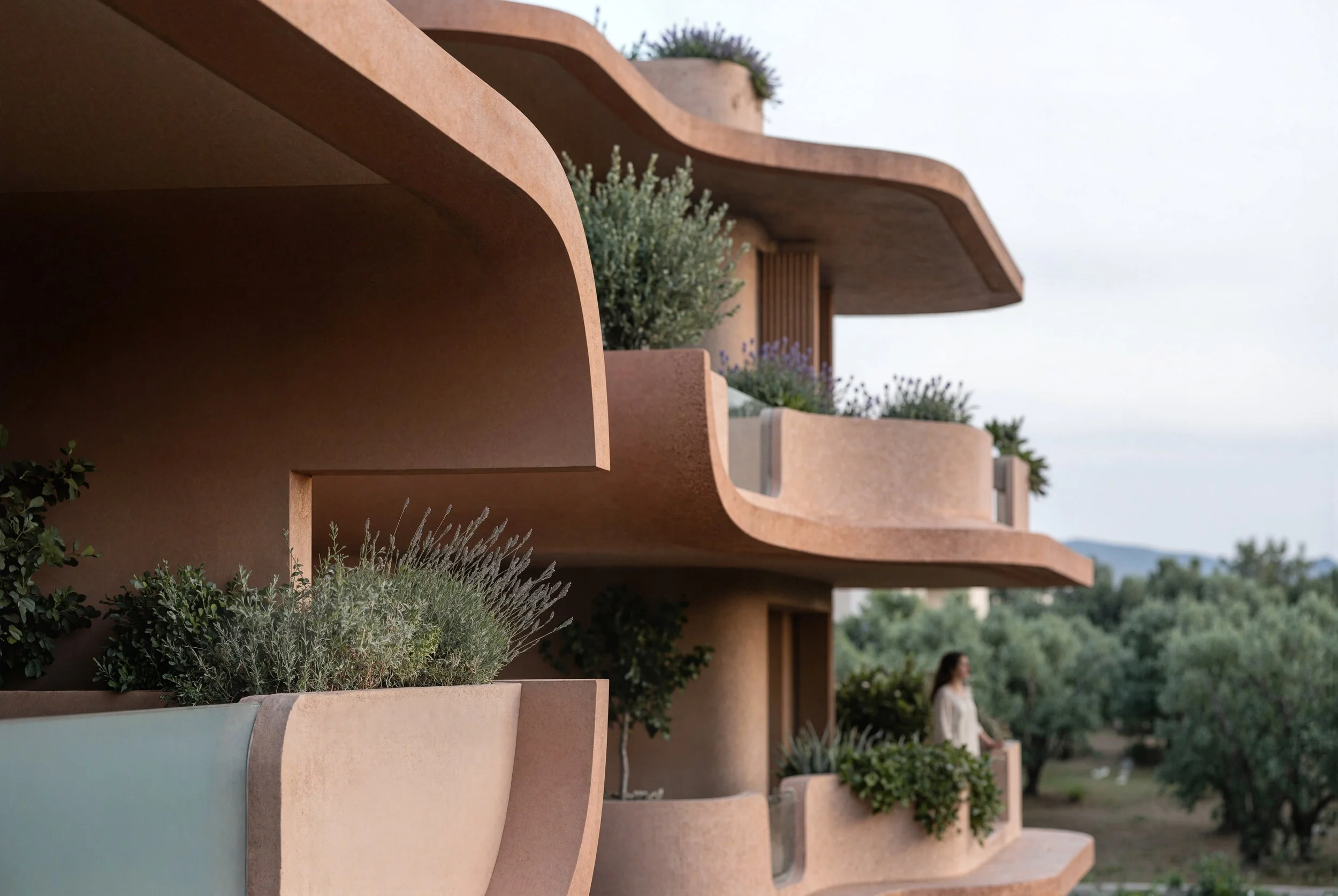
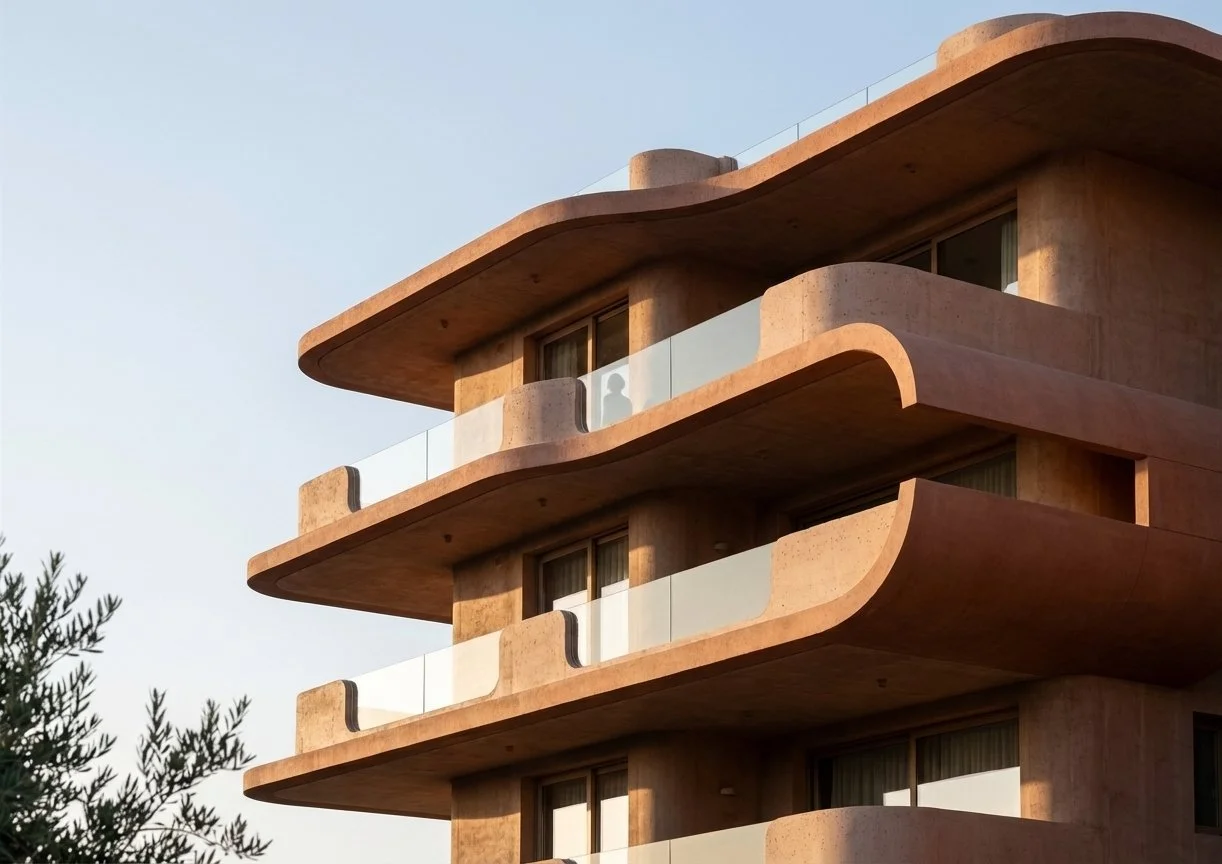
The semi-enclosed nature of the balconies is carefully calibrated. Screens, parapets, and structural elements modulate exposure, allowing residents to control degrees of openness according to climate, orientation, and personal preference. This layered façade responds to the Mediterranean context of Chania, addressing issues of solar protection, natural ventilation, and seasonal use. Rather than relying on mechanical solutions, the building integrates environmental performance into its architectural language.
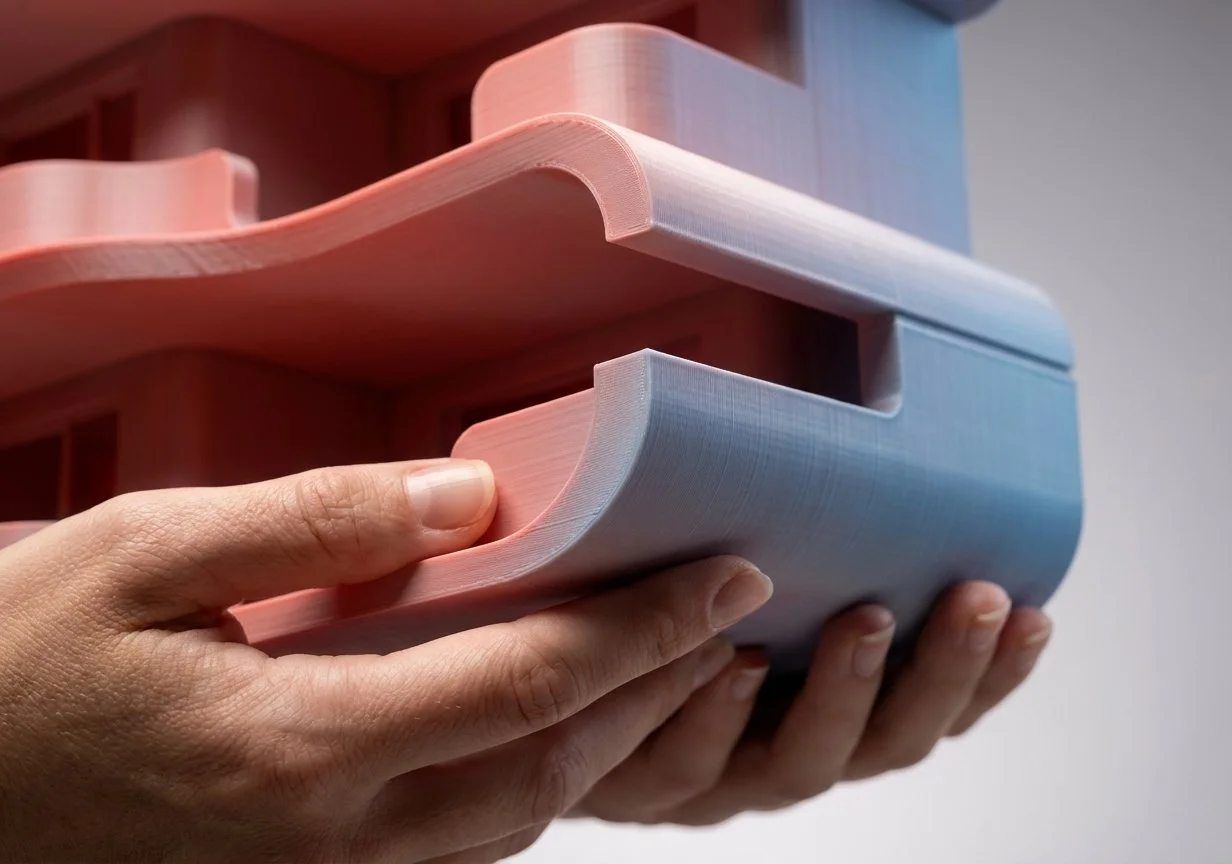
Historically, the Greek polykatoikia relied heavily on balconies as extensions of domestic life—spaces for social interaction, climate adaptation, and visual engagement with the street. Urban Matter reclaims this tradition, updating it through a more systematic and spatially generous interpretation. The continuous balcony ring fosters a sense of horizontal continuity across the building, subtly reinforcing the idea of collective inhabitation while preserving the autonomy of each dwelling.

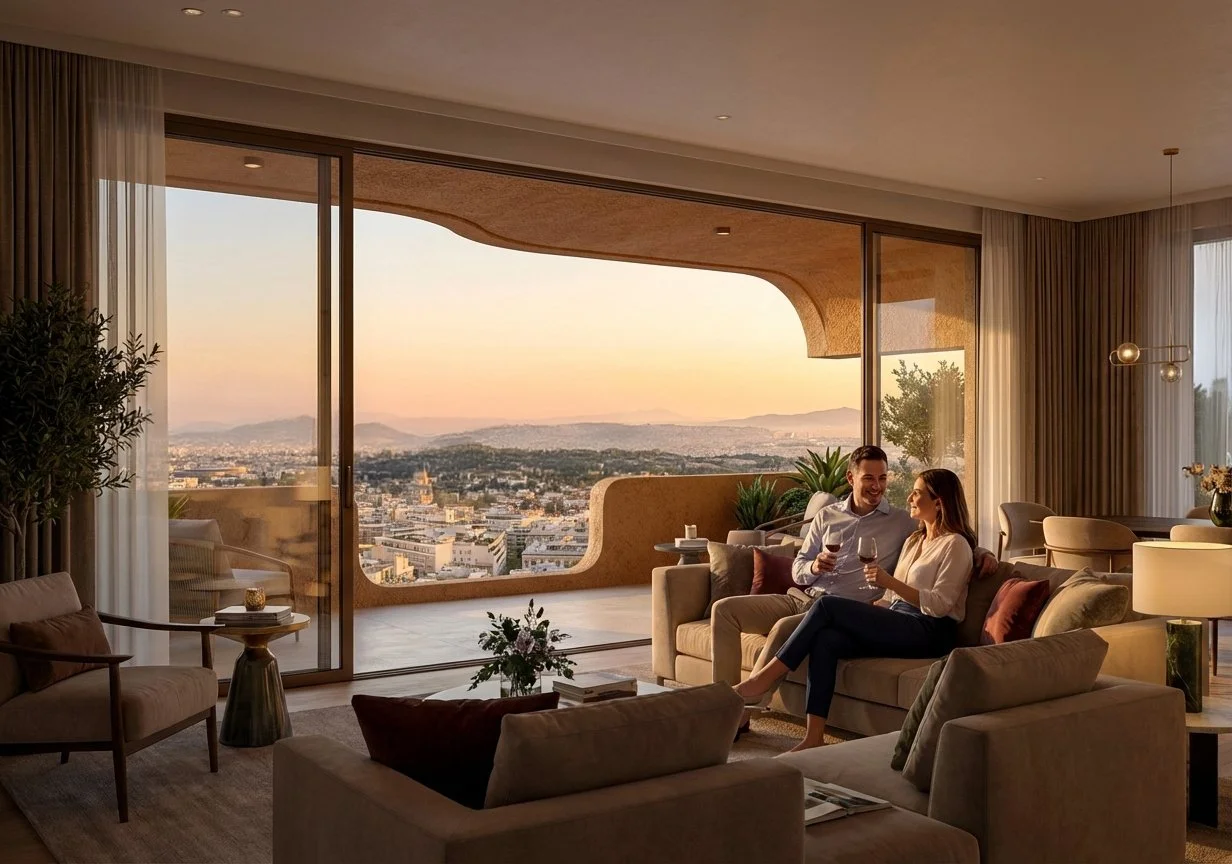
Internally, the apartments are organized to maximize spatial efficiency while maintaining a strong relationship to the exterior. Living spaces are typically oriented toward the balcony zone, allowing daily activities to extend outward and engage with light, air, and views. Bedrooms and more private functions are arranged to balance intimacy with access to daylight, ensuring that all spaces benefit from the building’s perimeter condition. This arrangement reinforces the idea that each apartment participates in the larger urban condition rather than retreating from it.

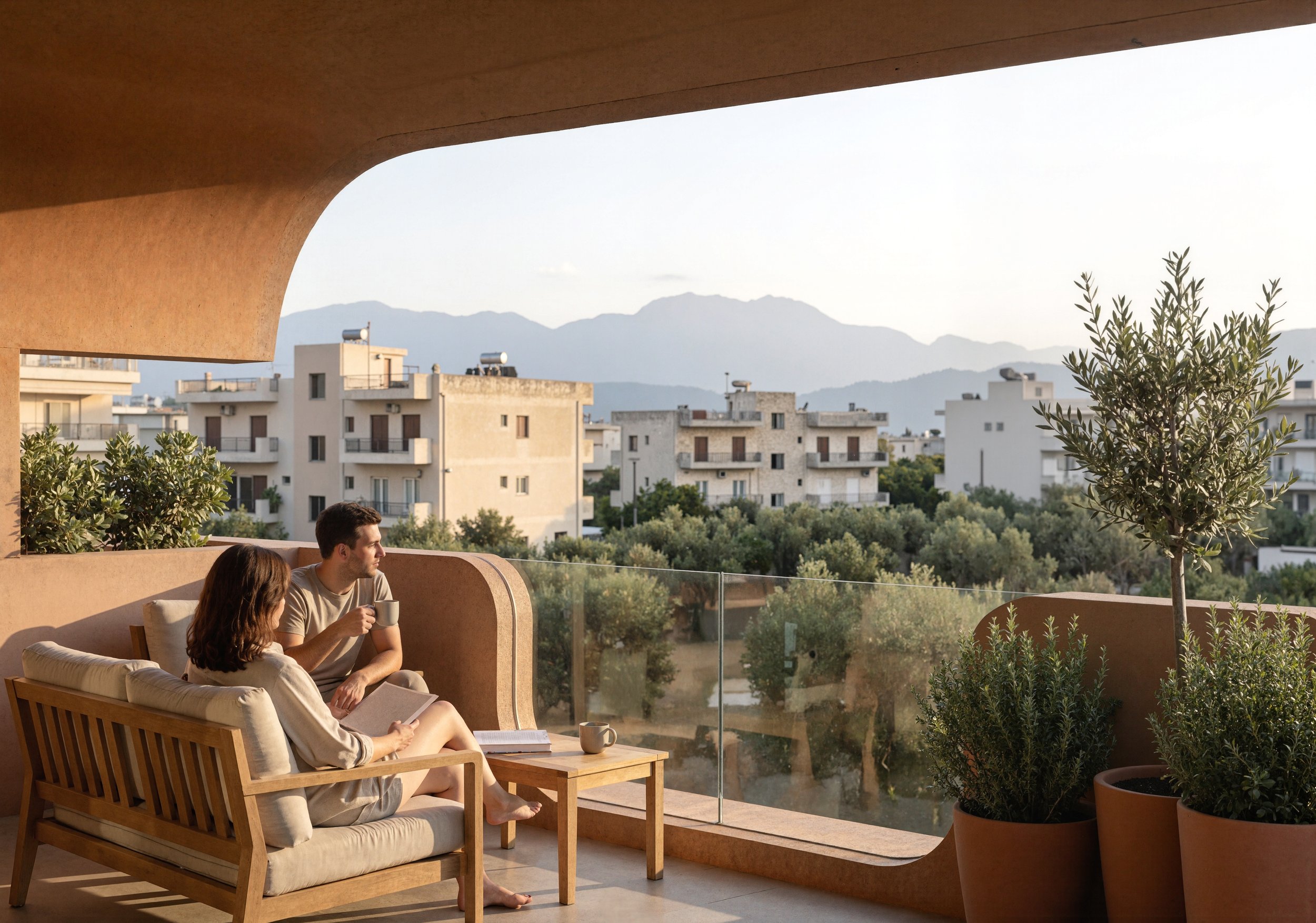
A key ambition of the project is to connect each apartment to the city across multiple scales. At the most immediate level, residents engage with the street through visual and acoustic proximity, maintaining awareness of urban life below. At a broader scale, the building’s orientation and balcony depth frame views toward the surrounding city fabric and the distant landscape, allowing residents to perceive their position within a wider urban and geographic context. This multi-scalar connection transforms everyday domestic experience into an ongoing dialogue with the city.
The ground level of Urban Matter plays a crucial role in mediating between building and street. Rather than presenting a closed or defensive edge, the base is articulated to reinforce urban continuity. Entrances, circulation cores, and shared spaces are clearly expressed, contributing to an active and legible street frontage. The building acknowledges its responsibility to the public realm, reinforcing the idea that residential architecture is inseparable from urban life.

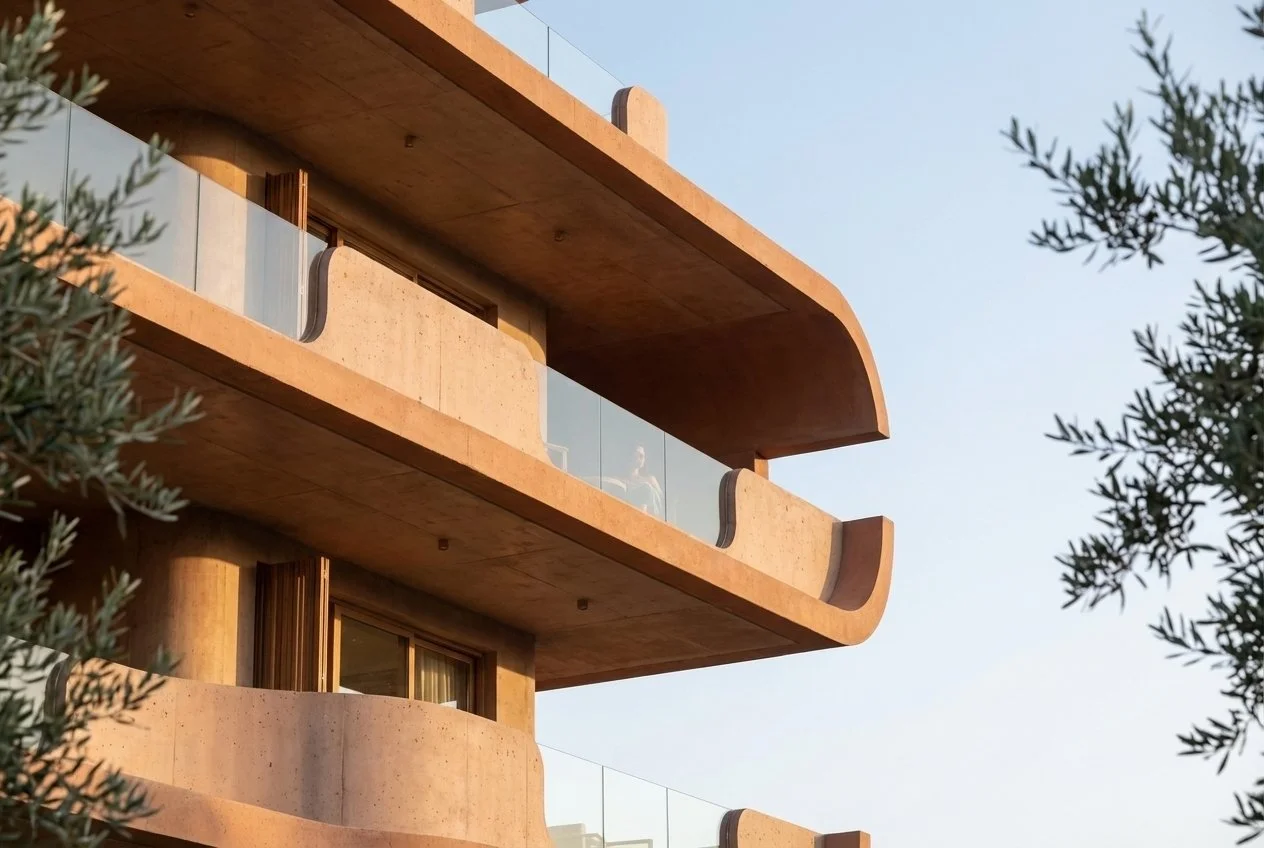
Material choices throughout the project are deliberately restrained, emphasizing durability, tactility, and coherence with the structural logic. The expression of concrete, plaster, and metal elements aligns with the modular framework, reinforcing the reading of the building as a system rather than a composition of independent gestures. This material discipline supports longevity and adaptability, allowing the building to age gracefully within its urban context.
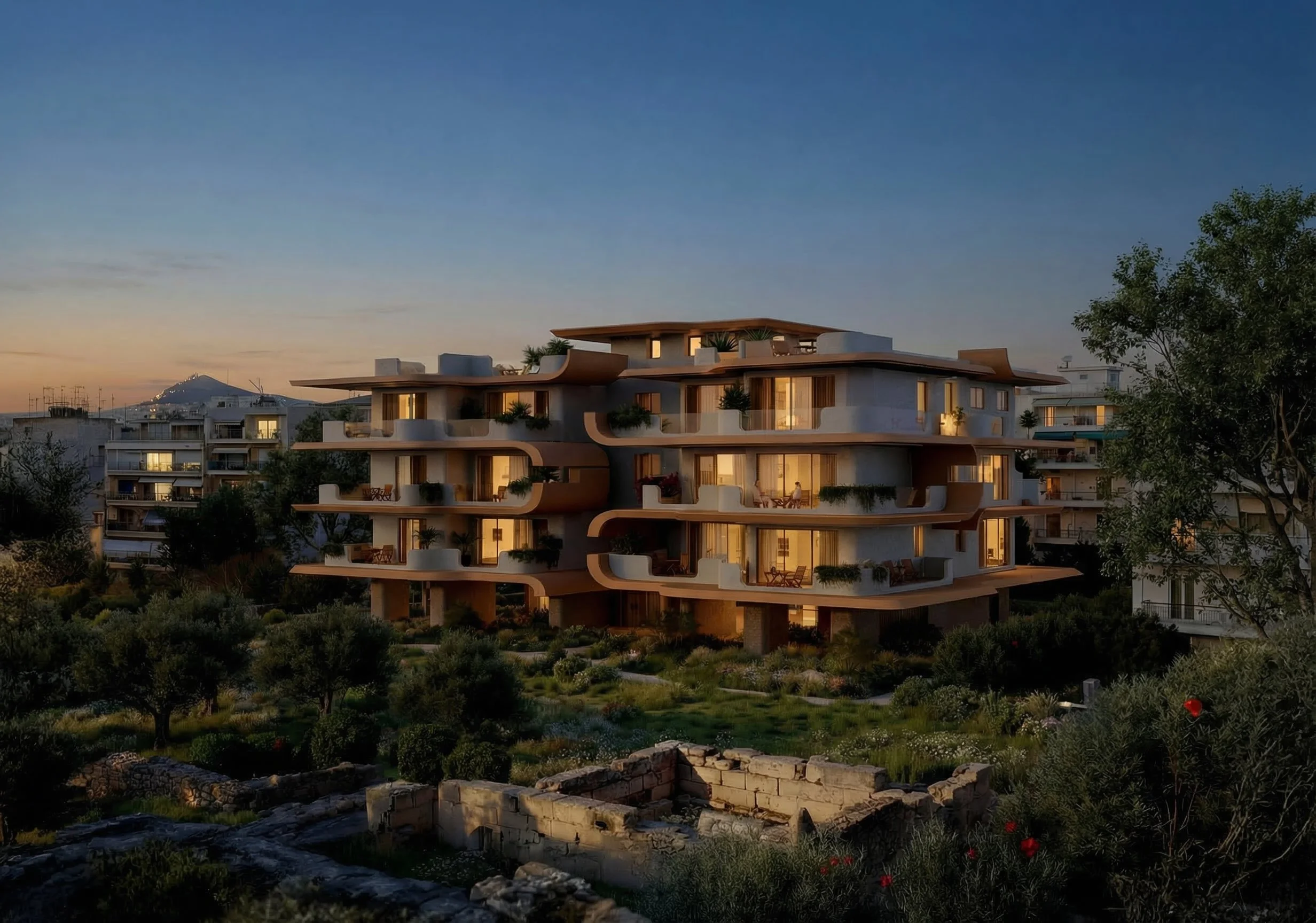
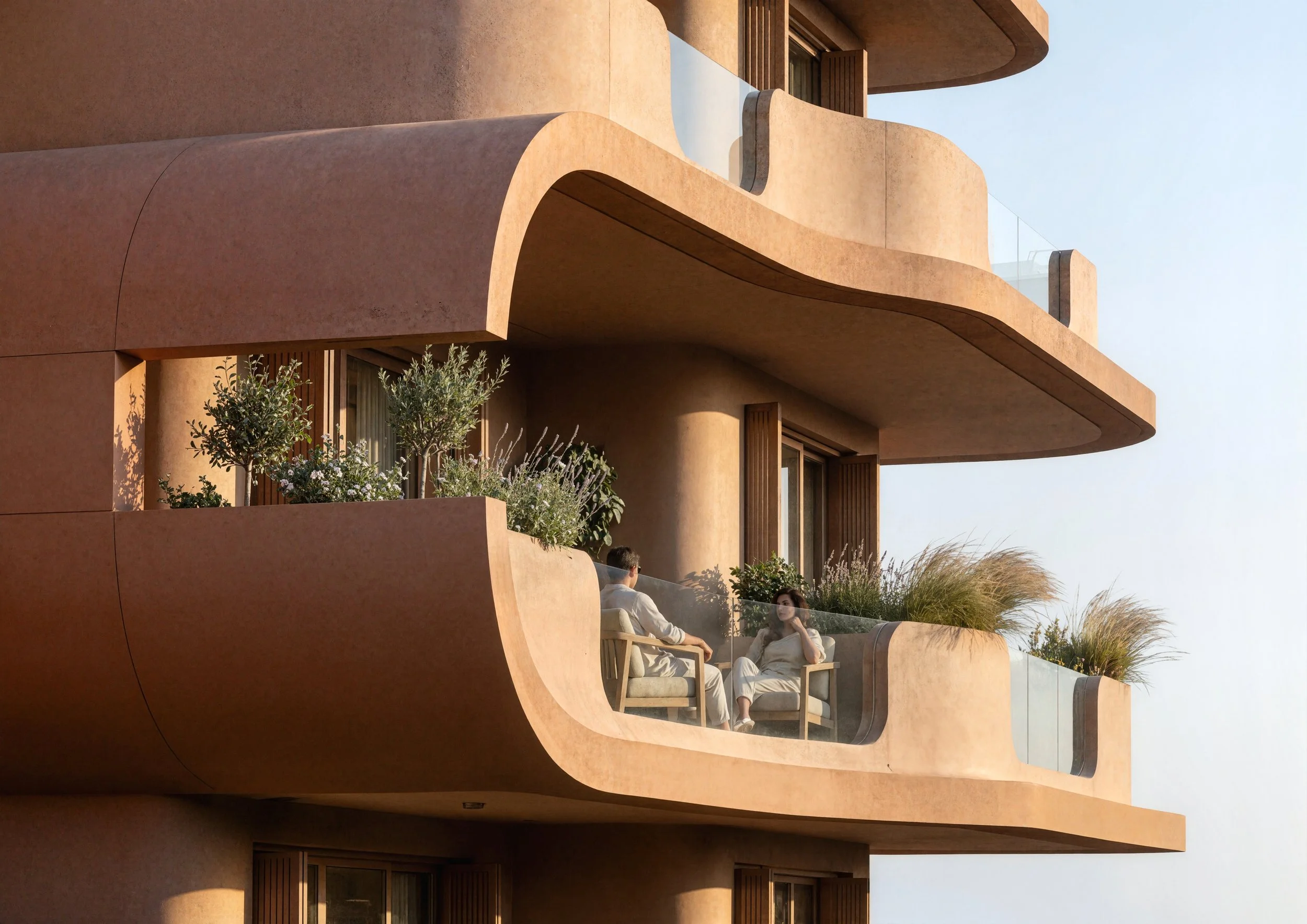
The repetition inherent in the modular system is not treated as a limitation but as a source of architectural strength. Subtle variations in balcony use, shading devices, and interior arrangements introduce diversity within the overarching order. Over time, the building is expected to accumulate traces of habitation—plants, furniture, and personal modifications—further enriching its façade and reinforcing its role as a living urban structure.
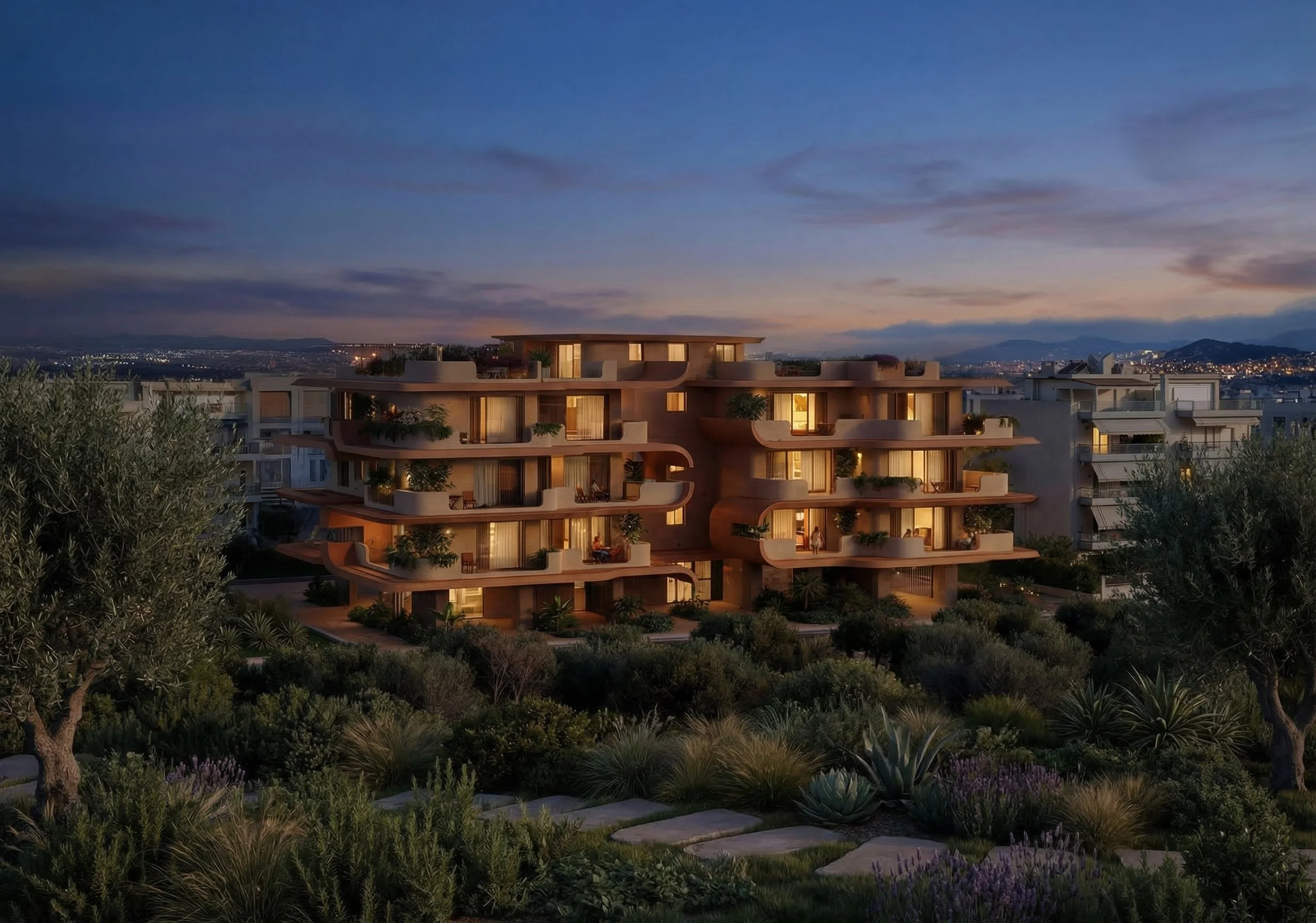
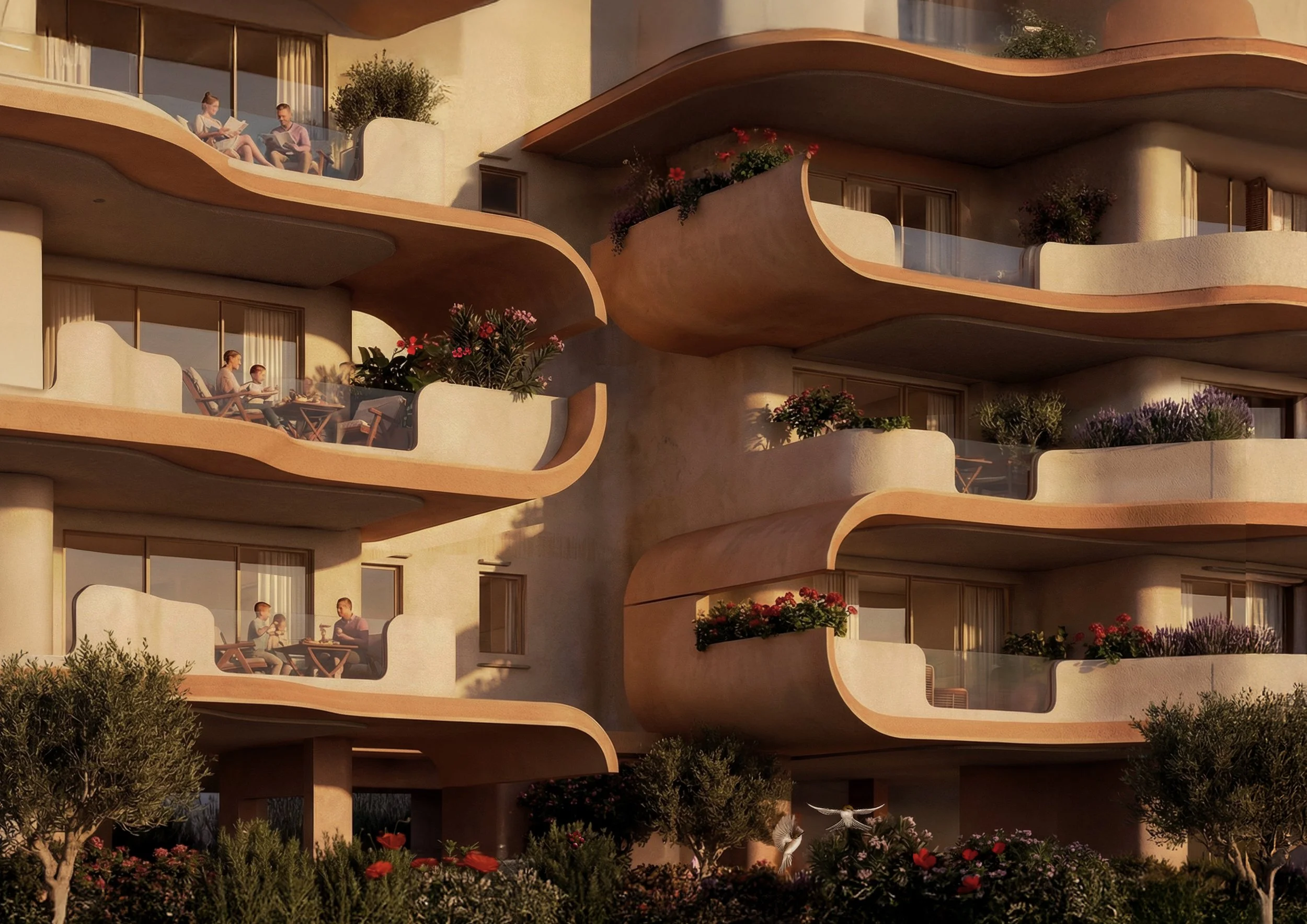
Urban Matter also engages with questions of density and collective living. By consolidating multiple dwellings within a compact footprint, the project supports sustainable urban growth while maintaining high standards of spatial quality. The shared architectural language fosters a sense of belonging among residents, encouraging awareness of collective coexistence without imposing uniformity.

In reinterpreting the polykatoikia, Urban Matter positions itself within a lineage of Greek urban housing while addressing contemporary challenges. It acknowledges the successes and shortcomings of the typology, retaining its capacity for adaptability and social interaction while refining its spatial, environmental, and urban performance. The result is a building that feels both familiar and forward-looking—rooted in local architectural culture yet responsive to present and future conditions.

Ultimately, Urban Matter proposes housing as an active participant in the life of the city. Through its modular framework, deep inhabitable façade, and multi-scalar urban connections, the project redefines the relationship between dwelling and urbanity. It suggests that contemporary residential architecture can be both systematic and humane, collective and individual, precise and open-ended. In doing so, Urban Matter contributes to an ongoing conversation about how we live together in the city, not as isolated units, but as part of a shared urban fabric.
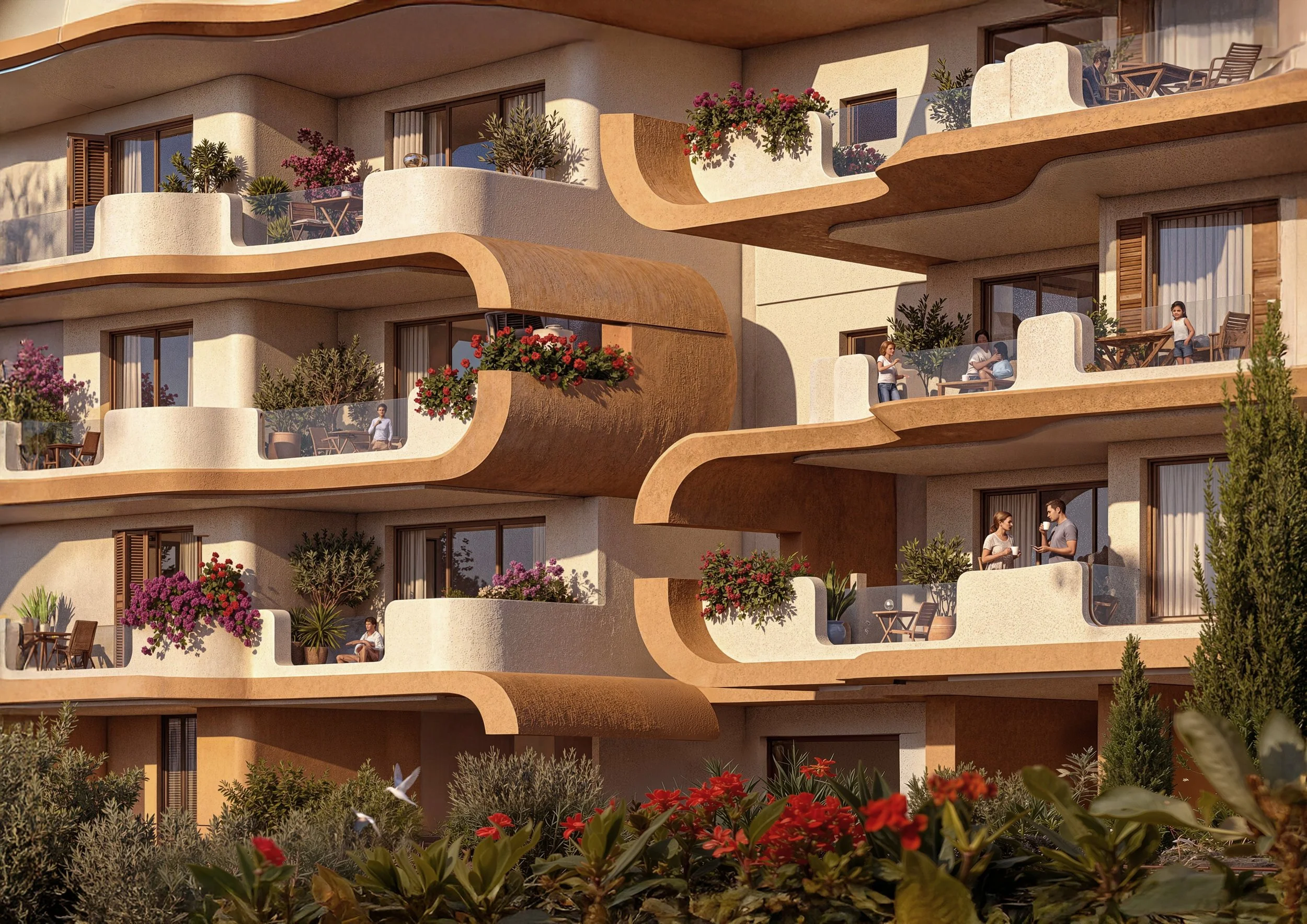
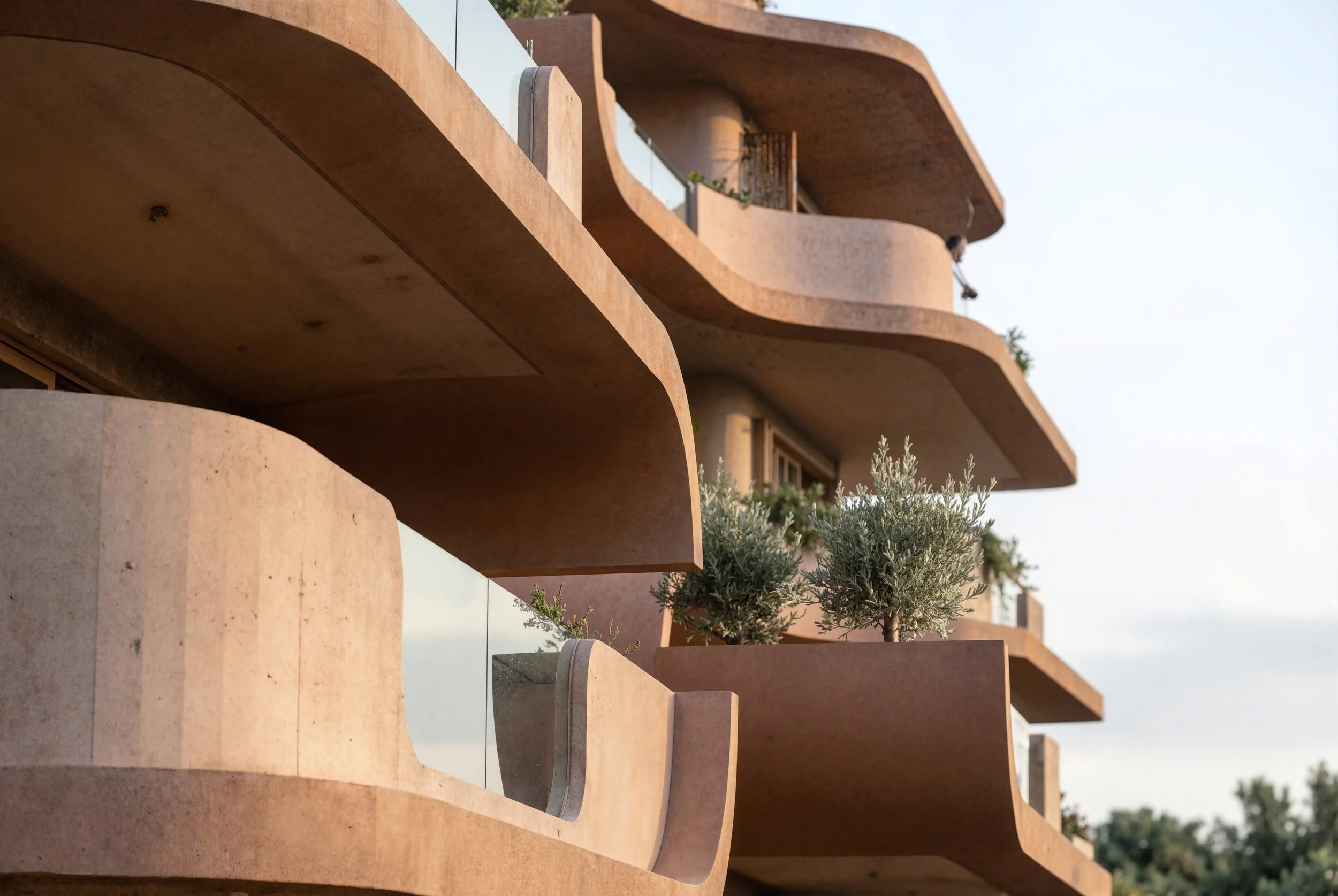
nternally, the apartments are organized to balance efficiency, flexibility, and spatial generosity. Living areas are typically oriented toward the balcony zone, allowing daily activities to extend outward and engage with light, air, and views. This arrangement supports a fluid relationship between interior and exterior, transforming the balcony into an active domestic room rather than a residual space. More private functions, such as bedrooms and service areas, are positioned to ensure acoustic separation while maintaining access to daylight and ventilation.

A central ambition of Urban Matter is to connect each apartment to the city across multiple spatial scales. At the most immediate level, residents engage with the street through visual and acoustic proximity, maintaining awareness of everyday urban rhythms.

At a broader scale, the depth of the façade frames views toward the surrounding city fabric, while upper levels establish visual connections to the wider urban horizon and landscape. These layered relationships reinforce a sense of belonging, situating domestic life within a larger collective and geographic context.
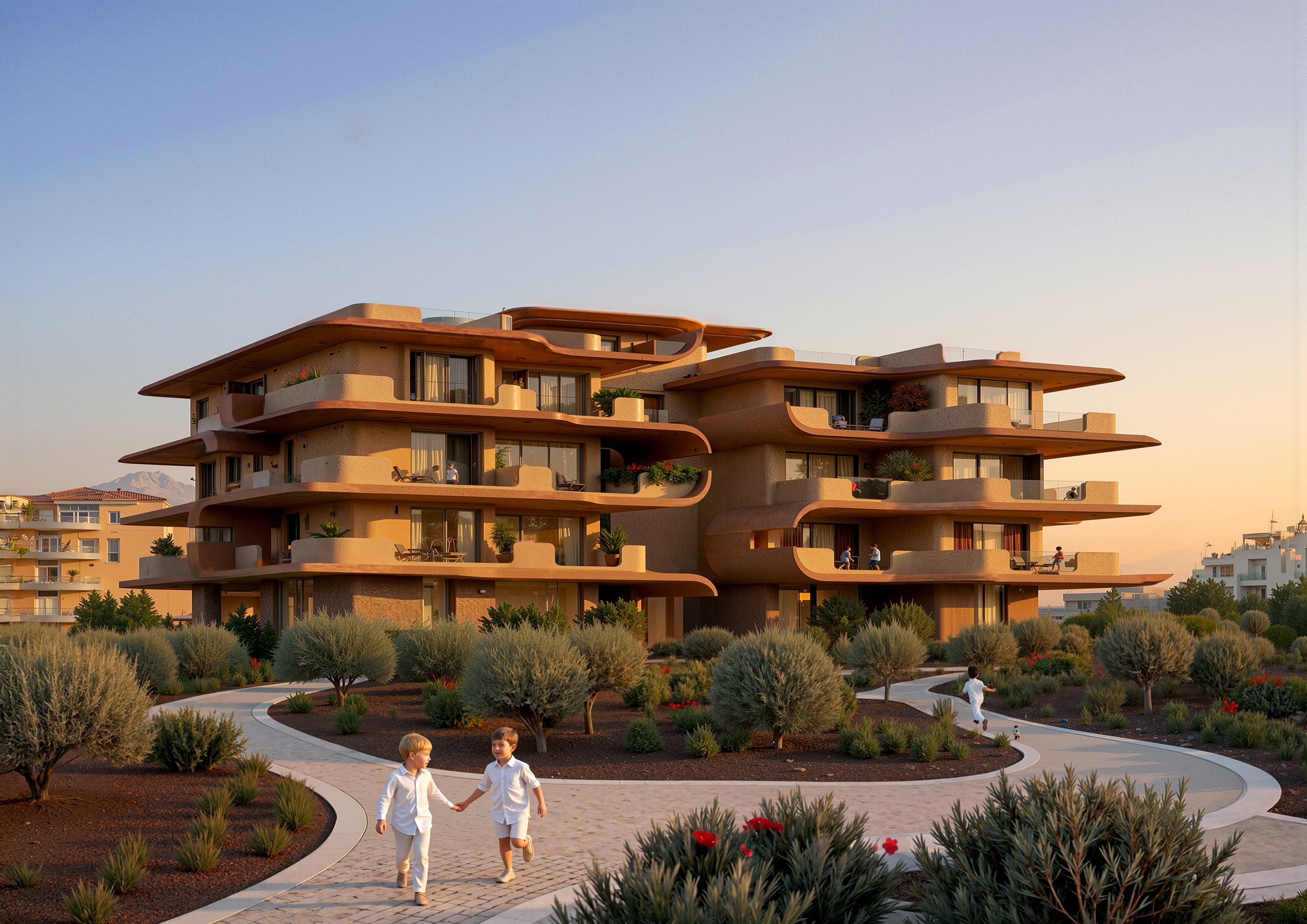
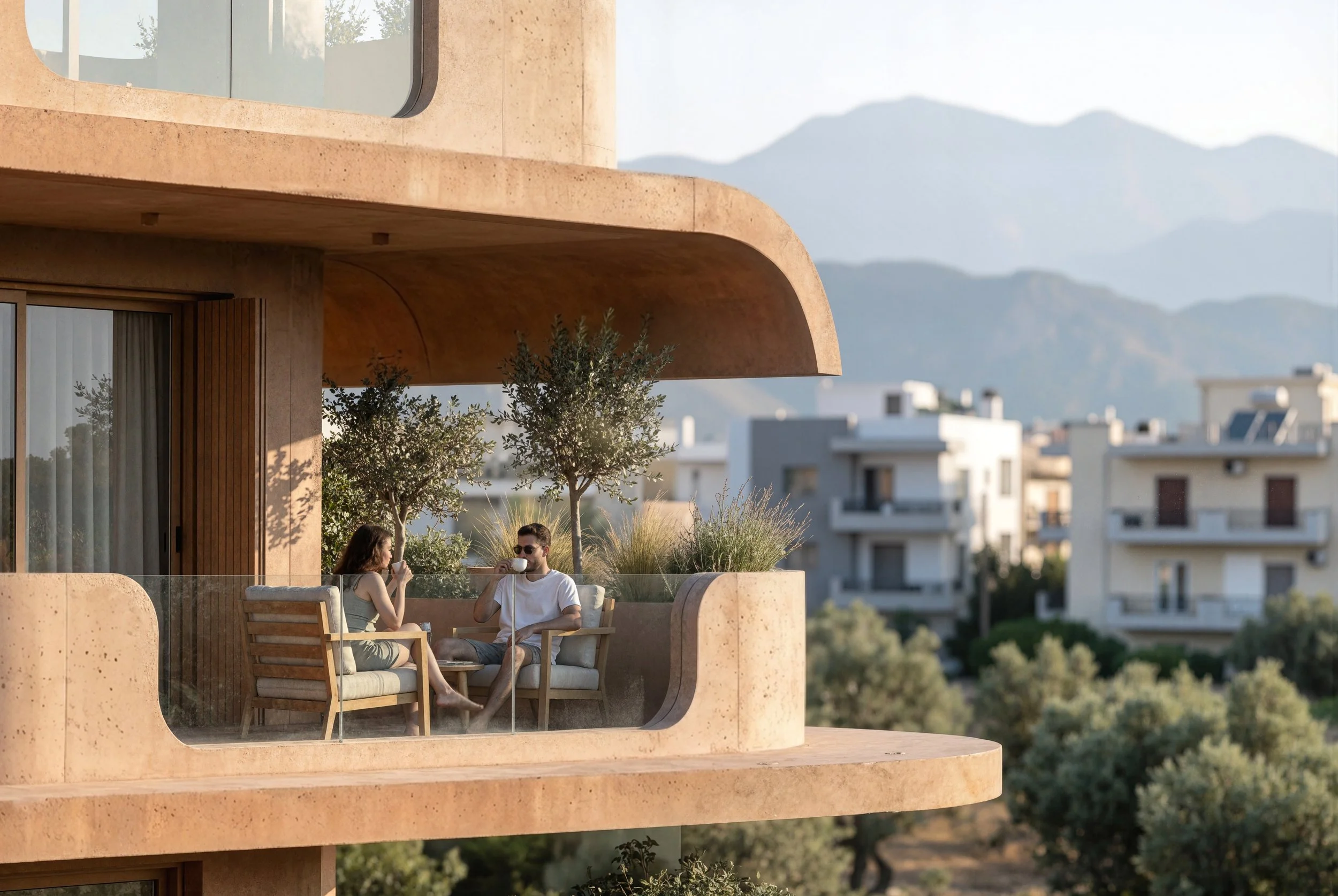
The ground level of the building plays a critical role in mediating between private residence and public city. Rather than presenting a defensive or closed edge, the base is articulated to reinforce permeability and urban continuity. Entrances, circulation cores, and shared thresholds are clearly expressed, contributing to an active and legible street frontage.

The building acknowledges its responsibility to the public realm, reinforcing the idea that residential architecture is inseparable from the life of the street.
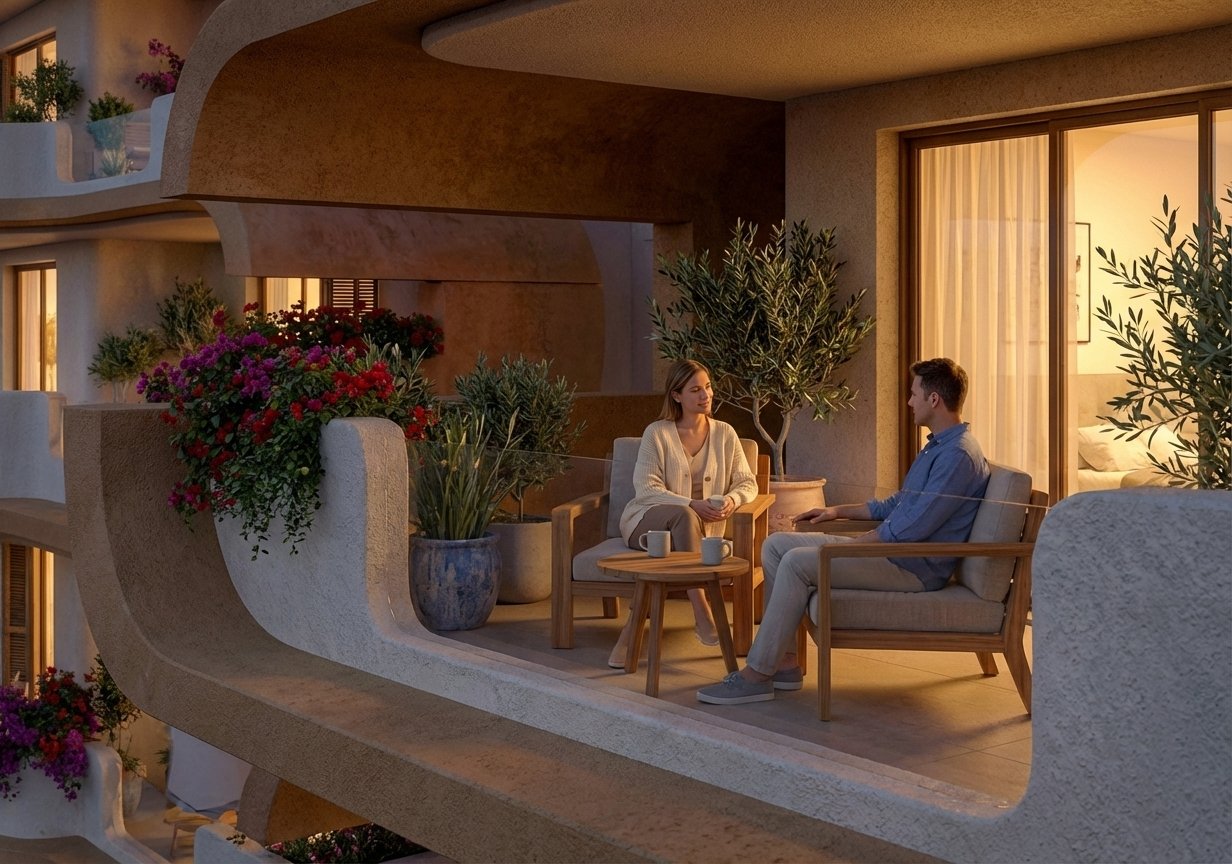
Material choices throughout the project are deliberately restrained and robust, emphasizing durability, tactility, and coherence with the structural system. Concrete, plastered surfaces, and metal elements are expressed in a way that reinforces the modular logic, allowing structure and envelope to read as a unified system.

This material discipline supports longevity and adaptability, enabling the building to age gracefully and accommodate change without losing its architectural clarity.
Repetition, a defining characteristic of the modular system, is embraced as a productive architectural strategy rather than a limitation. Subtle variations in apartment layouts, balcony occupation, and shading configurations introduce diversity within the overarching order. This balance between sameness and difference reflects the social reality of collective housing—individual lives unfolding within a shared framework. Over time, the accumulation of personal traces is expected to enrich the building’s appearance, reinforcing its identity as a living urban structure.

Urban Matter also addresses contemporary questions of density and sustainability. By consolidating multiple dwellings within a compact footprint, the project supports efficient land use while maintaining high standards of spatial quality. Shared infrastructure, passive environmental strategies, and reduced reliance on artificial systems contribute to a more sustainable mode of urban living. Density is treated not as a constraint, but as an opportunity to foster proximity, interaction, and collective awareness.
In reinterpreting the polykatoikia, Urban Matter positions itself within a lineage of Greek urban housing while critically responding to its limitations. The project retains the typology’s adaptability and social openness while refining its environmental performance, spatial clarity, and urban engagement. The result is a building that feels both familiar and forward-looking—rooted in local architectural culture yet responsive to contemporary conditions.
Ultimately, Urban Matter proposes housing as an active participant in the life of the city. Through its modular framework, deep inhabitable façade, and multi-scalar urban connections, the project redefines the relationship between dwelling and urbanity. It suggests that contemporary residential architecture can be systematic yet humane, collective yet individual, precise yet open-ended. In doing so, Urban Matter contributes to an ongoing conversation about how we live together in the city—not as isolated units, but as participants in a shared urban fabric.

Urban Matter ultimately positions itself as an argument for housing as an urban system rather than a collection of isolated domestic interiors. By reworking the Greek polykatoikia through a contemporary, modular framework, the project demonstrates how repetition, structure, and typological clarity can generate architectural richness instead of uniformity. The continuous ring of semi-enclosed balconies becomes the project’s most critical spatial and conceptual device: a thick, inhabitable façade that absorbs environmental forces, accommodates everyday life, and mediates between the private interior and the public city. This depth allows the building to operate simultaneously at multiple scales—domestic, collective, and urban—transforming the façade from a static boundary into an active zone of occupation. In doing so, Urban Matter reframes the relationship between dwelling and city, proposing an architecture that is neither introverted nor exhibitionist, but deeply embedded in its context, climate, and patterns of use.

As a contemporary residential project, Urban Matter suggests that the future of urban housing lies not in formal novelty, but in the careful re-articulation of systems that have historically shaped collective life. Its restrained materiality, clear structural logic, and adaptability over time position the building as an open framework rather than a fixed architectural statement. The project anticipates change—through inhabitation, appropriation, and aging—allowing residents to imprint their presence onto the architecture without undermining its coherence. In this sense, Urban Matter is less a finished object and more a living urban structure, capable of evolving alongside the city of Chania itself. By embracing density, environmental responsiveness, and collective coexistence, the project contributes to a broader discourse on how contemporary housing can remain socially engaged, climatically intelligent, and architecturally precise. It proposes a model of living that acknowledges individuality while reinforcing shared urban belonging—an architecture that does not simply accommodate life, but actively participates in shaping it.
Previous
Previous

Threshold

Next
Next

kk3 Residencies